By Daniel Aduro (Investigative Journalist)
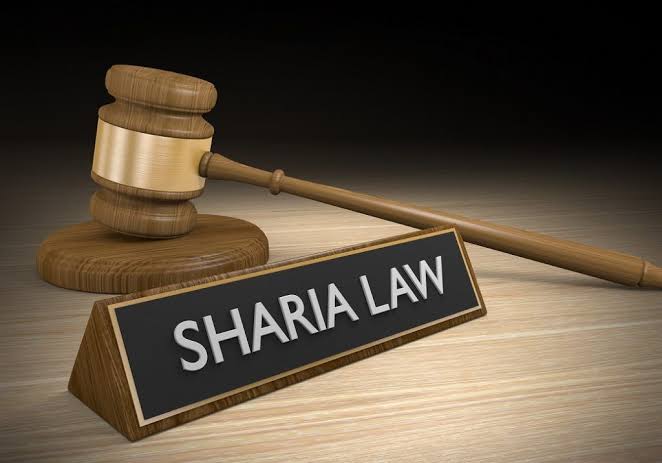
In Northern Nigeria, where Sharia law has been implemented across twelve states since 1999, a glaring contradiction persists: while the legal system imposes harsh penalties like amputation for petty theft, the region’s political elite—predominantly Muslim and often linked to Fulani leadership—remain untouched by the same laws, despite allegations of rampant corruption. This selective enforcement raises questions about whether Sharia is being wielded as a tool to suppress dissent and maintain control, rather than deliver justice.
The reintroduction of Sharia criminal law, spearheaded by Zamfara State’s then-governor Ahmad Sani Yerima, was sold as a divine antidote to societal decay—promising fairness, moral revival, and accountability. Yet, over two decades later, the reality is starkly different. Ordinary citizens, often poor and powerless, face the full rigor of Sharia for minor offenses. A thief in Zamfara might lose a hand, while high-profile politicians accused of embezzling billions walk free, their limbs and reputations intact.
Take the case of a former governor, whose tenure saw allegations of misappropriating state funds meant for schools and hospitals. Despite evidence circulating in public discourse, no Sharia court summoned him. Instead, he remains a prominent figure, shielded by wealth and influence. This pattern repeats across the North: from Kano to Katsina, powerful figures evade accountability, while Sharia’s punitive measures disproportionately target the vulnerable.
Critics argue this selective justice serves a deeper purpose. The Fulani elite, who hold significant sway in Northern politics, have historically leveraged their influence to shape the region’s governance. Some observers suggest that Sharia’s strict enforcement on the masses acts as a mechanism to cage potential uprisings. By keeping the populace in check through fear of divine punishment, the elite maintain a delicate balance—placating religious sentiments while safeguarding their own interests.
The 1804 jihad of Usman dan Fodio, a Fulani scholar, established the Sokoto Caliphate and entrenched Islamic governance in the North. Today’s Fulani political class, many claim, invokes this legacy to legitimize their authority, framing Sharia as a cultural and religious bulwark. Yet, the disconnect is palpable. Dan Fodio’s jihad targeted corrupt rulers, demanding accountability. In contrast, modern Northern elites appear insulated from such scrutiny, with Sharia courts rarely challenging their excesses.
Public frustration is mounting. In Kano, a tailor convicted of stealing fabric faced flogging, while allegations of land grabbing by a prominent politician went uninvestigated. “Sharia is for the poor,” a local trader told me, echoing a sentiment shared across markets and mosques. Posts on social media platforms amplify this anger, with users decrying a “political Sharia” that spares the elite while punishing the powerless.
The Hisbah, Sharia’s moral police, further fuels perceptions of bias. Tasked with enforcing Islamic codes, they often focus on petty infractions—banning mannequins or raiding bars—while ignoring systemic corruption. In 2020, Hisbah in Kano destroyed trucks carrying alcohol owned by non-Muslims, citing “corrupt acts,” yet no equivalent zeal targets the misappropriation of public funds.
This hypocrisy risks alienating the very communities Sharia was meant to uplift. Historically, Northern Nigeria has seen uprisings—like the 1980s Maitatsine riots—fueled by disillusionment with corrupt leadership. Today, groups like Boko Haram exploit similar grievances, railing against the elite’s moral and financial decay. By weaponizing Sharia selectively, the Fulani political class may be sowing the seeds of unrest they seek to prevent.
Defenders of the system argue Sharia’s implementation reflects popular will, citing its roots in the North’s Islamic identity. They claim corruption cases are complex, requiring federal oversight beyond state courts. Yet, this explanation falters when Sharia courts swiftly convict the poor but hesitate to prosecute the powerful. The Nigerian constitution, which guarantees religious freedom, further complicates matters, as Sharia’s application often blurs the line between state and religion.
As Northern Nigeria grapples with poverty, insecurity, and underdevelopment, the promise of Sharia as a path to justice remains unfulfilled. Instead, it appears as a carefully calibrated tool—upholding order among the masses while shielding the elite. For the Fulani political class, this may maintain short-term control, but the growing chorus of discontent suggests a reckoning looms. True justice, as dan Fodio once preached, spares no one—not even those at the top.
About the Author