Screenshot
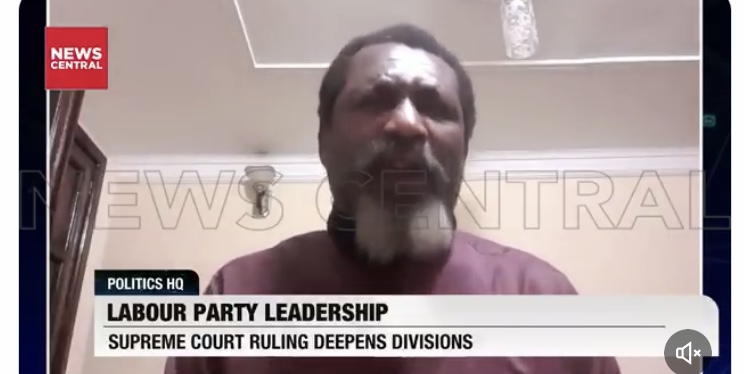
In Nigeria’s ever-noisy political arena, where rhetoric often drowns out reason, a new voice has emerged to stir the pot: Dr. Peter Piper. With a flair for dramatic pronouncements, Piper has taken aim at Peter Obi, the Labour Party’s 2023 presidential candidate, questioning his credentials and casting doubt on his reputation for competency and integrity.
But as the dust settles around Piper’s bold critiques, one question looms large: who exactly is this Dr. Piper, and what authority does he wield to challenge a figure like Obi? Is he a principled commentator with a track record of insight, or just another political noisemaker chasing relevance?
Let’s start with Piper himself. A cursory look at Nigeria’s public sphere yields little clarity about his credentials. No trailblazing reforms bear his name, no scholarly works leap off the shelves, and no grassroots movements claim him as their champion.
If Dr. Piper is a technocrat, his contributions remain curiously invisible; if a thought leader, his ideas have yet to leave a mark. What we do know is that his recent attacks on Obi—delivered with the gusto of a seasoned critic—lack the substance to match their volume. Without a clear legacy to stand on, Piper’s critiques feel less like principled scrutiny and more like the scripted jabs of a political hired hand.
Dr. Peter Piper is a fraud , He came to Asaba claiming he was sent from Abuja, he has no voters card, he never voted on Election Day- Hon. Onochie
Now, consider Peter Obi, the man in Piper’s crosshairs. Obi’s record isn’t flawless—no politician’s is—but it’s hardly anonymous. As governor of Anambra State from 2006 to 2014, he slashed wasteful spending, prioritized education, and left a budget surplus, a rarity in Nigeria’s governance playbook. His frugality became folklore: stories of him shunning luxury convoys and cutting official perks are still told in Awka markets. Since then, Obi’s 2023 campaign galvanized millions, particularly young Nigerians, with a message of fiscal discipline and accountability. Agree with him or not, his track record offers tangible points to debate—roads built, schools funded, debts cleared.
So when Piper dismisses Obi’s competency without specifics, it’s hard not to notice the irony: where are *Piper’s* receipts?
Piper’s assault on Obi’s integrity raises even bigger questions. Integrity is a heavy word in Nigeria, where trust in public figures is eroded by scandals and broken promises. Obi’s tenure wasn’t scandal-free—critics point to his handling of labor disputes or party defections—but no major corruption stain sticks to him.
Compare that to the broader political class, where convictions and allegations are practically a rite of passage. If Piper has evidence of Obi’s moral failings, he hasn’t shared it.
Instead, he leans on vague insinuations, the kind that evaporate under scrutiny. A true watchdog names names, cites cases, and risks backlash.
Piper’s reluctance to do so suggests he’s less interested in truth than in scoring points—perhaps for someone pulling strings behind the curtain.
The timing of Piper’s attacks is no coincidence. With Nigeria’s 2027 elections on the horizon, political battle lines are being drawn. Obi remains a polarizing figure: a hero to some, a threat to others.
Critics like Piper often surface now, not to inform but to distract, muddying waters to blunt a rival’s momentum. Is Piper acting alone, or is he a foot soldier for a larger agenda? His lack of a public footprint fuels suspicion that he’s a proxy, perhaps angling for a patronage slot—a board seat, a consultancy, or just a nod from a power broker.
Nigerians have seen this playbook before: praise one side, bash the other, and wait for the reward.
But here’s where Piper miscalculates: Nigerians are no longer swallowing soundbites whole.
Years of hardship—fuel queues, blackouts, inflation—have honed a national BS detector. Obi’s appeal, whether you buy it or not, rests on measurable acts: saving billions in Anambra, pushing for transparency, even flying economy as a private citizen. Piper’s counter? Empty barbs, no data, no counterexamples.
If he wants to dent Obi’s armor, he’ll need more than hot air. Show us a better model of leadership, Dr. Piper. Point to your own contributions. Until then, his attacks ring hollow, like a tune played for pay rather than principle.
So, who is Dr. Peter Piper to attack Peter Obi? Right now, he’s a question mark—a voice without a resume, a critic without a cause. If he’s got the goods, let him bring them: documents, dates, deals gone wrong. Otherwise, he’s just another piper in Nigeria’s crowded orchestra, playing someone else’s song. Nigerians deserve clarity, not noise. And until Piper steps out of the shadows with something real, Obi—and the public—can safely tune him out.
—Columnist’s Note: In a country hungry for truth, beware those who only bring volume. Check their motives, and always demand the evidence. And, beware the pipers. They play for those who pay, not for truth.
By P. AMECHI