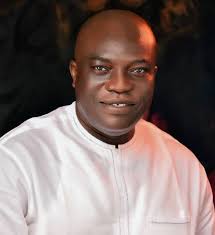
In a recent opinion piece titled *”Nicholas Ukachukwu, A Missed Opportunity”* by Kingsley Ubani, the APC governorship candidate for the November 8, 2025, Anambra election,
Prince Nicholas Ukachukwu, was portrayed as a figure lacking substance in governance and unprepared for leadership. As a journalist committed to fairness and evidence-based reporting, I find it necessary to address these claims, which appear to misrepresent Ukachukwu’s extensive track record and vision for Anambra. Far from being a missed opportunity,
Ukachukwu’s candidacy offers a unique blend of experience, grassroots connection, and a clear agenda for transformative governance.
A Track Record of Public Service and Impact
Ubani questions what Ukachukwu represents, suggesting he lacks a defining legacy in governance. This assertion overlooks a well-documented history of public service and tangible contributions. Ukachukwu served as Chairman of the Abuja Municipal Area Council (AMAC), where he spearheaded infrastructural projects and social welfare programs that transformed the council.
As a member of the House of Representatives for Orumba North/South Federal Constituency, he championed constituency development, delivering water boreholes, electrification projects, and school construction—initiatives that directly improved lives. These are not abstract achievements but concrete evidence of his administrative competence and commitment to public welfare.
Beyond elected office, Ukachukwu’s entrepreneurial ventures as CEO of SNECOU Group Limited, spanning real estate, oil and gas, agriculture, and education, have created thousands of jobs, making him one of Anambra’s largest employers of labor. On *Sunday Politics* (Channels Television), he noted that his record in job creation distinguishes him, stating, “I don’t think there is anybody per kilometre road that has done as much as I’ve done for my state.” This is not mere rhetoric; his businesses have bolstered Nigeria’s economic landscape, particularly in Anambra, providing livelihoods and fostering economic stability.
A Vision for Anambra’s Future
Ubani’s claim that Ukachukwu’s stance on national, regional, or state issues is “undetermined” is puzzling given the candidate’s articulated agenda. His campaign is anchored on a comprehensive plan focusing on agricultural advancement, healthcare reform, education, security, and infrastructure development—priorities that align with Anambra’s pressing needs.
For instance, Ukachukwu has outlined policies to support farmers and enhance food security, addressing the state’s agricultural potential. His commitment to youth empowerment is equally robust, evidenced by his philanthropic efforts in education and mentorship, which have earned him a strong following among Anambra’s young population.
In contrast to Ubani’s assertion that Ukachukwu represents nothing tangible, the APC Youths Progressive Forum has endorsed him as “the most credible candidate” to lead Anambra to prosperity, citing his “exceptional competence, compassion, and capacity.” The Ikemba Front, another APC support group, has praised his vision to “recreate and reinvent” the state, emphasizing his alignment with zoning arrangements to ensure equity. These endorsements reflect a broad consensus on Ukachukwu’s preparedness and clarity of purpose.
Political Influence and Grassroots Connection
Ubani’s critique dismisses Ukachukwu’s decades-long influence in Anambra politics, claiming he is known for “nothing.”
This is a gross misrepresentation. Ukachukwu has been a pivotal figure in shaping the state’s political landscape, describing himself as instrumental in the emergence of successive governors. “No candidate has ever won the governorship of Anambra without my support,” he stated confidently, a claim rooted in his extensive political network and grassroots mobilization.
His landslide victory in the APC primary, securing 1,455 votes against his closest rival’s 67, underscores his widespread support among party delegates across Anambra’s 21 local government areas.
Far from being unprepared, Ukachukwu’s decision to contest the governorship was deliberate, spurred by a commitment to continue the legacy of the late Senator Ifeanyi Ubah, whom he supported. His loyalty to party unity and his donation of ₦63 million to the APC in Anambra demonstrate a strategic and invested approach to leadership, not a lack of foresight.
Addressing Misconceptions
Ubani’s piece leans heavily on subjective impressions, such as Ukachukwu’s personal charisma or marriage, rather than engaging with his substantive contributions. While charm is an asset in politics, Ukachukwu’s appeal extends beyond personality to a proven ability to deliver results.
The suggestion that his long public presence equates to a “missed opportunity” ignores the reality that sustained relevance in Anambra’s competitive political space requires resilience, influence, and impact—all of which Ukachukwu possesses in abundance.
Moreover, Ubani’s comparison to figures like Soludo (economic management) and Ubah (youth empowerment) is selective. Ukachukwu’s multifaceted contributions span job creation, infrastructure, philanthropy, and political strategy, positioning him as a versatile leader capable of addressing Anambra’s diverse challenges.
His promise to resolve insecurity, poverty, and hardship within three months may sound ambitious, but it reflects a bold commitment to rapid, results-driven governance.
A Candidate for the People
The narrative that Ukachukwu is unprepared or lacks a governance identity does not hold up against the evidence. His emergence as the APC candidate was not a fluke but a testament to his grassroots appeal, political clout, and vision for Anambra.
As the state approaches the November 8 election, Ukachukwu stands out as a leader who has already delivered for his people—through jobs, infrastructure, and philanthropy—and is poised to do more as governor.
Rather than a missed opportunity, Prince Nicholas Ukachukwu represents a golden one for Anambra: a chance to elect a tested administrator, a compassionate philanthropist, and a visionary leader committed to linking the state to national opportunities under President Bola Tinubu’s administration.
Ndi Anambra deserve a governor who combines experience with ambition, and Ukachukwu is that candidate.
*Pamela James is a political analyst and journalist based in Lagos but from Anambra State.*