By Amechi.P.
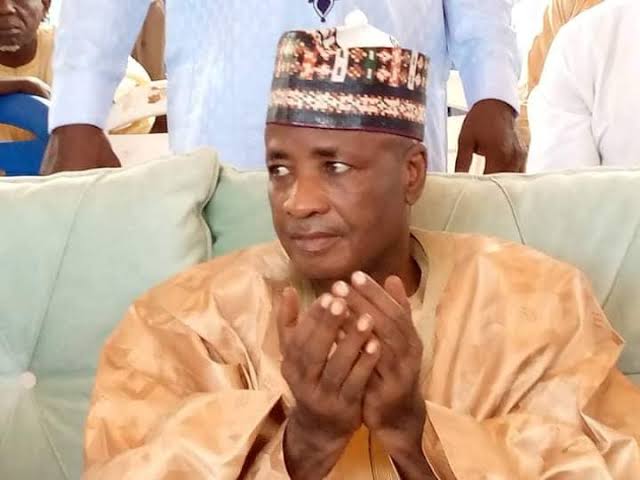
In the tapestry of Nigerian politics, few figures stand as tall as Senator Aliyu Magatakarda Wamakko, a man whose heart is as vast as the Sahel and whose contributions to Sokoto State and Nigeria at large are etched in the annals of history.
To call Wamakko a statesman is almost an understatement; he is a force of nature, a visionary whose footprints are not only difficult to mirror but impossible to erase. His journey—from a humble teacher to a towering political titan—is a testament to the power of purpose, integrity, and an unwavering commitment to the common good.
Wamakko’s story is one of grit and grace. Born in 1953 in Wamakko, Sokoto State, he began his career as an educator, shaping young minds with the same fervor he would later bring to public service.
His academic sojourn at the University of Pittsburgh, where he earned both undergraduate and postgraduate degrees, equipped him with a global perspective that he seamlessly blended with the deep-rooted values of Sokoto’s storied Caliphate.
This fusion of worldly wisdom and local ethos has defined his approach, making him a leader who is both relatable and revered.
As governor of Sokoto State from 2007 to 2015, Wamakko transformed the state into a beacon of progress.
His administration was a masterclass in governance, marked by bold initiatives that touched every facet of life.
Roads sprang up where dust once reigned, schools were revitalized, and healthcare facilities became lifelines for the underserved.
His declaration of a state of emergency on education, backed by an unprecedented 22% of the state budget, was a game-changer.
By abolishing school fees and doubling feeding allowances, he ensured that no child was left behind, drawing thousands of out-of-school children into classrooms.
The establishment of Sokoto State University in 2013 stands as a crowning achievement, a legacy that continues to shape the state’s intellectual landscape.
But Wamakko’s impact transcends infrastructure. His agricultural reforms, providing farmers with modern equipment and training, empowered communities and bolstered food security.
His philanthropy, often unsung, has lifted countless families out of poverty, with his home in Sokoto serving as a veritable “Mecca” for those seeking aid or counsel. This open-door policy, rare among politicians, underscores his large heart—a heart that beats for the people.
As a senator since 2015, Wamakko has continued to shine, chairing key committees and advocating for policies that uplift the marginalized.
His recent appeal to traders to lower prices amid a strengthening naira reflects his acute awareness of economic realities and his compassion for ordinary Nigerians.
The Sun Newspaper’s Lifetime Achievement Award in 2024, followed by a similar honor from New Telegraph, was not just a nod to his past but a recognition of a legacy that endures.
These accolades, conferred after rigorous vetting, affirm what Sokoto’s people have long known: Wamakko is a statesman par excellence.
Yet, not all voices sing his praises. Critics, as reported by outlets like Leadership and Daily Trust under sponsored articles by his political enemies but his critiques are, however, often a smack of political posturing.
Their comparing Wamakko’s systemic overhaul of Sokoto to isolated projects of Senator Ibrahim Lamido is like comparing an ocean to a stream. His mentorship of Governor Ahmed Aliyu, who continues to build on his vision, is proof that his influence is not a fleeting spark but a sustained flame.
Wamakko’s political acumen is equally formidable. His ability to navigate the treacherous waters of Nigerian politics—surviving impeachment plots as deputy governor and outmaneuvering rivals like Attahiru Bafarawa—has cemented his status as a “political bulldozer,” as one X post aptly described.
His leadership within the All Progressives Congress (APC) has made Sokoto a stronghold, a feat that speaks to his grassroots connection and strategic brilliance.
In a nation often starved of selfless leaders, Wamakko stands as a colossus, his large heart a beacon for what leadership ought to be.
His footprints—paved in roads, schools, and empowered lives—are not just difficult to mirror; they are eternal.
As Eleanor Roosevelt once said, “The future belongs to those who believe in the beauty of their dreams.” Wamakko dared to dream for Sokoto and Nigeria, and in doing so, he has woven a legacy that time cannot erase.
About the Author