by John Michael
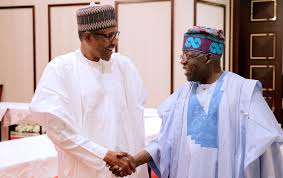
In the intricate tapestry of Nigerian politics, the threads of nepotism have long been woven into the fabric of governance, often sparking heated debates and regional rivalries. Former President Muhammadu Buhari, whose tenure ended in May 2023, faced relentless criticism for what many perceived as a blatant tilt toward his northern kin in appointments and resource allocation.
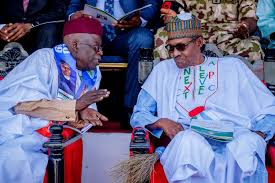
His defenders argued it was a matter of trust in familiar hands; his detractors saw it as a betrayal of national unity. Whatever the lens, one thing is clear: Buhari’s legacy left an indelible mark—a precedent that his successor, President Bola Ahmed Tinubu, appears to have picked up and run with, albeit with a southern twist.
The accusation is stark: Buhari set a stage where favoritism trumped merit, and Tinubu, rather than dismantling the script, has simply changed the cast.
Under Buhari, key security and political appointments disproportionately favored the north, fueling cries of marginalization from the south. Fast forward to Tinubu’s administration, and the pendulum seems to have swung.
The south, particularly the Yoruba southwest, now enjoys a lion’s share of influence, with strategic positions filled by loyalists and allies. The north, once basking in Buhari’s largesse, now finds itself on the receiving end of the same exclusionary playbook it once cheered. As the saying goes, “The precedent has been set—so continua,” or in the French flourish requested, *“continuer.”*
Tinubu’s defenders might argue that this is politics as usual—rewarding the base that propelled him to power after decades of maneuvering.
After all, Buhari’s northern bias was no less a product of his own political debts and instincts.
But the irony is thick: the same northern voices that dismissed southern complaints during Buhari’s reign now cry foul, decrying Tinubu’s “regionalism.” To them, one might retort, “Don’t cry me a river—the script was written long before Tinubu took the stage.”
The deeper issue, however, transcends regional tit-for-tat. Buhari’s nepotism didn’t just favor the north; it entrenched a governance model where loyalty often outranked competence, setting a dangerous benchmark. Tinubu’s continuation—whether by design or default—suggests that Nigeria’s leadership is less about rewriting the rules and more about redirecting the profits.
The north may lament its lost privilege, but the south’s jubilation rings hollow when the system itself remains unchanged.
So, where does this leave us? Nigeria’s political class seems locked in a cycle of *“continua,”* a French-inflected dance of power where each region takes its turn at the trough.
Buhari sowed the seeds; Tinubu waters them. The precedent is no longer a warning—it’s a blueprint.
Until the nation demands a break from this script, the river of nepotism will keep flowing, north to south and back again, leaving the dream of a unified, merit-driven Nigeria adrift in it’s wake.
About the Author