
In the intricate drama of Nigerian governance, certain patterns repeat with almost ritualistic precision. One such pattern is the elevation of capable Igbo professionals to high-stakes economic or infrastructural roles, only for them to shoulder the blame when the music stops and the bills come due.
Godwin Emefiele, former Governor of the Central Bank of Nigeria, provided the template under President Muhammadu Buhari. Now, Engineer David Nweze Umahi, Minister of Works under President Bola Tinubu, appears positioned for a similar encore — with the Lagos-Calabar Coastal Highway as the looming stage.
This is not about ethnic victimhood or conspiracy. It is about observable political mechanics in a system where ultimate power and decision-making rest at the top, yet accountability often flows downward — preferably toward ambitious “outsiders” who deliver visibly but lack the deepest ethnic or political insulation.
Under Buhari, Emefiele presided over an era of unprecedented Ways and Means advances — essentially the CBN extending massive overdrafts to finance federal deficits, reportedly reaching over ₦30 trillion in controversial lending.
Currency mismanagement, soaring inflation, multiple recessions, and a battered naira marked those years. When scrutiny intensified after 2023, Emefiele faced probes, detention, and public condemnation for “reckless” financial practices. The principal remained largely shielded behind narratives of “inherited challenges” and institutional complexity. The technocrat who executed the policies took the fall.
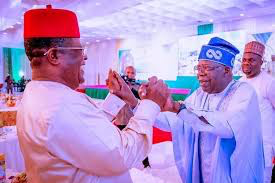
Fast-forward to the Tinubu administration. David Umahi, a former Ebonyi State governor celebrated for his infrastructure push at home, took charge of the Ministry of Works.
He inherited a daunting portfolio: over 2,000 (or, by some accounts, around 268 high-value) ongoing or abandoned road projects, with liabilities reportedly exceeding ₦13 trillion.
His ministry has aggressively advanced flagship initiatives, chief among them the Lagos-Calabar Coastal Highway — a massive “legacy” project strongly associated with Tinubu’s vision for coastal connectivity, port integration, and economic corridors.
Umahi has defended heavy borrowing and spending, including syndicated loans (such as the $747 million and subsequent $1.126 billion deals for early sections) and budget allocations running into trillions.
The Coastal Highway has sparked intense debate: its reported cost of around ₦7.5 billion per kilometre (after adjustments for design changes, waste excavation, and variations that added hundreds of billions), questions over transparency in funding and procurement, environmental and community impacts, and its priority amid national hardship, inflation, and debt servicing pressures.
Supporters highlight its potential as a transformative economic corridor capable of generating returns through tolling and investments. Critics see risks of cost overruns and fiscal strain.
The pattern feels eerily familiar. Ambitious infrastructure push framed as visionary and irreversible. Justification that “we inherited the mess” and had “no choice” but to borrow to grow.
Visible progress on select sections used for political messaging. And underlying concerns about sustainability, opacity in variations (with reports of nearly ₦1 trillion in contract revisions across projects since 2023), and value for money in an economy already wrestling with debt.
Umahi, like Emefiele before him, is Igbo — a detail that fits neatly into Nigeria’s elite power calculus. In a federation where ethnic balancing is both art and necessity, placing a competent Southeasterner in a high-visibility, high-expenditure role allows the centre to claim inclusivity while retaining control over the bigger fiscal levers.
When results shine, credit flows upward. When costs mount, debt piles higher, or controversies erupt around execution, the minister becomes the convenient lightning rod: “He pushed too aggressively.”
“Costs escalated under his watch.” “Questions remain on feasibility.” The principal can then pivot to “reviews” or “lessons learned,” while the fall guy absorbs the heat.
Emefiele did not single-handedly invent or approve the Ways and Means era. Umahi does not unilaterally set the national borrowing envelope or designate strategic “pet” legacy projects — those decisions sit higher.
Yet history suggests that when the day of reckoning arrives — whether through intensified debt distress, public backlash, National Assembly probes, or post-tenure accountability — the script holds: the Igbo technocrat positioned to “take the fall.”
Nigerians have seen this movie before. Borrowing continues under the banner of infrastructure revolution and “Renewed Hope.”
The Coastal Highway advances with international financing and phased commissioning claims, even as demands for full cost disclosure persist. When the gamble’s full price becomes undeniable, expect the familiar narrative.
True accountability would interrogate the principals who set the direction, approve the loans, and harvest the political capital — not merely the ministers tasked with delivery.
Until Nigeria dismantles this cycle of scapegoating competent executors while shielding ultimate decision-makers, the same ethnic and political patterns will endure.
Umahi brings characteristic energy to roads and defends the coastal vision robustly. But in Nigeria’s recurring playbook, such energy on trillion-naira borrowing and controversial mega-projects often fuels later political sacrifice.
The fall, when it comes, may be loud. The deeper question is whether citizens will finally see the full stage — or stay fixated on the designated actor taking the bow.
About the Author


