
Terrorists Roam Free, Broadcaster Jailed for Life – Welcome to Nigeria’s Selective Justice System
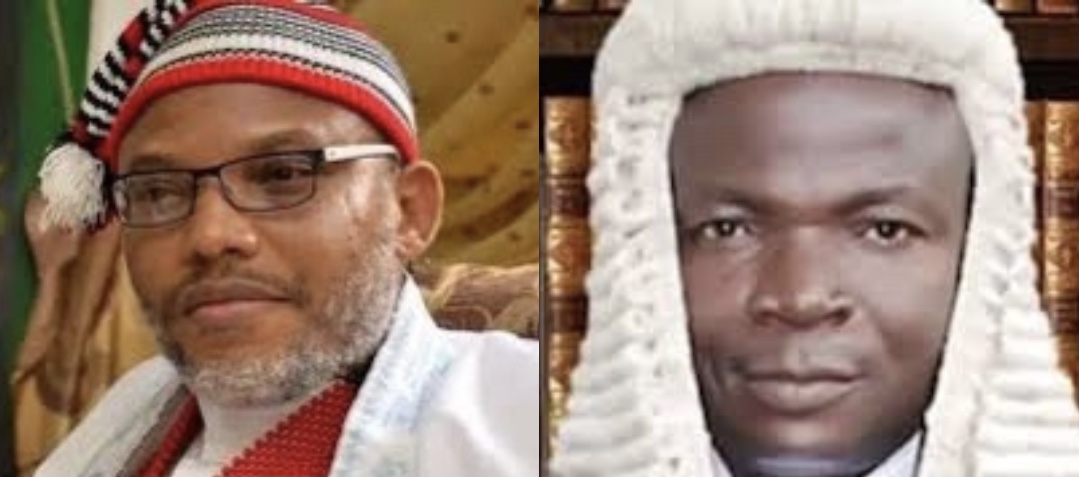
The sentencing of Mazi Nnamdi Kanu to life imprisonment on November 20, 2025, by Justice James Omotosho of the Federal High Court in Abuja is nothing short of a grotesque miscarriage of justice—a premeditated assault on the rule of law that mocks the very foundations of human rights and democratic governance.
This verdict, delivered in Kanu’s forcible absence after he was ejected from the courtroom for daring to question procedural irregularities, isn’t merely flawed; it’s a deliberate perversion of justice, engineered to silence a voice for self-determination and ethnic equity in a nation plagued by marginalization.
“Free the Killers, Jail the Speaker: How Nigeria Buried Justice on November 20, 2025”
It stands as a resounding slap in the face to international bodies like Amnesty International and the United Nations, which have repeatedly condemned his 2021 extraordinary rendition from Kenya as unlawful abduction and torture, as well as his prolonged detention under inhumane conditions that violate Article 5 of the UN Convention Against Torture.
The UN Working Group on Arbitrary Detention issued urgent appeals as early as 2021, highlighting enforced disappearance and ill-treatment, yet Nigeria’s response has been defiant indifference.
This ruling also spits on the tireless appeals from Nigerian legislators—figures like Senator Enyinnaya Abaribe and House members from the Southeast who petitioned for his release on grounds of fair hearing—and concerned Igbo leaders, including Ohanaeze Ndigbo, who have framed Kanu’s plight as emblematic of systemic persecution against the Igbo.
Their calls, echoed by global Igbo diaspora organizations, invoked Section 36 of the 1999 Constitution guaranteeing fair trial rights, only to be trampled under the boot of executive-orchestrated judicial theater.
By convicting Kanu on seven counts, including the absurd linkage to inciting violence during the 2020 #EndSARS protests—where the state itself massacred unarmed protesters at Lekki Toll Gate, as ruled by the ECOWAS Community Court in 2024 finding the federal government guilty of rights violations—the court has inverted victim and perpetrator.
No convictions have materialized for the police officers responsible for those killings, despite panels of inquiry recommending prosecutions; instead, the blame shifts to a man in chains for “radio broadcasts.”
This isn’t accountability; it’s scapegoating, a cynical bid to delegitimize legitimate grievances while shielding state terror.
What Kind of Judiciary (and Country) Is This?
Nigeria’s judiciary, once a fearless bulwark against tyranny—recall its bold voiding of military decrees in the 1990s under justices like Adolphus Karibi-Whyte—has devolved into a hollow shell, riddled with executive capture, chronic underfunding, and rampant selective enforcement.
Judges like Omotosho, accused in public discourse of bias due to prior controversial rulings, now serve as rubber stamps for political vendettas, eroding public trust to abysmal lows (a 2023 Afrobarometer survey pegged judicial confidence at under 30%).
Underfunding manifests in dilapidated courts and overburdened dockets, but the real rot is political: promotions tied to loyalty, threats from security agencies, and a bench increasingly populated by appointees beholden to the ruling elite.
In Kanu’s case, the rush to judgment—bypassing his demands for amended charges under the repealed Terrorism Act and deeming his non-submission a “waiver“—exposes how procedural loopholes under the Administration of Criminal Justice Act are weaponized against dissidents, while the powerful skate free.
This life sentence for “incitement” via broadcasts pales in absurdity against the unprosecuted architects of mass atrocities, laying bare a judiciary that dispenses two-tiered justice: one for the marginalized South, another for the entrenched North. Consider the stark contrasts:
– Real Terrorists Untouched: Boko Haram and its splinter ISWAP have unleashed carnage since 2015, killing over 10,000 civilians and soldiers alone in that period—part of a broader toll exceeding 35,000 deaths since 2009, per Council on Foreign Relations data—through bombings, abductions, and village razings.
Yet, aside from sporadic arrests, leaders evade swift trials; Abubakar Shekau’s death in 2021 was a battlefield end, not courtroom reckoning, and current commanders operate with impunity in the Northeast.
Bandit syndicates in Zamfara and Katsina have slaughtered thousands more, but operations yield few convictions.
Contrast this with Kanu’s lightning-rod treatment for words, not weapons.
– Fulani Herder Militias in the Middle Belt: These armed groups, often ethnically Fulani, have fueled a resource war displacing over 1.09 million people across Benue, Plateau, and Kaduna states since 2015, according to International Crisis Group and Genocide Watch reports.
They account for 47% of civilian killings in recent years—far outstripping Boko Haram in some metrics—through targeted village attacks that critics label ethnic cleansing. Mass arrests? Nonexistent.
Instead, victims face blame for “farmer-herder clashes,” with minimal prosecutions despite UN calls for accountability.
– State-Backed Killings Like #EndSARS: The 2020 protests saw at least 12 confirmed deaths at Lekki, with estimates up to 50 nationwide from security forces, yet zero convictions for the perpetrators five years on.
The ECOWAS ruling in July 2024 held the government liable for excessive force and cover-ups, but it remains unenforced—a damning indictment of a system that prosecutes protesters while absolving killers.
Tying Kanu to these deaths via “incitement” is not just ironic; it’s a grotesque rewrite of history to criminalize resistance.
– Separate Systems?: Absolutely, and it’s no accident. Southern and Igbo activists endure en masse treason charges—over 50 IPOB members languish in detention without trial, per Human Rights Watch—while northern insurgents benefit from olive branches like the 2016 Boko Haram amnesty program under President Buhari.
That initiative, via Operation Safe Corridor, rehabilitated thousands of “repentant” fighters with reintegration packages, costing millions in taxpayer funds, despite ongoing attacks.
Section 42 of the Constitution prohibits such discrimination, but it’s a paper tiger in a federation where “one Nigeria” means subjugation for the Igbo, whose marginalization traces back to the 1966 pogroms and 1967-1970 civil war.
This duality fosters resentment, not unity, turning courts into battlegrounds for ethnic survival.
– Global Disgrace: The world isn’t just watching; it’s recoiling.
Amnesty International’s 2025 report, “A Decade of Impunity,” catalogs Kanu’s ordeal as emblematic of Nigeria’s slide into authoritarianism, with his rendition deemed a “clear violation of international law.“
The UN’s 2023 Human Rights Report flagged his detention as “harsh and life-threatening,” amid broader prison crises.
On X, #FreeNnamdiKanuNow exploded today, with over 10,000 posts in hours—from Sowore’s prescient warnings of a “predetermined” verdict to diaspora cries of “tribal war” and immediate appeal announcements by Kanu’s lawyer, Ifeanyi Ejimakor.
Global outlets like Reuters and CNN frame it as a tinderbox for unrest, echoing fears of Southeast shutdowns.
Nigeria, for heaven’s sake, what kind of country shackles a man for advocating referendum while herders pillage unchecked and insurgents get amnesties?
This isn’t a judiciary; it’s a junta in robes. A country born of promise in 1960, now a patchwork of pain where justice is rationed by tribe and title.
Kanu’s team vows appeal to the Court of Appeal, citing fair hearing breaches—may it succeed, as the Supreme Court’s 2023 discharge hinted at reversible errors.
But true reform demands more: an independent judiciary, equitable prosecutions, and dialogue on restructuring.
Kanu will likely appeal to the Court of Appeal, then Supreme Court—potentially citing these very flaws.
In the meantime, his team demands immediate release under Section 36(12). If this feels like “shaving beards in absence,” it’s because the law’s spirit (fairness) is being bent to fit the state’s narrative. Nigeria deserves better—a judiciary that shaves no one without due process.
Igbos, Nigerians, the world—rise against this cowardice. Free Nnamdi Kanu now, or watch the fractures widen into chasms.
Personally, What’s your take on the next steps for appeal and What’s strategy do you recommend in amplifying this globally?
Pamela O. writes from Lagos.
About the Author


