
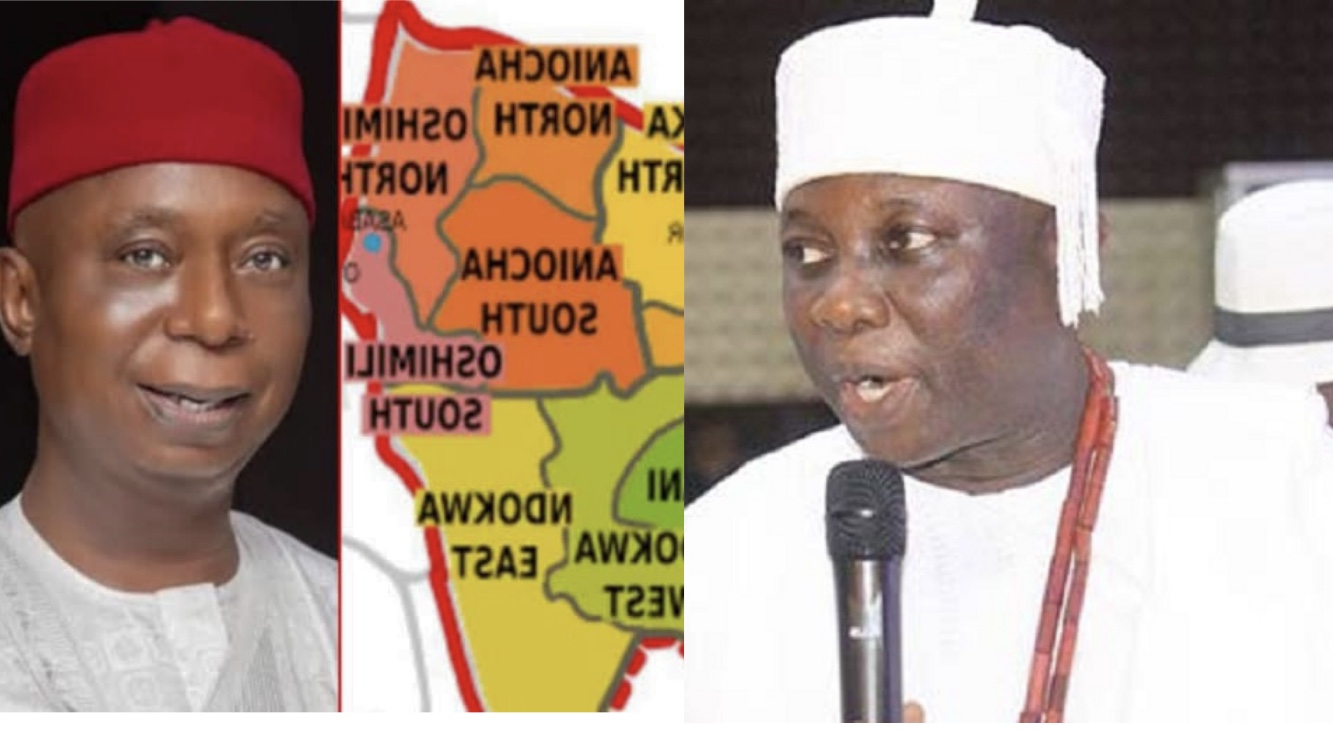
The agitation for Anioma state creation has been a beacon of hope for the people of Delta North, symbolizing decades-long demands for equity in Nigeria’s federal structure.
Spearheaded by Senator Ned Nwoko, this movement isn’t just about carving out a new state—it’s a quest for cultural identity, political representation, and economic empowerment in the South-East geopolitical zone.
As the Anioma state bill advances toward its third reading and presidential assent, recent schisms, particularly the opposition from traditional leader Prof. Epiphany Azinge, have tested the resolve of advocates.
Yet, with stalwarts like former Delta Deputy Governor Benjamin Elue remaining steadfast, the momentum for Anioma state creation remains unyielding.
In this in-depth analysis, we explore why Azinge’s stance appears selfish, prioritizing personal and traditional concerns over broader zonal equity, and how the movement presses on amid ongoing public hearings.
Ned Nwoko: The Architect of Anioma State Creation Initiative
Senator Ned Nwoko (APC, Delta North) didn’t just join the chorus for **Anioma state creation**—he ignited it into a national imperative.
As the sponsor of Senate Bill 481, Nwoko has framed the push as a non-partisan drive rooted in justice, equity, and historical destiny, not political maneuvering.
The bill proposes establishing Anioma State from nine local government areas in Delta North—spanning Aniocha, Oshimili, Ika, and Ndokwa zones—addressing the South-East’s anomaly as the only zone with five states while others boast six or more.
Nwoko’s advocacy traces back to the 1950s, when early leaders like Chief Dennis Osadebay laid the groundwork, but his modern efforts have galvanized unprecedented support.
Over 90 senators have endorsed the bill, surpassing the two-thirds threshold required for constitutional amendments.
Public hearings, including a resounding success in Enugu, echoed unanimous backing, with no dissenting voices reported.
Nwoko has secured nods from President Bola Tinubu, Senate President Godswill Akpabio, and even traditional rulers across divides, positioning Anioma as the South-East’s preferred sixth state.
This isn’t ambition; Nwoko has publicly disavowed gubernatorial aspirations, emphasizing sustainable development through enhanced infrastructure, more legislative seats, and closer governance.
Groups like the Human Rights Writers Association of Nigeria (HURIWA) hail him as a “visionary patriot,” crediting his lobbying for shifting the narrative from marginalization to unity.
The Anioma State Bill: On the Brink of Third Reading and Presidential Assent
The Anioma state bill is no longer a distant dream—it’s navigating critical legislative stages. After passing second reading with broad senatorial backing, it awaits third reading in the Senate, followed by concurrence from state assemblies, governors, and a national referendum.
Public hearings continue to build consensus, with zonal sessions in July 2025 reinforcing its viability through population, economic resources, and cultural affinity metrics.
Once cleared, the bill heads to President Tinubu for presidential assent, a step Nwoko describes as a “historic unifying moment.”
The Joint Senate-House Committee on Constitution Review has already greenlit an additional South-East state, with Anioma emerging as the frontrunner due to its comprehensive proposal.
A 200-member technical committee, including traditional rulers and politicians, was inaugurated in Asaba to streamline the process, ensuring grassroots buy-in.
This progress underscores Anioma state creation as a corrective measure for zonal inequity, promising three senators, expanded economic zones, and peace in the South-East—potentially alongside Nnamdi Kanu’s release.
Why Azinge’s Opposition to Anioma State Creation Seems Selfish: Protecting His Seat Over Progress
Enter Prof. Epiphany Azinge, the Asagba of Asaba and a revered traditional custodian. Once cited in supportive contexts for Anioma state creation—as in Nwoko’s July 2025 statements highlighting royal blessings—Azinge’s recent pivot has sparked controversy.
Now, alongside Aniocha and Oshimili leaders, he rejects aligning Anioma with the South-East, labeling it a “distortion of history” and “betrayal of distinct identity.”
Critics argue this stance reeks of selfishness, fixated on safeguarding Azinge’s influential seat amid fears that expansion could “alienate traditionalists like him.“
Anioma’s heterogeneity—not all speak native Igbo—fuels his concerns, but detractors see it as overlooking other factors like economic viability and federal balance.
By prioritizing a “Delta-only state,” Azinge risks perpetuating zonal inequity, confining Anioma to South-South dynamics and denying the South-East equitable representation.
This isn’t altruism; it’s a myopic defense of status quo, ignoring how Anioma state creation could amplify Asaba’s role as capital while fostering unity.
Traditionalists’ fears of dilution echo outdated binaries, but Nwoko counters that Anioma’s “distinct self” thrives precisely through self-determination, not isolation.
Benjamin Elue: The Unwavering Force Ensuring Azinge’s Exit Won’t Derail Anioma State Creation
Azinge’s schism threatens unity, but it won’t halt progress—as long as figures like Chief Benjamin Elue, former Delta Deputy Governor, stay active. Elue’s legacy in Anioma state advocacy dates to the 2014 National Conference, where he presented a seminal paper on the subject.
Today, he’s integral to the 200-member technical committee, bridging traditional and political divides.
Elue embodies resilience, endorsing Senate Bill 481 through Delta North APC channels and emphasizing Anioma’s readiness for statehood.
His involvement ensures Anioma advocates navigate this schism** without losing steam, proving that one exit can’t eclipse collective will.
As Delta APC declares unequivocal support, Elue’s activism reinforces that **Anioma state creation** is a “done deal.“
Navigating the Schism: Delta-Only Risks vs. Broader Zonal Equity in Anioma State Creation
The core tension? A Delta-only Anioma state could entrench isolation, alienating South-East allies and undermining zonal equity.
Azinge’s traditionalist lens—fearing Igbo assimilation—overlooks benefits like boosted GDP, infrastructure, and representation, which a South-East alignment amplifies.
Advocates must bridge this by highlighting inclusivity: even Igbanke communities seek inclusion, underscoring shared destiny.
Public hearings offer a forum to heal divides, urging Azinge and peers to prioritize justice over fear.
As Nwoko notes, this is about “generational dreams,” not egos.
Conclusion: Anioma State Creation – A Triumph of Equity Over Selfishness
Ned Nwoko’s initiation of the Anioma state bill has transformed a 70-year agitation into legislative reality, awaiting third reading, presidential assent, and public hearings for finality.
Azinge’s selfish bid to protect his seat—overlooking **zonal inequity** and traditional alienation—pales against the movement’s tide, especially with Benjamin Elue’s enduring activism.
For Anioma advocates, this schism is navigable: unity in equity will birth a state that heals, empowers, and balances Nigeria.
As Tinubu’s support looms, Anioma state creation isn’t if, but when—proving progress outlasts opposition.
Pamela O. writes from Lagos.
About the Author


