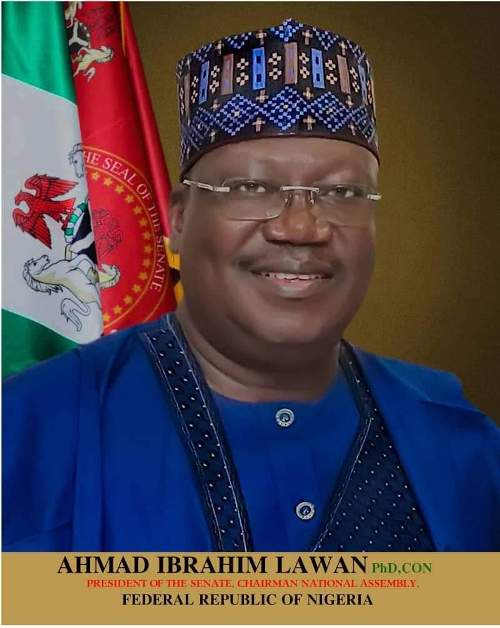
Distinguished Senator Ahmad Ibrahim Lawan,
I hope this message finds you in good health and spirits. As a political analyst who has followed Nigeria’s legislative and democratic journey closely for decades, I write not out of personal animosity but from a place of deep concern for the health of our institutions and the precedents that shape our republic.
Senator, one hopes you are thoroughly enjoying the legacy you helped craft as President of the 9th Senate (2019–2023).
That Senate, under your leadership alongside the Buhari executive, became synonymous in the eyes of many observers with executive deference rather than robust oversight.
From the swift passage of controversial loans and executive requests to the perceived sidelining of dissenting voices and the prioritization of harmony over rigorous scrutiny, the chamber often appeared more as a partner in implementation than an independent arm of government.
We labeled it a “rubber stamp” legislature — a phrase that still echoes in political discourse today.
The undemocratic precedents set during that period — the executive-legislative alignment that blurred separation of powers, the handling of key nominations, electoral matters, and the general perception of diminished institutional autonomy — continue to influence how many Nigerians view the upper chamber.
These were not abstract; they had real impacts on governance, accountability, and public trust in democracy.
Now, reports and political undercurrents in Yobe State suggest strong interest in higher office, with whispers and indications that you may eye the governorship (or at least remain a dominant force in state politics).
If true, one must ask candidly: Do you intend to import and replicate those same Senate-era precedents at the state level? Will the Yobe State House of Assembly, under such influence, become another arena of minimal pushback, rapid executive approvals, and weakened checks and balances?
Or will there be a deliberate shift toward strengthening democratic norms, legislative independence, and genuine oversight — the kind that many believe was insufficient at the federal level during your tenure?
Nigerians deserve clarity. Your long years in the National Assembly are noted, and your experience is undeniable. But legacy matters.
Will future chapters reinforce perceptions of power consolidation and institutional subordination, or will they demonstrate a matured commitment to robust federalism and accountable governance at the state level?
The electorate in Yobe and beyond will ultimately decide, but the precedents you helped establish at the Senate have already shaped expectations. History is watching how they are applied — or perhaps transcended — in the next phase.
I await your thoughts or actions on these matters with keen interest, as do many who care about the quality of Nigeria’s democracy.
Respectfully,
A Concerned Political Analyst
Pamela O.
About the Author