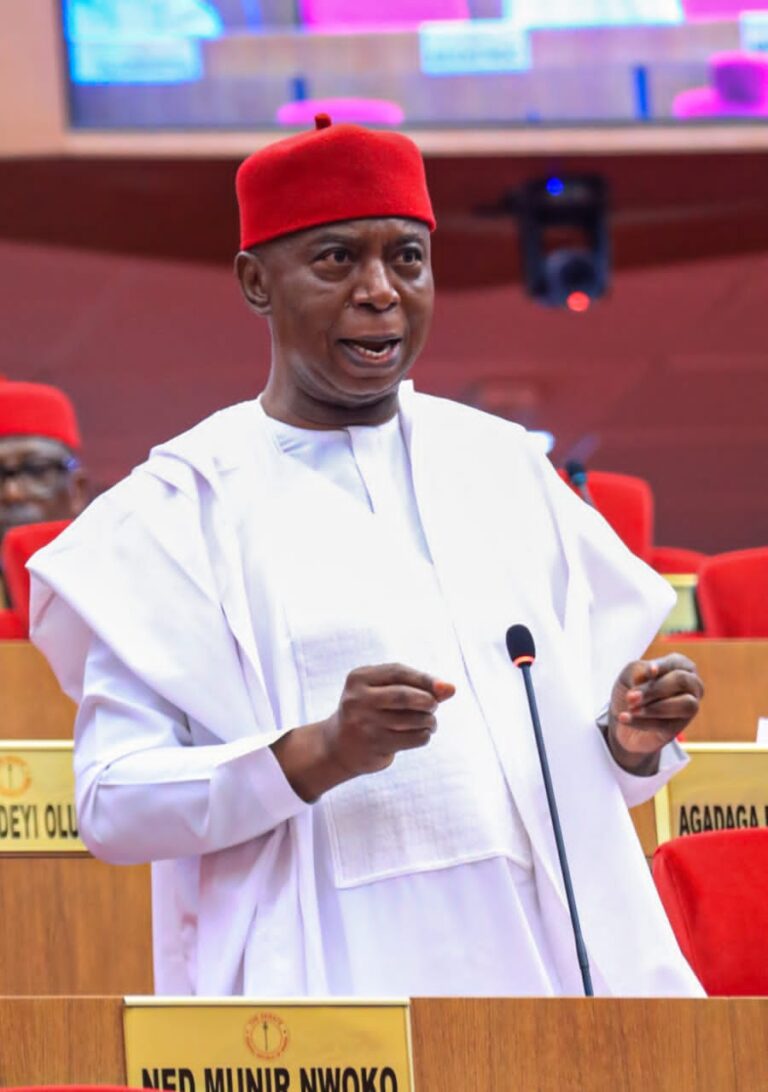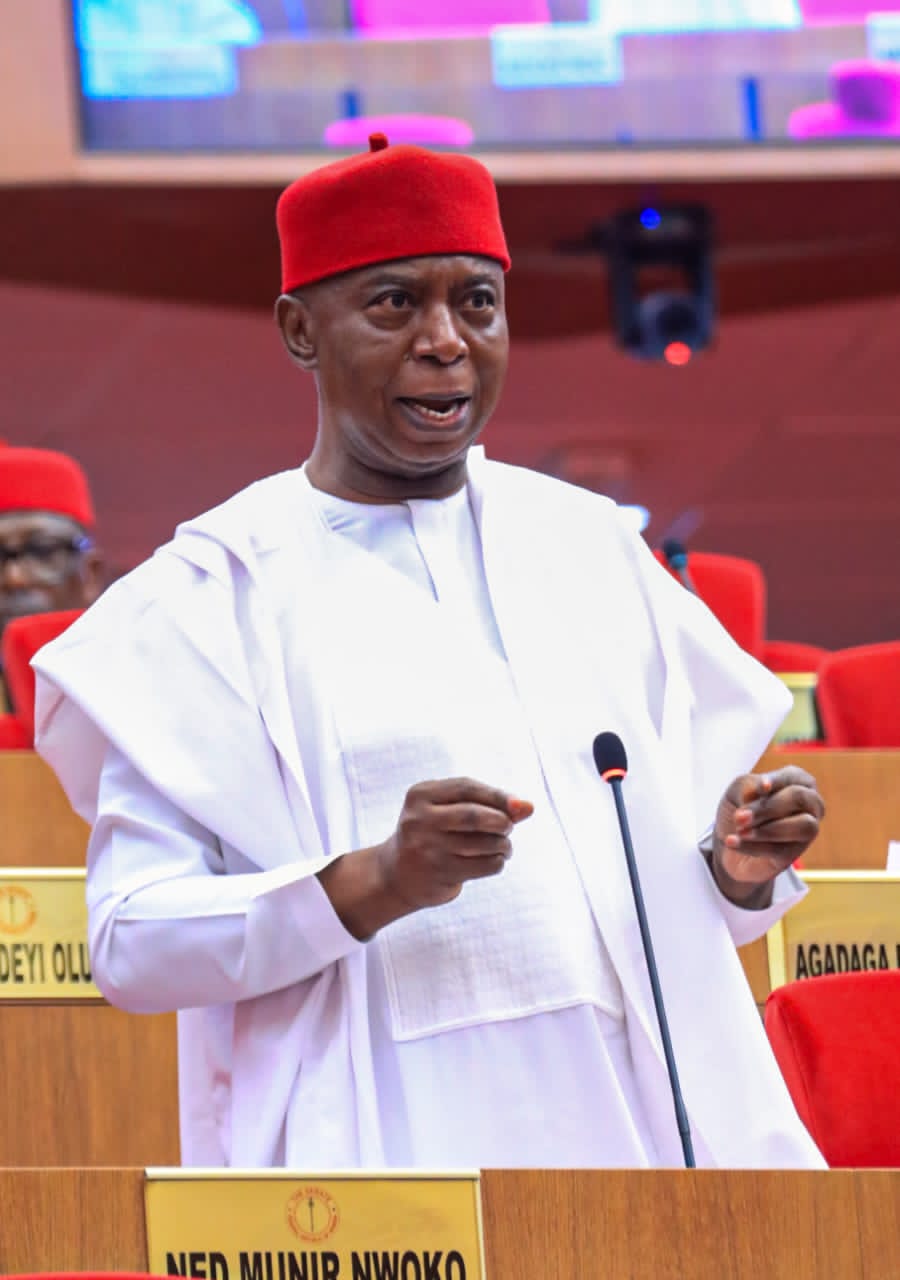
When BusinessDay placed Senator Ned Nwoko among the Top 10 Senators of the 10th National Assembly, and when the Democracy Heroes Award Africa named him Best Performing Senator of the Year 2025, the honours did not arrive as surprises to those who have followed the work.
They confirmed what the record already showed: a first-term senator who has treated office as a platform for results, not a title to be worn.
Representing Delta North, Nwoko entered the Senate in June 2023 after earlier service in the House of Representatives.
In a relatively short time he has built one of the most active legislative footprints among first-term members. Independent reviews and published scorecards credit him with more than 30 private member bills—by his own two-year accounting, 34—alongside a substantial run of motions.
In a chamber where initiative is uneven, that level of output is rare and deliberate.
The bills are not filler. They speak to the pressures people actually live with and to the structural questions Nigeria keeps postponing.
The Anioma State creation bill sits at the centre of a larger argument for equity and historical justice. Around it are proposals on waste management and malaria eradication, youth entrepreneurship grants, a one-month rent limitation and landlord registry, diaspora voting, institutional upgrades for local polytechnics and colleges of education, and reforms touching security, public health and national institutions.
This is a lawmaker writing for both the household and the republic.
Committee work has matched the floor work. As Chairman of the Senate Committee on Reparations and Repatriation, and through service on the ad-hoc panel on crude oil theft, he has taken on briefs that demand persistence rather than photo opportunities.
In Delta North the same energy shows up in solar street lighting, boreholes, road works, scholarships, medical outreaches, empowerment programmes for youths and women, and facilitation of larger federal interventions, including elements of the Ogwashi-Uku Dam and related water schemes.
National advocacy and local delivery are not competing instincts in this record. They are the same instinct applied at two scales.
What distinguishes Nwoko as much as the volume of work is the way he receives recognition. On the BusinessDay listing he did not treat the honour as a personal coronation. He called it a reminder of the responsibility that comes with representing Delta North, thanked those who have walked with him, admitted that much more remains to be done, and closed with the line that should be the motto of serious public office: the work continues.
At the Democracy Heroes Award he dedicated the prize to Sir Dennis Osadebay and the Anioma cause, placing personal honour inside a longer story of identity, justice and unfinished regional nation-building.
That is not the language of a man collecting plaques. It is the language of a man who understands that representation is stewardship.
Three qualities define the approach.
He treats politics as legacy work. Anioma State is not a seasonal talking point. It is framed as continuity with Osadebay’s vision and as a correction of imbalance. That is rarer than it should be in a system that often reduces office to tenure and patronage.
He refuses the false choice between big ideas and daily life. Reparations and malaria eradication sit beside rent relief and youth grants. The message is clear: serious politics must operate at the level of history and at the level of the rent receipt.
He presents service as the test of office. In acceptance remarks he has said politics should not be a vehicle for personal enrichment and has been generous enough to note that many colleagues also work hard. The difference is that his claim is backed by an unusually public trail of bills, motions and constituency projects.
No serious political observer should pretend that every bill becomes law on first attempt, or that awards are laboratory instruments.
Constitutional change is hard. Implementation is harder still. What can be said without exaggeration is this: measured by industry, thematic coherence, people-facing delivery and the criteria these recognitions themselves used, Ned Nwoko has earned his place among the most consequential first-term senators of this Assembly.
For Delta North, Anioma and anyone watching the 10th Senate for evidence that representation can still mean something, the lesson is straightforward. Visibility without work is noise. Work without humility becomes vanity. Nwoko has offered a third path: high output, a public agenda large enough to matter, and a posture that treats every honour as an instruction to keep going.
The awards are deserved. The record supports them. And as he has already said, the work continues.
Pamela O.
About the Author