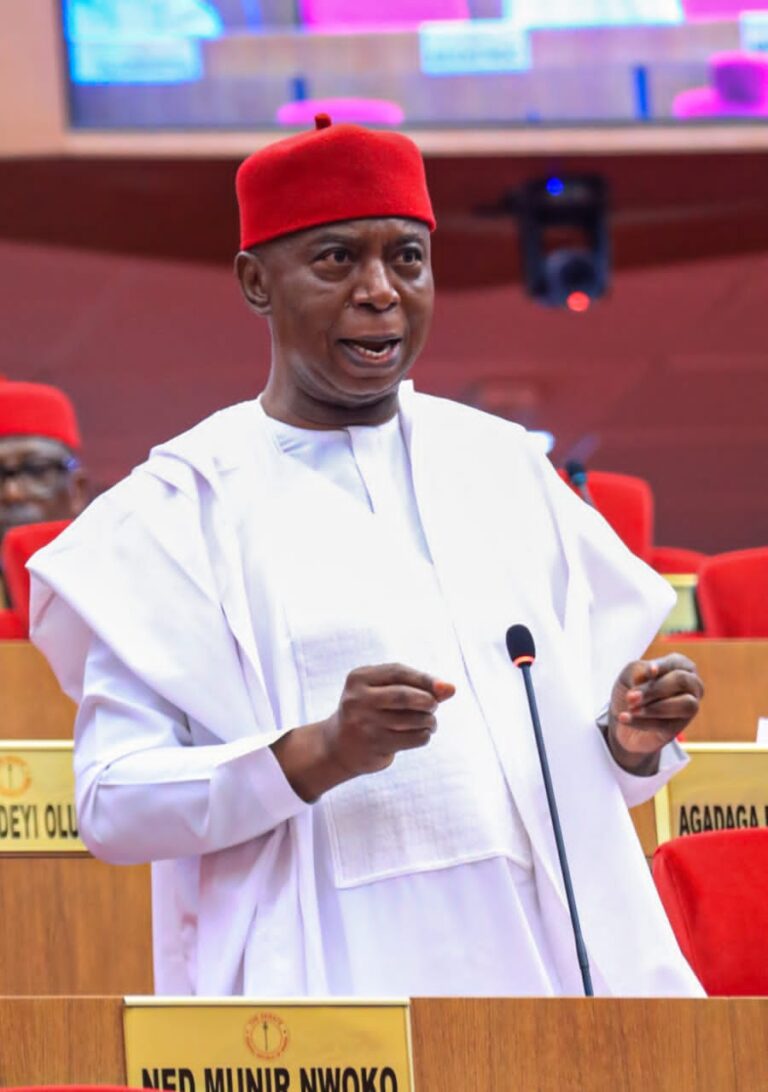
As a political analyst who has long watched Nigeria surrender its most dynamic economic frontier to foreign platforms, I find myself carefully weighing the merits of Senator Prince Ned Nwoko’s bill to amend the Nigeria Data Protection Act.
The legislation, now advancing toward public hearing, is not an overreach—it is overdue justice. It simply demands that companies earning billions from Nigerian users, data, and attention must maintain a physical presence here, pay their fair share, create local jobs, and face accountability under Nigerian law.
The Unacceptable Status Quo
For too long, Big Tech has treated Nigeria as a vast, profitable extraction zone. With one of the world’s largest and most engaged user bases—millions spending hours daily on platforms like Facebook, Instagram, TikTok, X, and YouTube—these companies generate enormous revenue while contributing minimally in taxes, employment, or local infrastructure.
Senator Nwoko has rightly highlighted the staggering losses: billions in uncollected taxes annually and over $50 billion in the past decade alone.
This is not partnership; it is exploitation. Nigerians provide the content, the attention, and the data—yet the economic benefits flow outward.
The human cost is equally glaring. Unregulated spaces have become breeding grounds for vicious defamation, fake news, and character assassination for clout and clicks.
High-profile victims, including Nwoko himself amid personal controversies, illustrate how platforms profit from chaos while Nigerian victims navigate foreign legal systems or receive empty apologies.
A physical office changes this equation: faster complaint resolution, easier regulatory engagement, proper data handling, and meaningful corporate accountability.
Economic and Strategic Wins
This bill is pro-Nigerian development. Requiring local offices will:
– Generate substantial tax revenue and personal income taxes from employees.
– Create tens or hundreds of thousands of direct and indirect jobs in tech support, moderation, compliance, and related fields—opportunities our youth desperately need.
– Facilitate genuine technology transfer and skills development.
– Ensure user data is better protected and domiciled closer to home, reducing risks of foreign exploitation or destabilization.
Far from anti-business, this is pro-sovereignty and pro-fairness. Other nations with significant markets have imposed similar requirements.
Nigeria, as Africa’s largest digital player, should not settle for second-class treatment. Traditional local media houses already comply with registration, taxes, and content rules—why should foreign giants enjoy a privileged exemption?
Addressing the Critics
Opposition from groups like SERAP, who warn of censorship risks and threaten lawsuits, misses the point or prioritizes abstract concerns over concrete national interest.
The bill explicitly targets corporate presence and compliance, not content opinions. Safeguards can—and should—be strengthened during the public hearing to prevent abuse, but the core principle stands: those who profit here must answer here.
Fears of a “backdoor shutdown” overlook that platforms already face global compliance obligations elsewhere without collapsing. Nigeria deserves the same respect.
Critics often sound more concerned with protecting Silicon Valley convenience than empowering Nigerian regulators, workers, or citizens. True free speech thrives in accountable environments, not lawless ones where defamation runs rampant and platforms evade responsibility.
A Bold Step Forward
Senator Nwoko’s legislation aligns with broader nation-building: economic repatriation, youth empowerment, institutional strength, and digital maturity.
As the public hearing approaches tomorrow , Nigerians—especially youths, content creators, and professionals—should rally behind it. Support the bill not as an attack on innovation, but as a declaration that Nigeria is a serious market deserving serious partners.
The era of digital colonialism must end. Senator Nwoko’s bill offers a clear, practical path to equity. Parliament should pass it with robust safeguards, and the executive should sign it into law.
Our digital future—and the billions it represents—belongs to Nigerians, not distant boardrooms. It is time we acted like it.
About the Author