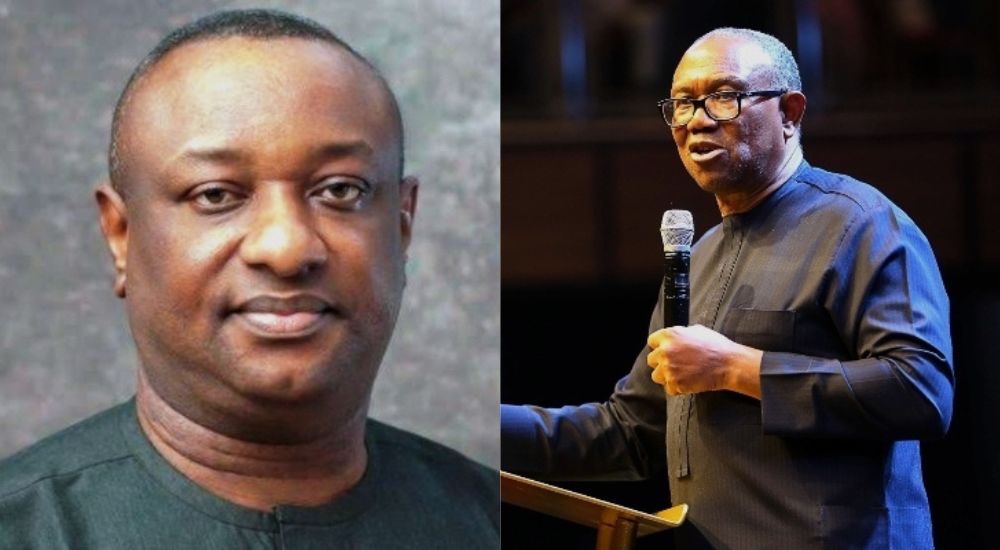
Setting the Record Straight on Selective Outrage
Minister Keyamo’s release of CCTV footage, ultimatum for a public apology, and ₦25,000 fine demand paint a picture of equal justice. Yet the details reveal a different story: a government minister weaponizing a minor parking issue against Nigeria’s leading opposition voice while ignoring far graver disruptions by allies.
Key points from the clarification you referenced dismantle the claims:
1. Wrong Incident, Wrong Assumptions: Obi described being present during an incident (“I was there…”).
Keyamo’s footage shows a drop-off where Obi was not present. This mismatch alone undermines the minister’s “gotcha” moment. If multiple vehicles linked to Obi face clamping under “questionable circumstances,” it points to a pattern of harassment, not isolated enforcement.
2. The 30-Minute Myth vs. Reality: The full sequence in Keyamo’s own footage—from arrival to clamping—lasted about **five minutes**, per eyewitness accounts aligned with the rebuttal.
Global airport standards often allow 10-minute drop-offs. Inflating this to 30 minutes smells like embellishment to justify outrage. Half-truths erode public trust faster than outright lies.
3. Selective Enforcement Exposed: Other vehicles lingered nearby, some longer, without action. Contrast this with routine impunity for ruling-party figures: large convoys blocking routes, or high-profile incidents like Senator Adams Oshiomhole’s disruption and KWAM 1’s alleged attempt to block a flight. No CCTV releases, no ultimatums, no public shaming there. Why does the “CCTV system” activate with laser focus only for Obi?
4. Security and Privacy Breach: Releasing personal movement footage of a major opposition figure on a minister’s social media isn’t governance—it’s intimidation.
Obi travels modestly without full VVIP police details (no dedicated police driver, despite entitlement as a leading opposition presidential candidate). Broadcasting his patterns heightens real security risks in a volatile environment. Would Keyamo do the same for ruling-party equivalents flying on taxpayer-funded aircraft? Democratic norms demand consistent protocols, not targeted exposure.
Broader Context: Persecution or Accountability?
Nigeria’s airports suffer chronic issues—delays, poor infrastructure, touting—not rogue opposition drop-offs. Clamping a vehicle for a brief stop while elites flout rules daily suggests political signaling ahead of 2027, not aviation safety.
Obi’s frequent travel (dozens of airports weekly) and history of highlighting public service failures make him a target. His calm, evidence-based style frustrates those reliant on spectacle.
Keyamo, as Minister, should prioritize systemic fixes over personal score-settling. Releasing selective footage while downplaying allies’ infractions invites accusations of abuse of office. True leadership applies rules evenly: fine the powerful convoy blockers and flight interferers with the same zeal.
This episode underscores a deeper rot—politicization of state institutions against dissent. Nigerians see through it. Obi’s modest travel without fanfare highlights the contrast: one side demands accountability from all; the other demands apologies for minor infractions while shielding its own. The public will judge whose narrative holds.
The minister’s energy would serve Nigeria better fixing airports than chasing opposition vehicles.
Pamela O.
Political Analyst and Columnist.
About the Author