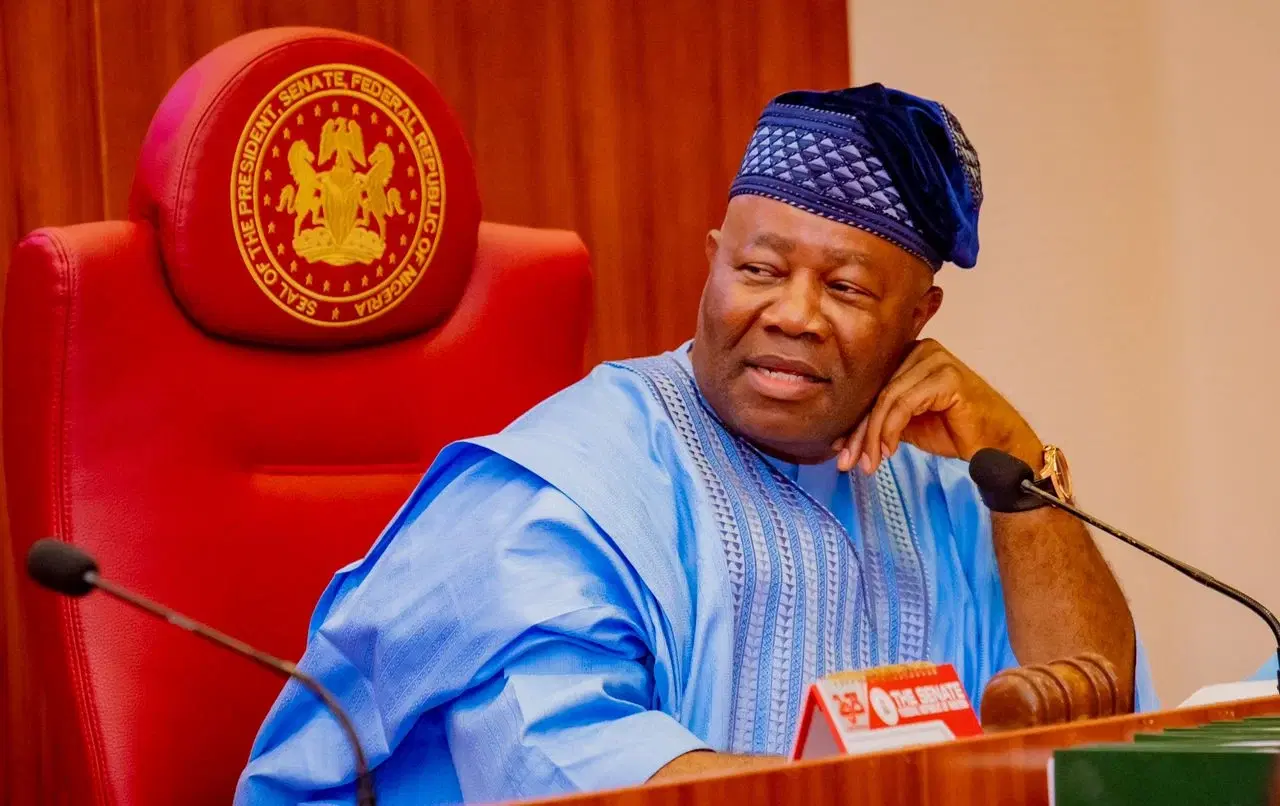
As a political analyst, the 10th Senate under Senate President Godswill Akpabio faces persistent criticism for perceived institutional weaknesses, executive alignment, and selective oversight that undermine public trust in Nigeria’s legislature.
While every parliament has defenders who cite legislative outputs or procedural constraints, recurring patterns of controversy fuel narratives of a body more focused on harmony with the executive than rigorous checks and balances.
The “Fake Agency” Probe Rejection
A recent flashpoint is the Senate’s repeated rejection of motions to independently investigate the so-called “fake agency”scandal involving the Presidential Economic Advisory Council/Presidential Foreign Investment Promotion Council (PEAC/PFIPC) and figures like Prince Adeniyi Adeyemi.
Reports allege significant budgetary allocations (around ₦1.3 billion or more in related claims) for an entity the Presidency itself labeled as unauthorized or fake, with questions about how it secured recognition, funding, or contracts across government institutions.
Senator Kawu and others pushed for a Senate probe, but Akpabio ruled it out, citing the matter being before the courts and President Tinubu’s directive for the ICPC to investigate within 30 days.
Critics argue this sets a troubling precedent: deferring to executive agencies or courts while avoiding legislative scrutiny on potential budget padding or institutional deception.
If multiple arms of government interacted with a “fake” entity involving substantial public funds, an independent parliamentary review could clarify accountability rather than risk perceptions of shielding insiders.
This fits broader critiques of the Akpabio-led Senate as overly deferential (“rubber stamp”) on sensitive executive-related matters, despite Akpabio’s public rebuttals urging critics to study legislative rules and highlighting national development support.
Oyo State Abductions and the Senate’s Response
The abduction of dozens of schoolchildren and teachers in Oyo State’s Oriire LGA on May 15, 2026 (around 49 victims initially, with one teacher killed), their prolonged 56-day captivity, and eventual rescue have amplified security and transparency concerns.
Governor Seyi Makinde publicly called for UN and international human rights bodies to investigate the “grave and unusual” circumstances of the abduction and resolution, arguing Nigerians deserve full truth beyond domestic institutions.
This demand reflects frustration with opaque security operations, ransom rumors (reportedly paid by the state government), and questions about intelligence failures or possible collusion in a region plagued by banditry.
Makinde’s move underscores distrust in federal handling and pushes for external accountability.
In response, the Akpabio Senate approved a ₦50 million donation to families of five Nigerians who died during the rescue operation.
While humanitarian gestures are commendable, they stand in contrast to the absence of a robust Senate-led inquiry into systemic kidnapping failures, intelligence lapses, or patterns across states.
Critics highlight the selectivity: swift financial gestures for some victims’ families, but hesitation on deeper probes that might expose governance shortcomings.
The disparity—intense focus on donations versus reluctance for broad investigations—fuels skepticism. Why not a comprehensive hearing on rural insecurity, school vulnerabilities, and rescue protocols affecting many more families beyond this incident?
Broader “Bones in the Shelves” and Credibility Issues
The Akpabio Senate has accumulated other controversies: allegations of lavish “top-ups” to senators’ accounts, clashes with members like Senator Ndume, handling of sexual harassment claims, hurried bills (e.g., national anthem), and perceived executive loyalty over constituent hardships amid economic pressures and insecurity.
Akpabio himself carries baggage from past EFCC scrutiny during his Akwa Ibom governorship. Leadership style draws so much widespread negative knocks for stifling dissent.
Nigeria’s legislature should prioritize oversight, especially on security and public funds. Blocking probes on “fake” entities or major security failures, while offering targeted aid, risks reinforcing narratives of elite self-protection. Public cynicism grows when transparency seems conditional.
That said, procedural rules (sub judice, executive referrals) exist for reasons, and not every motion merits a full Senate probe. The test is consistency and outcomes: Does the institution deliver accountability that deters future scandals and improves security?
The “hidden bones” may surface through persistent journalism, opposition pressure, civil society, or electoral consequences.
Nigerians expect a Senate that vigorously defends public interest, not one perceived as reactive or protective.
Until oversight matches rhetoric, trust deficits will persist—exacerbating the very instability (insecurity, graft perceptions) that hampers national progress. True legislative strength lies in uncomfortable questions, not convenient deferrals.
Pamela O.
Political Analyst.
About the Author