
As a columnist, one grows accustomed to the Nigerian Supreme Court’s heavy docket, procedural complexities, and the inevitable criticism that accompanies politically charged appeals.
Yet the current furore over the delayed judgment in the African Democratic Congress (ADC) leadership dispute — appeal SC/CV/180/2026 — strikes at something deeper than routine frustration.
Nigerians are openly accusing the apex court of “sitting on the judgment,” deliberately allowing the electoral clock to run down and hobble an emerging opposition platform ahead of 2027.
Whether this perception is fair or not, the optics are damaging, and they invite uncomfortable questions about institutional independence.
The facts are straightforward but urgent. The Supreme Court granted an accelerated hearing in the ADC matter, compressing filing timelines to 24 hours in some instances and hearing arguments on April 22, 2026, before a five-member panel led by Justice Mohammed Garba (Lawal).
Judgment was reserved, with a date to be communicated. Six days later, as of late April 2026, no date has been fixed.
Meanwhile, the INEC timetable for party primaries and internal dispute resolution looms: the window opened shortly after the hearing, with a critical deadline around May 30.
The David Mark-led faction of the ADC has now written to the Chief Justice of Nigeria, warning that further delay risks irreversible exclusion from the 2027 ballot, effectively disenfranchising millions who see the party as a vehicle for a broader opposition coalition.
Public reaction has been incendiary. On social media and in commentary, the refrain is blunt: the court rushed the hearing only to stall on delivery, mirroring bureaucratic sabotage by “sitting on files.”
Opposition figures, including those at the recent Ibadan summit involving Atiku Abubakar, Peter Obi, Rabiu Kwankwaso, and Rotimi Amaechi, frame this as part of a wider assault on democratic institutions.
Governor Seyi Makinde and former Senate President David Mark have voiced concerns about compromised independence.
The accusation is not merely delay — it is that inaction itself serves as a partisan tool, fragmenting the opposition without the court needing to deliver a substantive ruling against the ADC. Justice delayed, in this context, becomes democracy denied.
The Uzodimma Shadow and Questions of Pattern
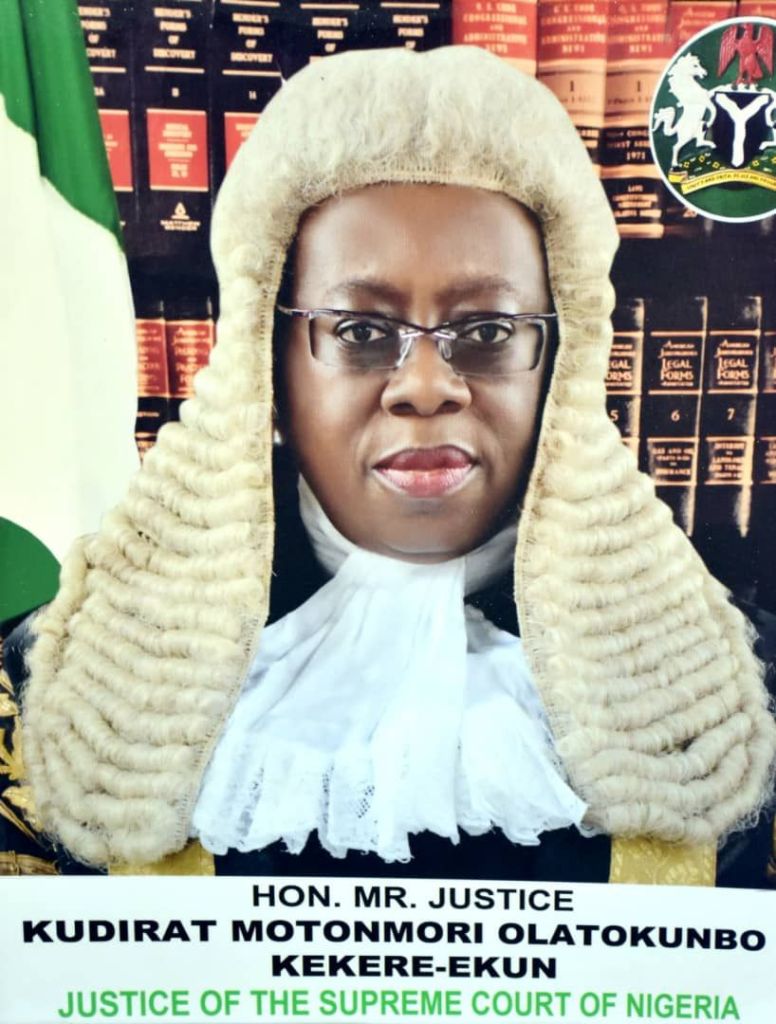
The most incendiary element of the public criticism involves the Chief Justice of Nigeria’s association with the 2020 Supreme Court judgment that installed Hope Uzodimma as Governor of Imo State.
That decision — often derided as the “miracle judgment” — overturned lower court rulings that had affirmed Emeka Ihedioha of the PDP.
The apex court added purportedly excluded votes, handing victory to Uzodimma of the APC in circumstances many Nigerians still view as judicial overreach or electoral engineering.
Critics at the time, and since, pointed to the mathematical and procedural oddities; the ruling remains a lightning rod for accusations that the court can, when it chooses, bend technicalities to produce politically convenient outcomes.
The parallel being drawn today is not that the ADC judgment will necessarily mirror Uzodimma in substance, but in perceived timing and effect.
In 2020, the court acted decisively to alter the status quo in favour of the ruling party.
In 2026, the complaint is that decisive action is being withheld, achieving a similar outcome by default: weakening a platform positioned as a unifying vehicle for anti-APC forces.
When the same institution (or justices linked to controversial precedents) presides over high-stakes political matters, public trust frays.
The CJN, as head of the judiciary, bears heightened responsibility for safeguarding perception as well as process.
This feeds a broader narrative of state capture of the judiciary — not crude bribery in every case, but a subtler erosion where institutional incentives, personal networks, or fear of executive backlash align judicial outcomes (or non-outcomes) with the interests of the ruling dispensation.
Nigerian history offers precedents: election petition seasons routinely produce cynicism, with “technical justice” trumping substantive will of the people.
When opposition parties face internal crises that land before the courts, the suspicion arises that resolution is calibrated to electoral disadvantage.
Judicial Independence Requires More Than Procedure
To be clear, courts are not political accelerators. Reserved judgments can legitimately take time for thorough reasoning, especially on complex questions of party jurisdiction, internal democracy, and the limits of judicial intervention in political party affairs.
The Supreme Court has a crushing workload, and not every accelerated hearing demands delivery within days. Precedents exist for timely rulings in election-related matters when urgency is demonstrated.
The ADC’s letter to the CJN acknowledges the court’s heavy burden while pleading the peculiar statutory deadlines under the Electoral Act.
Yet perception matters profoundly in a democracy already scarred by eroded trust. Granting accelerated hearing signals recognition of urgency; failing to communicate even a tentative delivery date shortly thereafter fuels the “sitting on the judgment” charge.
Transparency — fixing a clear date for delivery, even if weeks away — would go far to rebut sabotage claims. Silence, by contrast, invites the worst interpretations, particularly when the ruling party stands to benefit from a fractured, deadline-missing opposition.
The judiciary’s legitimacy rests on consistent application of rules, impartiality in politically sensitive cases, and insulation from executive or partisan influence.
When Nigerians perceive a pattern — swift action when it suits one side, strategic delay when it burdens the other — they reasonably question whether the temple of justice has become an annex of state power.
The Uzodimma judgment lingers precisely because it exemplified, for many, the triumph of technicality over electoral reality. Repeating similar controversies, or even the appearance of them through inaction, deepens the rot.
A Call for Institutional Self-Reflection
The Supreme Court must rise above these accusations. Delivering judgment expeditiously in the ADC (and related PDP) matters would demonstrate that the court respects both its own accelerated processes and the democratic timetable.
More broadly, the judiciary needs to confront the crisis of public confidence head-on: clearer timelines for reserved judgments in time-bound political cases, stricter internal accountability for delays, and a visible commitment to reasoning that prioritises substance and democratic health over clever proceduralism.
Nigerians are not asking the court to pick sides in 2027. They are demanding that it not tilt the pitch through omission.
“They are sitting on the judgment” is a dangerous slogan because it implies the scales are already weighted.
The CJN and the apex court have an opportunity — and a duty — to prove otherwise. Justice must not only be done; in matters this consequential for the republic’s future, it must be seen to be done promptly.
The alternative is a judiciary whose every ruling, timely or delayed, carries the taint of capture. Nigeria’s democracy, already fragile, cannot afford that verdict.
By Pamela O.political columnist and conmentator.
About the Author


