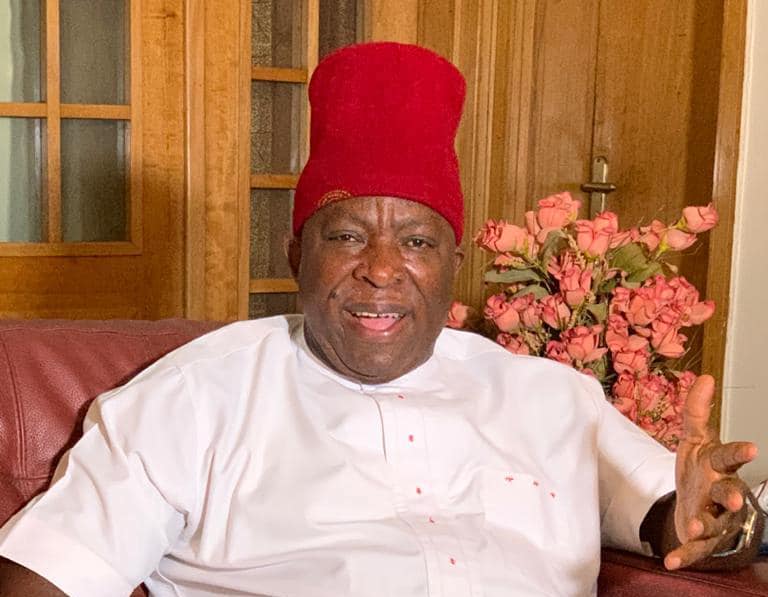
When Senator Victor Umeh rose on the floor of the Senate to query the capital provisions for River Basin Development Authorities in the 2026 budget, he was not engaging in rhetorical flourish.
He was placing hard figures on the record: the Anambra-Imo River Basin Development Authority—the sole authority serving the entire South-East—received ₦4 billion, while counterpart agencies elsewhere were allocated sums ranging from ₦25 billion to ₦67 billion.
The breakdown circulating from the budget documents is stark. Cross River Basin Authority was given ₦3 billion, Niger Delta ₦4 billion, Lower Niger ₦5 billion, and Anambra-Imo ₦4 billion. By contrast, Benin-Owena received ₦45 billion, Chad Basin ₦33 billion, Hadejia ₦67 billion, Ogun-Osun ₦39 billion, Sokoto-Rima ₦52 billion, Upper Benue ₦32 billion, and Upper Niger ₦25 billion.
These are not abstract percentages; they are line-item capital provisions for agencies with identical statutory mandates—irrigation, water resources, and agricultural support.
This disparity is not a one-off. In the 2025 budget, under the Renewed Hope Infrastructure Development Fund, ₦380 billion was earmarked for irrigation projects to be implemented through the River Basin Authorities.
Anambra-Imo—the only one covering the South-East—was allocated zero.
Other authorities received between ₦24 billion and ₦66.9 billion.
South-East senators moved a motion highlighting the exclusion; it was debated and then withdrawn after the Senate leadership argued that affected zones could raise their concerns “in due time.”
The pattern continued into the 2026 estimates that Umeh is now challenging.
These figures sit within a broader structural reality that Umeh has documented for years.
The South-East remains the only geopolitical zone with five states and 95 local government areas. Federal resource distribution, civil service recruitment, ministerial appointments, and even party delegate strength are tied to these numbers.
The zone therefore begins every national allocation exercise from a smaller baseline than the North-West (with far more LGAs) or other zones.
When discretionary capital spending then compounds the imbalance—as the River Basin figures illustrate—the outcome is predictable.
Umeh’s warning that “the consequences of Igbo marginalisation will be huge” is not new. He has repeatedly linked such budgetary patterns to the grievances that sustained the IPOB agitation: the exclusion of the Eastern rail corridor from successive budgets while other corridors advanced, limited federal presence in strategic infrastructure, and the sense that post-civil-war promises of rehabilitation remain unfulfilled.
The South-East Development Commission, established under the current administration, has received substantial statutory transfers, yet the continued under-provisioning of parallel federal agencies shows that dedicated vehicles alone do not automatically correct selective capital allocation.
A political analyst’s task is not to romanticise every claim of marginalisation. Some differences in agency funding can be justified by project readiness, land area, or ecological need. What is harder to justify is the consistent placement of the South-East’s primary water-resources authority at the bottom of the table, year after year, including outright exclusion from a multi-hundred-billion-naira irrigation envelope.
When four of twelve River Basin Authorities are singled out for single-digit or zero capital provisions while others receive tens of billions, the burden of explanation shifts to those who prepare and defend the budget.
Umeh is performing the basic function of a legislator from the affected zone: placing the figures before the chamber and refusing to rubber-stamp them.
Whether the Senate ultimately adjusts the allocations will test whether the principle of equitable distribution that the Constitution enjoins is operational or merely declarative.
The numbers themselves, however, require no further embellishment. They are already on the public record.
-Pamela O.
Daily Buzzwire.
About the Author