As a political analyst and socio-political commentator, I must address the misguided narrative suggesting that the Anambra South senatorial seat is somehow “vacant” or automatically open for a fresh round of aspirants based on zoning or “turn-by-turn” logic. It is not.
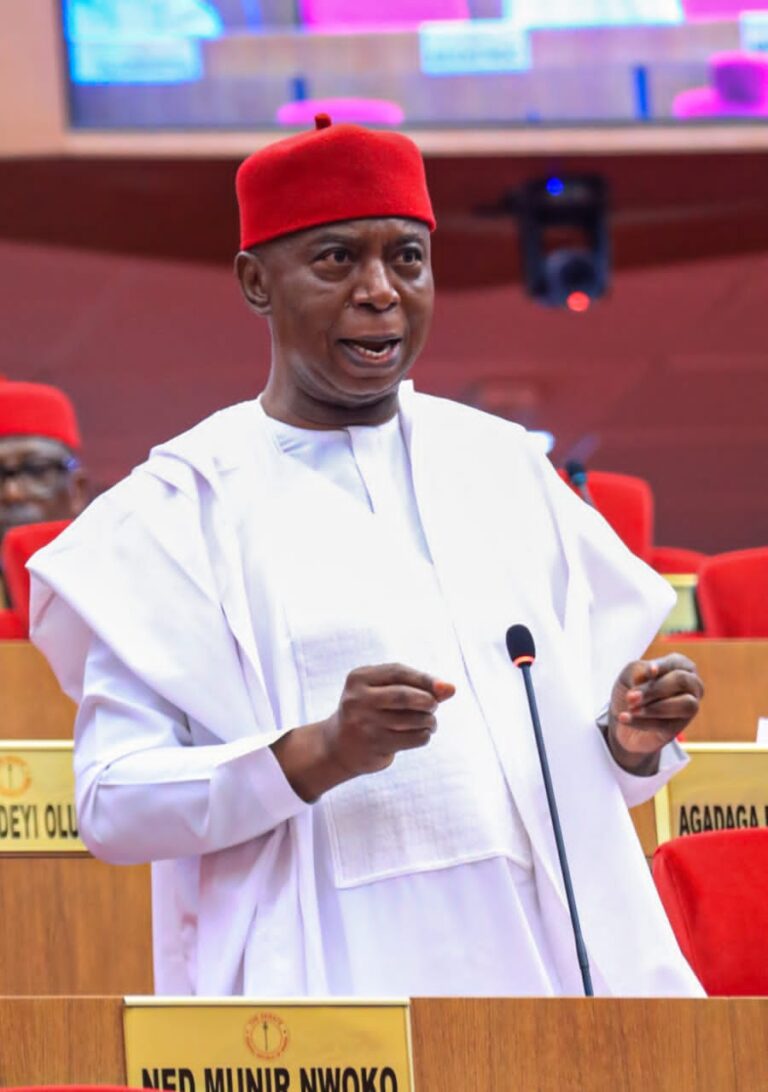
The seat is occupied by Senator Emmanuel Chibuzor Nwachukwu (Chief Emma Nwachukwu, Ọnọdụgo Ukpor) of the All Progressives Grand Alliance (APGA), who is actively representing the district and delivering tangible value.
A Clear Mandate, Not a Vacuum
Senator Nwachukwu assumed office following the August 16, 2025, by-election triggered by the passing of the previous occupant. He secured a decisive victory with 90,408 votes against his closest rival’s 19,812 votes — a margin exceeding 70,000 votes. He swept all seven local government areas and nearly every polling unit.
“This was not a narrow or contested win; it was a strong endorsement from the people of Anambra South”.
In October 2025, he was duly sworn into the Nigerian Senate.
By May 2026, he consolidated that support by winning the APGA senatorial primary in a landslide (27,389 votes). These are not the numbers of a weak or replaceable incumbent. They reflect a district that has already assessed and chosen its representative.
Performance Over Rotation: Why “Turn-by-Turn” Does Not Apply Here
In some Nigerian political contexts, especially in the South East, there is an understandable cultural and political preference for equitable rotation of offices among zones, senatorial districts, or local government areas. This “turn-by-turn” approach has served equity purposes in gubernatorial contests and other positions.
However, Senate seats are fundamentally different. They are not ceremonial or symbolic offices designed for periodic sharing. They are legislative positions where:
– Institutional memory
– Committee influence
– Relationships across the federation
– Ability to attract federal resources
…all matter significantly.
Mature democracies like the United States provide the clearest model. American senators are routinely re-elected for multiple terms — sometimes decades — when voters judge them effective.
There is no constitutional or cultural rule forcing “turn-by-turn” replacement of a performing senator simply because their time “is up” on some informal calendar. Voters retain or replace based on results, not rotation.
If the people of a district or state believe their senator is delivering, they keep them. That is democracy in action.
Anambra South should apply the same standard. The district does not owe anyone a “turn.” It owes itself the best possible representation.
Senator Nwachukwu Is Delivering What the District Needs
Senator Nwachukwu brings a rare combination of **grassroots credibility** and professional competence. Before entering the Senate, he served as President-General of the Ukpor Improvement Union, earning the traditional title Ọnọdụgo Ukpor for distinguished community service. He is an accountant and businessman with deep roots across the senatorial district.
Since assuming office, he has:
– Moved early motions on critical federal roads affecting Anambra South.
– Engaged federal agencies (TCN and the Ministry of Power) to push for improved electricity supply, particularly in the industrial hub of Nnewi and surrounding areas.
– Unveiled an agenda focused on youth empowerment and result-oriented representation.
– Maintained accessibility as a grassroots servant-leader rather than an Abuja-centric politician.
These are not vague promises; they are concrete actions aligned with the district’s most pressing needs — infrastructure, power, and economic empowerment.
When a representative is already addressing core issues within his first year, the burden shifts to any challenger to prove they can do better, not merely different.
You Do Not Change What Is Working
The fundamental principle is simple: “If it is not broken, do not fix it”. The people of Anambra South have a senator who:
– Won a by-election convincingly.
– Won his party primary overwhelmingly.
– Is focused on deliverables rather than politicking.
– Understands the terrain because he rose through community leadership.
In such circumstances, agitation for replacement often stems more from personal ambition or outdated zoning arithmetic than from any demonstrated failure of the incumbent. The district is not “ready to send anyone else.” The recent electoral outcomes prove the opposite.
Democracy Allows Competition — But the People Decide
Of course, this is a democracy. Anyone who meets the constitutional requirements can contest the 2027 primaries and general election. That is their right.
However, the people of Anambra South also have the right — and the demonstrated inclination — to retain a performing senator.
Political analysts who have watched Nigerian elections know that incumbents with strong local support and visible activity are extremely difficult to dislodge. Anambra South has already shown it will not “budge” when it believes the right person is in the seat.
Nothing More One Can Go There to Do Than What Senator Nwachukwu Is Already Doing
Senator Nwachukwu is laying the foundation for sustained impact: legislative advocacy, federal linkages, and constituency engagement.
Continuity allows him to build on this momentum — attract more projects, gain seniority in the Senate, and deepen relationships that benefit Anambra South.
Replacing him now would reset the clock, sacrifice institutional knowledge, and risk losing the momentum he has already generated.
“The Anambra South senatorial seat is not vacan”t. It is occupied by a viable, elected, and performing senator who is giving the district what it needs. The people have spoken through their votes, and the logic of effective representation — not mechanical rotation — supports continuity.
“Continue , Senator Emmanuel Nwachukwu”. The district appears ready to let you continue the work. Ready to affirm you again, come 2027.
–Pamela O.
Political analyst and Socio-political commentator
About the Author