
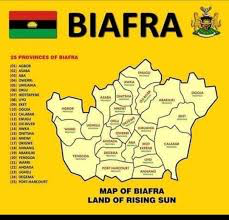
The Igbo people, one of Nigeria’s major ethnic groups primarily residing in the Southeast region, have long alleged systemic marginalization in various spheres of national life.
This stems largely from the aftermath of the Nigerian Civil War (1967-1970), where the Igbo-led Biafran secession attempt led to policies and practices perceived as punitive. These include political exclusion, neglect in infrastructural development, and biases in civil service promotions.
While some government officials, like Minister David Umahi in 2025, have claimed that such marginalization has ended under President Bola Tinubu’s administration while numerous academic studies and reports argue it persists, fueling groups like the Indigenous People of Biafra (IPOB) and ongoing ethnic tensions
This marginalization is often framed as a deliberate exclusion from equitable resource allocation and power-sharing, exacerbating socioeconomic disparities in the Southeast.
Political Marginalization
Politically, the Igbo have faced significant underrepresentation in Nigeria’s federal structure since the end of the civil war. No Igbo person has held the presidency or vice-presidency since the return to democracy in 1999, despite the group’s substantial population and economic contributions
The zoning arrangement in Nigerian politics, intended to rotate power among regions, has often sidelined the Southeast, with power predominantly alternating between the North (Hausa/Fulani-dominated) and Southwest (Yoruba-dominated) regions.
Studies highlight that Igbos are underrepresented in key federal positions, such as ministerial roles, security chiefs, and heads of major agencies.
For instance, since independence, the Igbo community has felt marginalized by structures favoring other ethnic groups, leading to perceptions of second-class citizenship
This exclusion is rooted in post-war policies, such as the unfulfilled “Reconstruction, Rehabilitation, and Reconciliation” (3Rs) promises by General Yakubu Gowon, which failed to reintegrate the Igbo fully into national politics
The Federal Character Principle, enshrined in the constitution to promote inclusivity, has instead been criticized for not ensuring equitable Igbo representation, often resulting in token appointments
In the Fourth Republic, ethnic marginalization has manifested in the underrepresentation of Igbos in the National Assembly and executive arms, perpetuating a cycle of disenfranchisement that some scholars link to the rise of separatist movements like IPOB
Marginalization in Infrastructural Development
Infrastructural neglect in the Southeast is one of the most visible forms of alleged marginalization, with the region receiving disproportionately low federal investments compared to other zones.
Post-civil war, the region was devastated, and policies like the £20 flat refund for pre-war bank deposits crippled economic recovery, leaving infrastructure in ruins without adequate reconstruction
Today, the Southeast lags in road networks, healthcare facilities, educational institutions, and industrial development.
For example, major federal projects like railway lines constructed in the Fourth Republic have bypassed the Southeast, while other regions benefit from extensive networks.
Airports in the region, despite high traffic from Igbo travelers, lack quality upgrades, and there is limited access to essential utilities like electricity and water.
Economic policies, such as the indigenization decree in the 1970s, further disadvantaged Igbos by excluding them from business opportunities, perpetuating regional disparities.
Critics argue this neglect is politically motivated, as the Southeast is seen as opposition territory, leading to underfunding in budgets and stalled projects.
This has resulted in socioeconomic challenges, including high unemployment and migration, reinforcing calls for restructuring or secession.
Marginalization in Civil Services Promotions
In the civil service, Igbos face barriers to promotions and equitable representation, often attributed to ethnic biases and the uneven application of the Federal Character Principle.!
Post-independence, the civil service was dominated by educated Southerners, including Igbos, but post-war quotas favored Northern regions, limiting Igbo advancement
Today, Igbos are underrepresented in top positions in ministries, departments, and agencies (MDAs), with promotions allegedly stalled due to ethnic considerations
A recent example is the reported disquiet in the Nigeria Security and Civil Defence Corps (NSCDC) in February 2026, where retiring Commandant-General Ahmed Audi allegedly refused to hand over to the most senior Deputy, Nnamdi Nwinyi (an Igbo), citing ethnic reasons.
This incident highlights broader claims of bias in successions and promotions within security and civil services, where Igbos rarely head agencies like the police or judiciary.
Discrimination extends to “non-indigenes” in state services, where Igbos in other regions face hurdles in advancement due to indigeneity policies
This has led to grievances over access to government services and rights, with calls for reforms to address these imbalances
Conclusion
The marginalization of the Igbo tribe in politics, infrastructure, and civil services is a complex issue intertwined with Nigeria’s ethnic politics and historical legacies.
While some progress has been claimed, evidence from studies suggests it remains a reality, contributing to national disunity and the resurgence of Igbo nationalism
Addressing it requires genuine implementation of inclusive policies, equitable resource distribution, and dialogue to foster national integration. Without this, tensions may persist, as seen in ongoing advocacy by groups like Ohanaeze Ndigbo.
Pamela O. political columnist and commentator
About the Author


