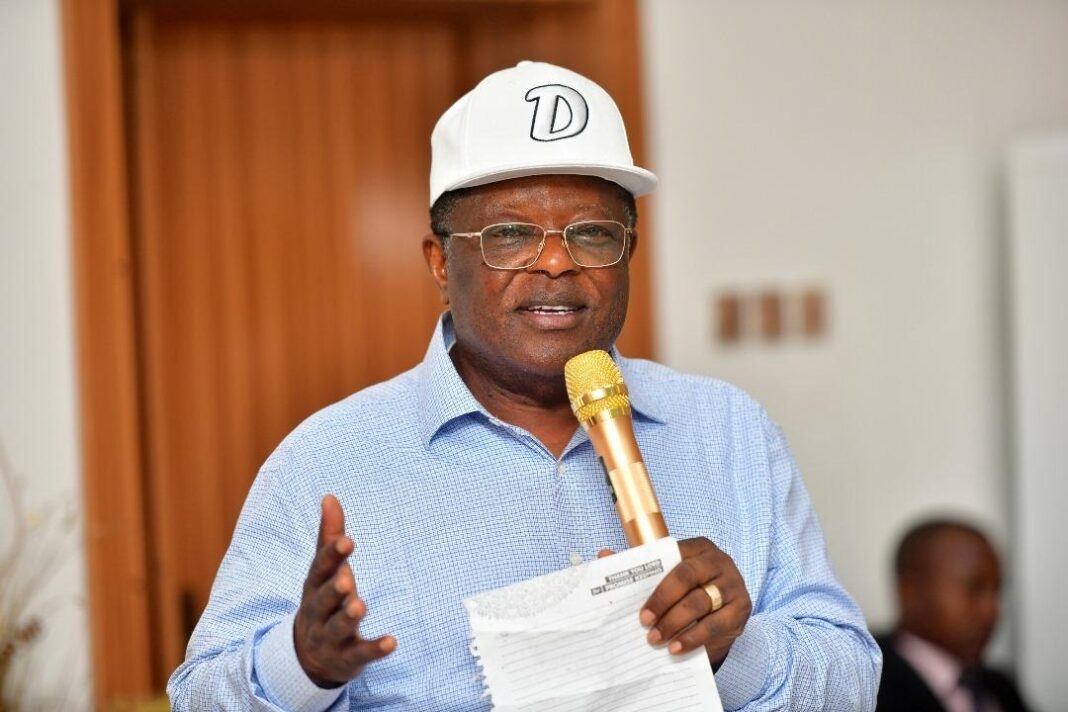
As a political analyst, the core public-interest questions for Minister of Works David Umahi centre on transparency around the Lagos-Calabar Coastal Highway (originally framed as a ~700–750 km multi-lane concrete coastal superhighway).
The project, awarded primarily to Hitech Construction under an EPC+F (Engineering, Procurement, Construction + Financing) model, has seen documented realignments due to terrain and other factors.
Umahi has repeatedly defended the changes as engineering necessities while insisting the core 750 km project remains intact and ongoing.
Critics (including Atiku Abubakar and others) have demanded full disclosure of original contracts, revised designs, payments, and financial implications of variations.
Below are the key questions Nigerians need answered, followed by answers drawn from Umahi’s public statements, ministry updates, and contemporaneous reporting (as of mid-October 2026).
Gaps in full public disclosure remain a central issue.
1. What were the original plans, alignment, and overall budgeted/estimated cost?
The original concept was a coastal alignment running close to the shoreline (roughly 700–750 km dualized highway with multiple lanes, concrete pavement, shore protection, drainage, and related features) linking Lagos through Ogun, Ondo, Delta, Bayelsa, Rivers, Akwa Ibom, and Cross River.
It was positioned as a flagship Tinubu administration legacy project, with work starting in March 2024 (Lagos end) and proceeding from both ends in phases.
Procurement used a restrictive/selective approach justified by Hitech’s prior coastal experience.
Umahi previously stated a figure of about ₦4 billion per kilometre (adjusted for the wider design versus simpler comparisons), implying roughly ₦2.8 trillion for 700 km under certain assumptions.
Other figures around ₦15 trillion have also been referenced in discussions of the project’s scale (sometimes including related elements).
There was never a single, publicly fixed lump-sum original contract for the entire route; it has been procured in sections. Section 1 (47.47 km in Lagos) was set at ₦1.067–1.068 trillion.
2. Why and how have the original plans/alignment changed?
Umahi has attributed changes primarily to engineering realities uncovered during investigations and construction: deep pits (>100 m in places), extensive peat/weak soils (40–50 m deep in some sections), absence of suitable sharp sand even at depths up to 300 m, refuse dumps (including a decades-old dump >10 m deep spanning kilometres in Lagos that required ₦15 billion in excavation/design work), properties and infrastructure conflicts (e.g., Landmark Beach area, Dangote Refinery logistics), water crossings, and flooding risks linked to climate effects.
Specific examples include detours/redesigns on Sections 4A and 4B (~67 km across parts of Ogun and Ondo).
More recently, President Tinubu directed that from the Ondo end into Edo the route should use the existing East-West Road rather than a fully new coastal alignment (“Divert, do not do any new alignments.
Pass the coastal highway through the existing East-West road”), with plans to raise vulnerable sections by about 2 metres above current/expected flood levels. Umahi has described the 400 km East-West integration (from Edo toward Akwa Ibom/Cross River) as complementary for connectivity, flood protection, and regional development—not a replacement or abandonment of the coastal highway.
He has stated the 750 km coastal project “is intact and cannot be changed” because it is already designed and ongoing, with surveys continuing on remaining stretches (Edo, Delta, Bayelsa, Rivers).
Local leaders (e.g., Ilaje/Itsekiri) have opposed some revisions, preferring the original coastal path.
Design variations have been flagged as potentially increasing costs in some areas.
3. What has been budgeted/contracted for awarded sections, and how much has been used/disbursed?
Awarded sections include:
– Section 1 (Lagos, 47.47 km): ₦1.067–1.068 trillion (30% of the contract sum had been disbursed in early reporting).
– Section 2 (~55 km, including complex elements near the Dangote area): ₦1.6 trillion.
– Sections 3A and 3B (Akwa Ibom/Cross River area): jointly ₦1.33 trillion.
These alone aggregate to roughly ₦4 trillion in contracted value. Progress updates (October 2026): Section 1 fully constructed and ready for commissioning; Section 2 pavement expected ready around mid-November; Sections 3A/3B over 40% complete in places; other sections underway with varying progress (some >20–40%).
Additional costs include compensation (e.g., ₦15+ billion related to Section 1 property impacts) and the ₦15 billion for waste excavation/design adjustments in Lagos.
No single, fully audited public total of all amounts disbursed to date is readily available in consolidated form; payments are progressive under the EPC+F model tied to work certificates.
Umahi has clarified per-kilometre figures in different ways: an earlier ~₦4 billion (adjusted for width/lanes/shoulders) and later ~₦7.5 billion for a standard two-lane equivalent (including fills, shore protection, solar lighting, trees, and other features). Raw division of the Section 1 contract produces a much higher figure (~₦22.5 billion/km), which Umahi has addressed by adjusting for the multi-lane design and scope.
4. Given the changes, how much should be returned, adjusted, or revised?
There is no official public figure for a sum that “should be returned.” Umahi frames the realignments as cost- and risk-avoiding engineering decisions that prevent far higher expenses from proceeding on unsuitable terrain. Variations are normal in large civil works when site conditions differ from initial assumptions, and contract payments should track actual work performed via certificates and approved variations.
Critics, including Atiku Abubakar, argue that when scope or route changes (removing or altering work), the original contract, bills of quantities, payment records, revised designs, and new total cost must be published so the public can see what was removed, what has already been paid, and the net financial impact. “You cannot change the work and refuse to change the bill.”
Demands also include original feasibility/environmental studies, BPP approvals, and details of any linked borrowing.
Some opposition voices have called for independent audits. Umahi has rejected claims of abandonment or impropriety and welcomed scrutiny of the engineering choices, stating there are “no regrets” for decisions such as those in Ondo.
5. What is the financing structure and current revised outlook?
Funding follows an EPC+F model: Federal Government counterpart ~30%, external lenders ~70%. Notable facilities include a $747 million syndicated loan (Deutsche Bank-led, oversubscribed) for Phase 1 Section 1 and later financing around $1.26 billion for Section 2.
Additional external borrowing has been sought or approved in the 2025–2026 plans as costs and scope evolved.
The project is expected to take years (earlier references to an eight-year horizon), with sections opening progressively.
Tolling has been discussed as a future recovery mechanism.
Bottom line for accountability: Umahi’s public position is that changes are technical, the core coastal highway continues, awarded sections are progressing, and costs reflect the challenging coastal terrain and high-specification design.
The persistent public demand—shared by opposition figures and civil society—is for full, accessible documentation of the original contract, all variations, certified payments to date, and a clear revised overall cost and scope.
Without that consolidated disclosure, precise answers on “amount used versus budgeted” and any net savings or additional outlays from realignments remain incomplete.
Nigerians are entitled to that level of detail on a multi-trillion-naira public infrastructure project Mr. Umahi.
Pamela O.
Daily BuzzWire
About the Author