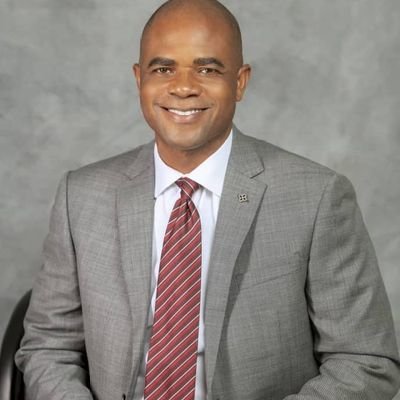
The case for continuity in Isoko North/South is not being made in slogans. It is being made in streetlights that now stand in all twenty-four wards, in classroom blocks that did not exist three years ago, and in a first-term lawmaker who has treated the Green Chamber as a place to bargain for Isoko, not merely to sit in it.
Hon. (Engr./Pst.) Jonathan Ajirioghene Ukodhiko came to the House of Representatives in June 2023 as the member for Isoko North and Isoko South Federal Constituency. An engineer and former Delta State commissioner, he arrived as a first-timer and was appointed Deputy Chairman of the House Committee on Science and Technology, with seats on Local Content, Host Communities and Water Resources.
What has followed is the kind of scorecard that makes replacement sound like an interruption rather than a plan.
On the floor, he has not been ornamental. Two motions cut to the bone of Isoko life. One urged oil and gas companies to stop flaring gas and convert it to electricity for Isoko communities and their neighbours; it was referred to the compliance committee.
The other demanded rehabilitation of failed sections of the East-West Road from Delta through Bayelsa to Rivers.
He has also sponsored bills to establish a Federal Medical Centre in Oleh, a Federal University of Agriculture in Erawha-Owhe, a College of Entrepreneurship and Skill Acquisition in Olomoro, a Federal College of Nursing and Midwifery in Owhelogbo, and a Federal College of Education (Technical) in Oleh.
A related amendment to the University Teaching Hospitals Act has passed third reading in the House and awaits Senate concurrence. These are not yet completed institutions. They are, however, the first serious federal footprints Isoko has been asked to imagine in health, agriculture and skills, and they explain why constituents talk of unfinished business rather than a clean break.
The constituency ledger is more immediate. In his first full budget year, statutory allocations were modest — about ₦200 million in capital projects, ₦113 million in zonal intervention and ₦40 million for outreach — yet lobbying lifted the envelope.
Solar-powered streetlights went into communities including Eniagbedhi, Erawha, Owodokpokpo, Ada Irri, parts of Oleh and others, with reports that every ward received at least forty-five units and that NDDC facilitation alone accounted for over 1,800 units.
Classroom blocks were delivered at Owodokpokpo Grammar School and Odueni Grammar School, Olomoro, alongside school furniture, medical equipment for primary health centres, and JAMB, WAEC and scholarship support for indigent students.
Human capital has not been an afterthought. Over 200 women received entrepreneurial training and start-up support; hundreds of youths passed through vocational and ICT programmes; more than 150 constituents were enrolled in NDE Renewed Hope training; about 250 were placed on the federal ₦50,000 conditional grant scheme; and business grants of ₦500,000, ₦200,000 and ₦100,000 reached selected traders and small owners, with beneficiaries publicly describing the process as open rather than godfathered. NEMA flood relief was also facilitated.
The 2025 cycle is the sharper argument for a second term. Projects valued at over ₦3.1 billion — some accounts put the total, including extra lobbying, above ₦4 billion — cover roads, flood and erosion control, skills centres, markets, diagnostics and renewable energy, completed, ongoing or awaiting award.
He is credited with personally attracting an additional sum of about ₦2 billion beyond statutory lines. Visible items include rehabilitation of the Otor-Owhe water reticulation system, with solar-powered pumps and new distribution lines, and the upgrade of Owhe clan electricity infrastructure from 11kVA to 33kVA. Implementation delays remain, as they do across the federation, but contractors have already closed several sites.
Constituents his records converted to supporters , including aides and community voices, frame the demand for continuity in plain terms: a performer who has spread projects by ward, who still attends weddings, funerals and traditional events, and who has said a second term would press oil firms operating on Isoko soil for jobs and contracts under local-content rules.
In a constituency that has waited long for federal institutions and steady power and water, that record is why the talk on the ground is not of a replacement. It is of finishing what has been started.
Pamela O. write for Daily Buzzwire.
About the Author