By a Political Analyst and Columnist, Pamela O.
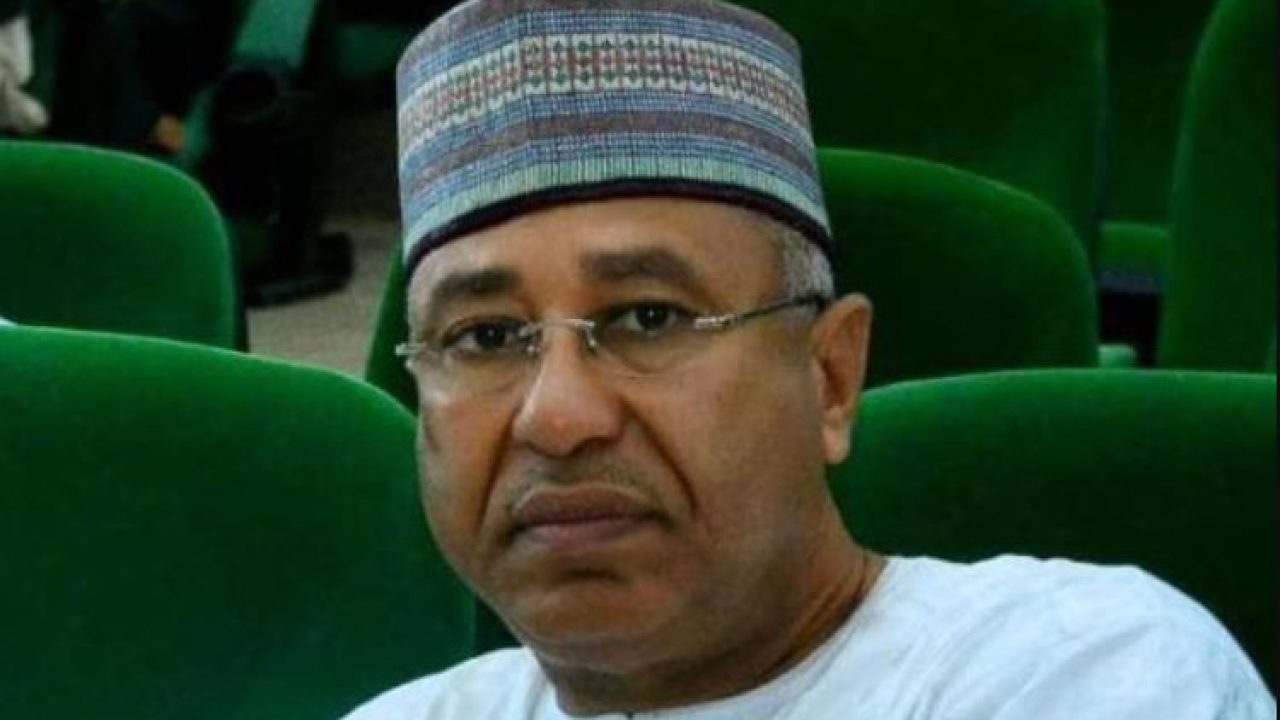
Alwan Hassan’s on-air remarks amount to a rare, unvarnished insider admission that ministerial office in Nigeria often functions as a purchased investment to be recovered through public funds—directly implicating the systemic incentives that operate under the Tinubu administration even as he tries to reframe them.
On Arise News’ ‘Prime Time’, the APC Presidential Campaign Council spokesperson stated that “a lot of ministers pay billions and billions… to get themselves appointed. The first thing they think of is how to recoup that money.”
He went further, describing ministers as “the most criminal elements in government,” noting that the biggest fraud cases after governments leave office frequently involve ministers, and questioning why budgets should even be given to them.
He explicitly framed this as a longstanding Nigerian reality—“not just APC, before APC”—while praising President Bola Tinubu’s “hands-on” control of major capital expenditure and revenue projects as the practical safeguard against ministerial looting.
He cited this centralization as having bypassed ministers for years.
What the admission actually reveals
Hassan is not a random critic; he is a party campaign spokesperson defending the administration’s record ahead of 2027.
His comments confirm the widespread (and previously only rumored or episodically alleged) practice of monetizing high office: appointees treat their positions as recoverable capital outlays rather than public trusts.
Once in place, control of budgets, contracts, and allocations becomes the recovery mechanism—through inflated contracts, kickbacks, or diverted funds. This creates an inherent conflict of interest from day one.
The generalization is both accurate as historical pattern and strategically convenient.
Similar allegations have surfaced under previous governments, including under Buhari (whom Hassan has separately claimed saw “95%” of his ministers deserve jail for unchecked access to full capital releases).
Yet the practical effect is to describe the current cabinet—appointed by Tinubu—as operating under the same compromised logic.
Who receives the “billions”? The appointing authority and the patronage networks around it are the logical recipients.
Hassan’s framing tries to isolate Tinubu as the corrective force, but it simultaneously underscores that the president nominates and retains the very people whose primary orientation he describes as criminal self-enrichment.
Implications for this government and Nigerian governance
This is not abstract. Low capital budget implementation rates, persistent project abandonment or inflation, and public cynicism about contracts are consistent with the incentive structure Hassan describes.
Tinubu’s reported preference for direct executive oversight is presented as a feature—protecting funds from looting ministers. In the short term it can produce visible projects (Hassan pointed to education infrastructure, electricity metering approvals, pensions clearances, and technology initiatives).
Structurally, however, it personalizes power, sidelines the formal ministerial and civil-service system, and treats institutions as unreliable.
A government that passes budgets it does not fully fund through the line ministries, then steps in selectively, signals deep distrust of its own appointees.
That is an indictment of the appointment process itself, not a sustainable operating model.
Hassan’s record adds context but does not erase the statement. He has made expansive claims before (including a later-retracted allegation of a $10 million bribe involving Senate leadership over a NERC nominee) and has been sharply critical of the previous APC government.
The absence of names, amounts, or documentary evidence in the Arise interview means the remarks function more as confirmation of elite consensus about how the system works than as a prosecutable disclosure.
Still, when a ruling-party spokesperson says the first thought of many ministers is recouping purchase price, the anti-corruption posture of the administration is undercut from within.
Broader political reading
Nigeria’s high cost of politics, godfatherism, and weak institutional filters have long made “pay for position, loot to recover” a rational strategy for ambitious elites across parties.
Hassan’s comments simply remove the polite fiction. For the Tinubu government specifically, they reinforce narratives of patronage continuity rather than rupture: the same monetized access that critics allege under prior administrations continues, managed through greater presidential centralization.
Opposition figures will use the clip to argue that the ruling party has admitted its own cabinet is compromised; APC defenders will stress the “systemic, pre-APC” qualifier and Tinubu’s hands-on style as evidence of relative discipline.
Institutionally, the episode highlights the limits of personality-driven fixes. Bypassing ministers may shield some funds in the short run, but it does not create transparent appointment processes, independent oversight, or credible consequences for those who treat office as an investment.
Until appointments are driven more by competence and less by financial or political contributions, and until budget execution is transparent and accountable through functioning institutions rather than presidential intervention, the cycle Hassan described will persist.
The admission is damaging precisely because it comes from inside the campaign structure: it is harder to dismiss as opposition propaganda.
It is, in effect, a candid description of how power and money still interact in the federal cabinet under the current administration
About the Author