
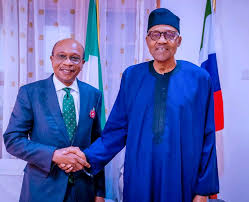
In a development that has sent shockwaves through Nigeria’s political and economic circles, the Economic and Financial Crimes Commission (EFCC) has confirmed the recovery of what it describes as its largest-ever asset seizure: a sprawling 753-unit housing estate in Abuja’s Lokogoma District.
Valued at billions of naira and spanning over 150,500 square meters on Plot 109, Cadastral Zone C09, the property—comprising duplexes and other high-end apartments—was officially forfeited to the federal government via a court order issued on December 2, 2024, by Justice Jude Onwuegbuzie of the Federal Capital Territory High Court.
By May 20, 2025, the EFCC had handed it over to the Ministry of Housing and Urban Development for assessment, completion, and eventual auction to the public, following a directive from President Bola Tinubu.
The ministry, led by Ahmed Dangiwa, has promised structural integrity tests and transparent sales to ordinary Nigerians, emphasizing affordability amid the ongoing housing crisis.
Court documents unsealed by the EFCC reveal a web of alleged financial malfeasance linking the estate directly to Godwin Emefiele, Nigeria’s former Central Bank Governor from 2014 to 2023.
Investigators traced the acquisition to illicit forex allocations and kickbacks during Emefiele’s tenure, funneled through cronies and shell companies.
Funds reportedly siphoned from the CBN’s foreign exchange windows—meant for legitimate importers but diverted for personal gain—financed the project’s development.
Emefiele, already facing multiple trials for procurement fraud, forgery (including of former President Muhammadu Buhari’s signature), and money laundering, has not publicly responded to these specific allegations, though his legal team was unreachable for comment.
This isn’t isolated; Emefiele’s broader case has exposed a pattern of abuse, including billions in unauthorized naira printing and offshore asset hoarding, painting a picture of unchecked power at the apex bank.
A Symptom of Eroded Checks and Balances?
The scale of this recovery raises profound questions about the state of auditing and oversight during Emefiele’s eight-year reign—and by extension, the Muhammadu Buhari administration (2015–2023).
As CBN Governor, Emefiele wielded immense influence over Nigeria’s monetary policy, foreign reserves, and financial regulations.
Yet, how did a project of this magnitude—equivalent to a mid-sized city suburb—evade detection for years? The CBN’s internal audit mechanisms, statutory reporting to the National Assembly, and executive oversight via the presidency appear to have faltered spectacularly.
Under Nigerian law, the CBN is subject to rigorous checks: annual audits by external firms, quarterly reports to the Fiscal Responsibility Body, and direct accountability to the President as the appointer-in-chief.
Emefiele was handpicked by Buhari in 2014 and reappointed in 2019, despite early whispers of irregularities.
Critics argue this reflects a deliberate blind spot, where loyalty trumped scrutiny. “Many things went wrong during the Buhari regime,” one commentator noted, echoing widespread sentiment that forex manipulations—estimated to have drained over $20 billion from reserves—were enabled by a cozy nexus between the CBN, presidency, and select insiders.
Key CBN staff, including deputy governors and department heads, were allegedly complicit, turning the bank into a “personal ATM” for elites.
Without robust whistleblower protections or independent probes, such schemes festered. The EFCC’s success here, under its current leadership, underscores how a proactive agency can unearth rot—but only post-tenure, highlighting the preventive failures of the era.
| Aspect | Pre-Tenure Oversight | Post-Recovery Implications |
| Auditing | CBN’s internal audits were reportedly sanitized; external reviews (e.g., by KPMG) flagged issues but lacked enforcement teeth. | Mandates for real-time forex transaction tracking and AI-driven anomaly detection could prevent repeats. |
| Checks & Balances | President’s direct oversight via Monetary Policy Committee; National Assembly’s public hearings often ceremonial. | Strengthens calls for CBN independence reforms, including term limits and impeachment thresholds for governors. |
| Key Enablers | Cronies in forex allocation units; lack of transparency in BDC dealings. | Probes into 200+ similar estates nationwide, per EFCC hints. |
This lapse isn’t just procedural—it’s a betrayal of public trust. Nigerians, grappling with naira devaluation and 30%+ inflation partly blamed on these distortions, see it as evidence of systemic capture.
Who Was Emefiele Really Serving? The Fog of Loyalty and Confusion.
At the heart of Nigerian bewilderment is a simple query: For whom was Emefiele wielding the “sword” of CBN authority? Was it the masses, whose livelihoods he vowed to safeguard, or a cabal of political godfathers and business allies? Public discourse paints him as a fall guy, “taking the sword” for higher powers while shielding deeper rot. Social media erupts with theories: Was the estate a slush fund for Buhari’s 2019 reelection?
A payoff to northern elites? Or simply Emefiele’s hubris, amassing wealth to rival state governors?
The Buhari angle stings most. As Emefiele’s patron, the ex-president appointed him amid controversies and defended him publicly even as scandals brewed.
“It’s impossible for Buhari not to be aware,” many argue, citing the CBN’s role in funding Buhari’s pet projects like the Anchor Borrowers’ Programme, riddled with ghost farmers and unrecovered loans.
Key CBN insiders—deputies like Aisha Ahmad (now facing her own EFCC probe)—were Buhari loyalists, suggesting a deliberate veil over misappropriations.
Yet, deniability persists: Buhari’s team claims ignorance, framing Emefiele as a rogue operator. This duality fuels confusion—who polices the police when the apex bank becomes a heist vehicle?
Nigerians’ reactions, from Lagos markets to Abuja salons, blend outrage and resignation.
On X (formerly Twitter), users decry the EFCC’s initial anonymity as “protecting the big fish,” with one quipping, “If it were Yahoo boys, names would be plastered everywhere
Others hail the recovery as Tinubu-era vindication, urging sales at subsidized rates to first-time buyers.
A common thread: demands for full disclosure, including beneficiary lists and timelines, to restore faith. As one post lamented, “A vibrant system can curtail the ongoing corruption”—but only if yesterday’s guardians face tomorrow’s reckoning.
In the end, this “mega recovery” isn’t just about bricks and mortar; it’s a mirror to Nigeria’s fractured governance.
While the duplexes may soon house families, the real estate at stake is public confidence—squandered under one regime, clawing back under another.
For Emefiele, once a symbol of stability, it’s a stark fall: from monetary czar to cautionary tale.
And for Buhari? A lingering shadow, reminding that awareness—or willful blindness—defines legacies.
About the Author


