Anambra South has already paid the cost of an interrupted mandate not ready to risk any for the sake of change or “my turn” mantra.
Replacing a senator who is actively converting that interruption into legislative motion, federal attention, and constituency delivery would be a political choice, not a necessity.
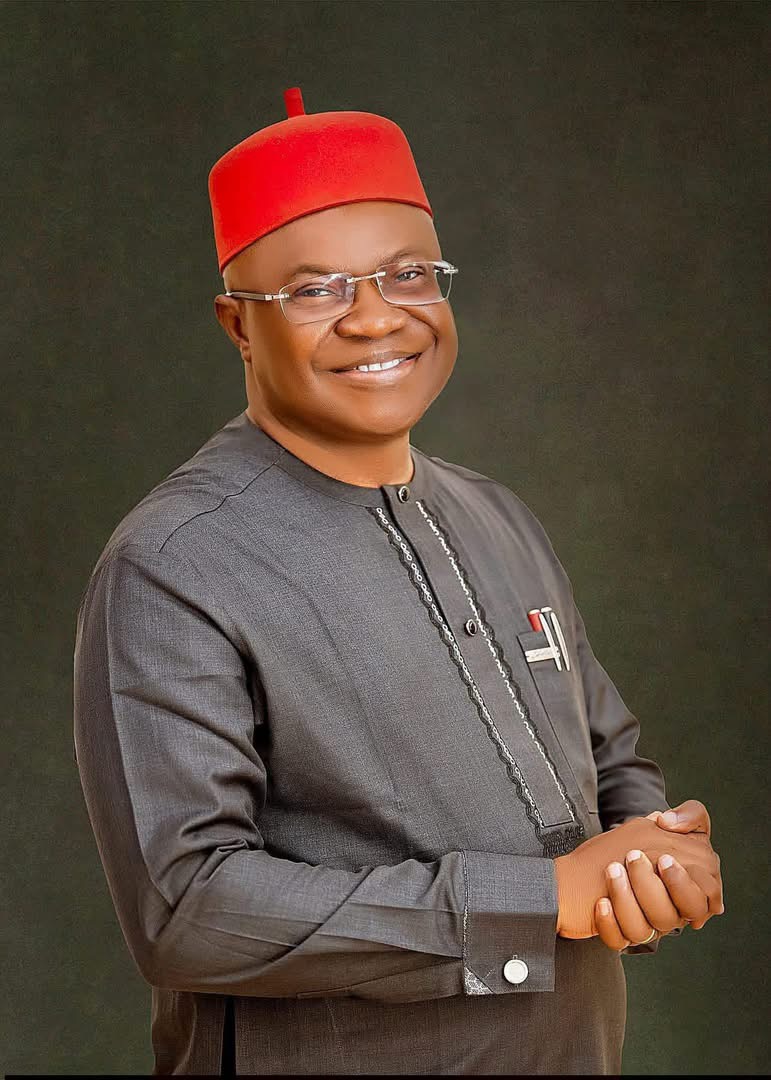
The case for continuity is not sentimental loyalty to Senator Emmanuel C. Nwachukwu (Ọnọdụgo). It is a risk calculation: the district has visible evidence of what this representation is producing, and no comparable evidence that a fresh face would improve on it simply because the calendar has moved.
Nwachukwu entered the 10th Senate mid-stream after the August 2025 by-election, taking the oath on 8 October 2025 in the seat left vacant by the late Senator Ifeanyi Ubah.
The first year was not a clean slate. It opened under legal contest over the mandate, with roads still failing, erosion still advancing, industrial power still unreliable, and graduates still looking for work.
Those conditions did not pause for tribunal proceedings. The decision to retain the late senator’s administrative secretary was therefore not a courtesy.
It preserved institutional memory and kept constituent services from restarting at zero. Continuity of that kind is a legislative asset, not a personal favour.
The record he has placed before the district is specific enough to be tested. On power, he engaged the Transmission Company of Nigeria and federal power authorities on right-of-way bottlenecks at Nnobi and on completion of the Nnewi Injection Substation—the infrastructure that industrial Nnewi and the surrounding commercial belt actually need.
On infrastructure, he sponsored the Senate motion on the collapsed bridge and failed sections of the Okija Spur–Ihembosi–Ukpor–Ebenator–Ezinifite corridor, securing resolutions directing the Federal Ministry of Works and FERMA to intervene.
On ecology, he took the gully threats across Aguata, Orumba, Ihiala and neighbouring communities to the Ecological Fund Office and the Federal Ministry of Environment.
On disaster response, he worked with NEMA and the Nigerian Red Cross on fire-outbreak relief, including affected families in Ozubulu, and drew NEMA’s attention to the building-collapse victims in Oko, Orumba North.
These are not campaign slogans. They are named interventions on long-neglected federal responsibilities inside the district.
His committee work supplies the other half of the argument. As a member of the Senate Committee on Electoral Matters, he was one of only fifteen senators who voted against manual fallbacks and for mandatory real-time electronic transmission of results during the Electoral Act amendment process.
That is a recorded legislative position, not a local promise. A district that has lived through disputed mandates has a direct interest in a senator who treats electoral integrity as a floor, not a talking point.
Parallel to that, he has kept a working alignment between the National Assembly caucus and Governor Charles Chukwuma Soludo, so that state transformation priorities and federal interventions are not running on separate tracks.
Youth employment facilitation across ministries, departments and agencies, and the first phase of more than 3,000 solar streetlights across Anambra South, sit in the same frame: federal access used for local outcomes, not for photo opportunities alone.
The consultation pattern matters for the same reason. Town halls and sessions with traditional rulers, presidents-general, youth bodies, women’s organisations and constituents across all seven local government areas—Aguata, Orumba North, Orumba South, Ihiala, Nnewi North, Nnewi South and Ekwusigo—plus diaspora engagements in Lagos and elsewhere, are how a mid-term senator keeps the mandate from becoming an Abuja abstraction.
Representation that is only visible at election time is the habit Anambra South can least afford to reward.
None of this closes the democratic door. Every qualified person is free to contest. What the aspirants now knocking should not expect is that the district will treat the seat as turn-by-turn rock and roll.
A senatorial mandate is not a communal rota. It is a scarce instrument for moving federal attention onto roads, substations, erosion sites, disaster relief and electoral rules.
One year is a short foundation, not a completed term, and Nwachukwu himself has framed it that way: continuity as the chance to consolidate, correct and finish, not as a prize for perfection.
That is precisely why trial substitution is the higher risk. The issues he has already placed on the Senate floor and with the relevant agencies—power right-of-way and the Nnewi substation, the Okija Spur corridor, ecological remediation, NEMA responses, electoral transmission—do not reset cleanly when the name on the seat changes.
Relationships, committee standing and unfinished federal follow-through are lost in the handover.
Anambra South has seen what this senator is doing with a contested, mid-stream entry. The items in his first-year address are public, checkable and tied to named agencies and places. Until a challenger can show a stronger capacity to carry those same files to conclusion, the rational position is not rotation for its own sake.
It is to keep the representative who is already inside the neglected files, and to judge him on whether he finishes them. The seat is open to contest. It is not open to experiment.
Anambra South voters who democratically handed the mandate to Senator Emmanuel C. Nwachukwu, Ọnọdụgo, are not contemplating a change. He is already delivering beyond the promises that carried him into the chamber, and the district can see the difference between a seat occupied and a brief being worked.
Those still knocking at the door should hold on. The people are satisfied with the representative they already have inside, and they are not prepared to trade proven attention to their roads, power, erosion and livelihoods for an untested turn.
-Pamela O.
Daily Buzzwire
About the Author