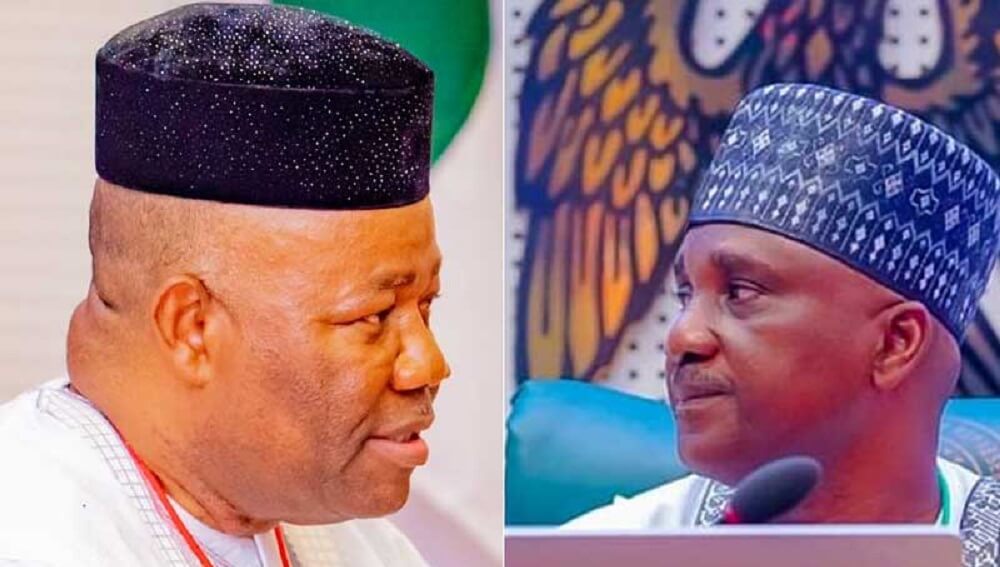
The 10th National Assembly (inaugurated in 2023) has been widely termed a “rubber stamp”legislature, with the label often directly attached to its leaders: Senate President Godswill Akpabio (Senate) and Speaker Tajudeen Abbas (House of Representatives).
Critics, including opposition politicians, civil society, analysts, and ordinary Nigerians (especially on social media), accuse them of presiding over an institution that excessively defers to the executive under President Bola Tinubu, approving bills, budgets, and policies with minimal scrutiny or opposition.
Why Akpabio and Abbas Are Called “Rubber Stamp” Leaders
The “rubber stamp” tag for the entire 10th Assembly stems from perceived lack of independence, but it zeroes in on the leadership duo:
– Godswill Akpabio (Senate President): Frequently labeled the “chief rubber stamper” or even “rubber stamp factory manager.”
He has repeatedly defended the Senate’s approach as “partnership” and “constructive engagement” rather than rivalry, stating the body will “rubber-stamp any executive bill that positively impacts Nigerians” if it serves public good.
Critics point to:
– Rapid approvals of executive requests (e.g., loans, appointments, budgets).
– Controversial moves like the 2026 Electoral Act amendments (removing mandatory real-time electronic result transmission despite earlier Senate positions and INEC preferences), seen as executive-favoring and rigging-enabling.
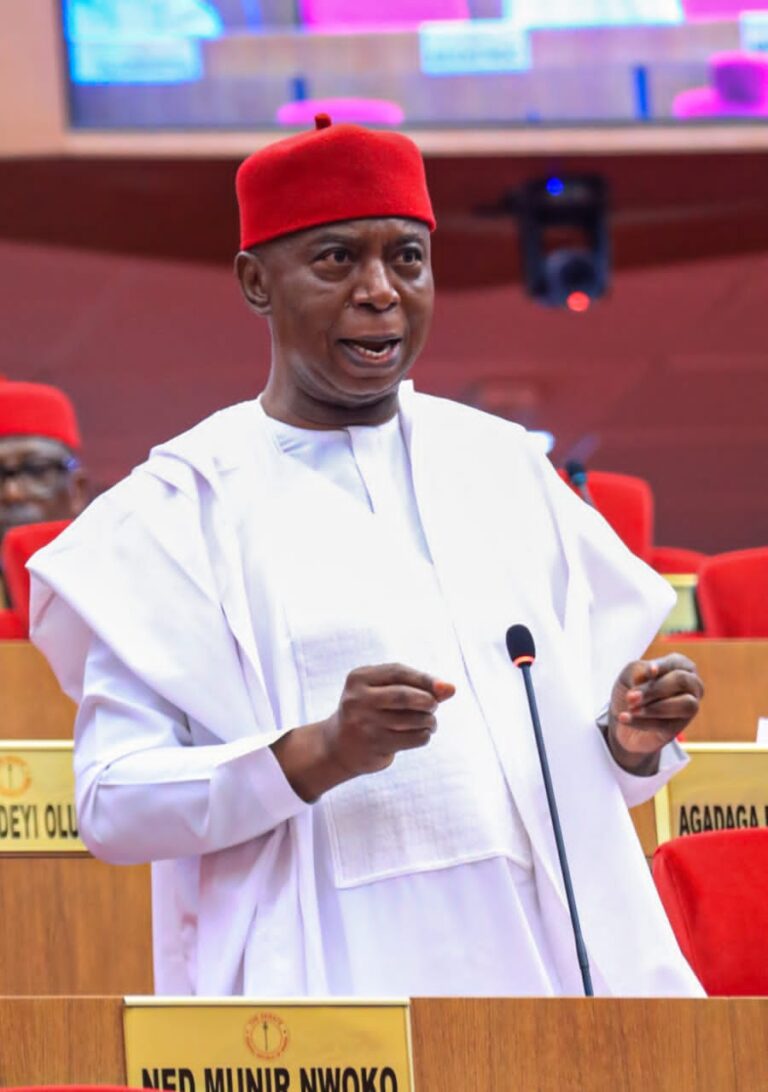
– Internal drama, such as overriding dissenting voices (e.g., Senators like Adams Oshiomhole, Ali Ndume, or Enyinnaya Abaribe challenging rushed processes or calling out “rubber-stamp” tendencies).
– Symbolic acts reinforcing loyalty (e.g., praise-singing sessions like “On Your Mandate”).
Akpabio consistently rejects the label, insisting critics misunderstand parliamentary roles and highlighting productivity (e.g., high bill passage rates, restored budget cycles).
Yet public sentiment, especially amid 2026 hardships (food crisis projections of 35 million at risk), views him as prioritizing executive harmony over oversight.
– Tajudeen Abbas (Speaker of the House): Similarly accused of leading a compliant House.
He promised pre-election (2023) that the 10th Assembly would not be a rubber stamp, emphasizing consensus over confrontation. He defends the approach as “dialogue and inclusive leadership” yielding better results than past rivalries.
However:
– The House has faced similar criticism for quick passages (e.g., Electoral Act debates turning rowdy over perceived executive influence).
– Critics call it a “subsidiary of Aso Rock” or part of the broader “rubber-stamp betrayal,” especially on electoral reforms.
Both leaders frame their style as efficient and pro-people, but detractors argue it erodes checks and balances, turning the legislature into an executive appendage.
Potential Long-Term Impacts on Nigerian Democracy
If this pattern continues through 2027 elections and beyond, it could lead to:
1. Institutional Capture and Weakened Checks/Balances — A legislature seen as an extension of the presidency risks normalizing executive dominance, reducing rigorous debate on critical issues like debt, insecurity, or reforms.
2. Erosion of Electoral Integrity— Actions like diluting electronic transmission provisions fuel fears of entrenched rigging advantages for the ruling APC, potentially making opposition victories near-impossible and sliding toward “competitive authoritarianism.”
3. Heightened Public Disillusionment — Amid economic pain (inflation, hunger, hardship), perceptions of elite self-service (e.g., lawmakers’ luxury vs. citizens’ suffering) deepen cynicism, lowering voter turnout, fueling apathy, or sparking protests/unrest.
4. Risk of Democratic Backsliding — Prolonged compliance could hollow out democracy—elections persist, but meaningful contestation fades. This might entrench one-party dominance or elite capture.
5. Paths to Renewal or Crisis — Pushback (internal dissent, public pressure, civil society) could force greater independence.
Economic crises might trigger demands for reforms (e.g., unicameral legislature, stronger anti-corruption).
Without change, 2027 could see manipulated outcomes, radical alternatives, or instability.
In short, Akpabio and Abbas embody the “rubber stamp” critique: leaders who prioritize harmony with the executive over robust independence.
While they tout productivity, widespread skepticism—amplified by recent events like electoral amendments—suggests this could undermine Nigeria’s democratic foundations unless countered by stronger oversight or citizen demands.
Pamela O., political columnist and commentator.
Turn any TV into a smart TV
• 4K streaming + Dolby Vision
• Alexa voice remote
• Netflix, Prime Video, Disney+ & more
Buy now → https://www.amazon.com/dp/B0BP9MDCQZ?tag=gadgets00139-20
About the Author