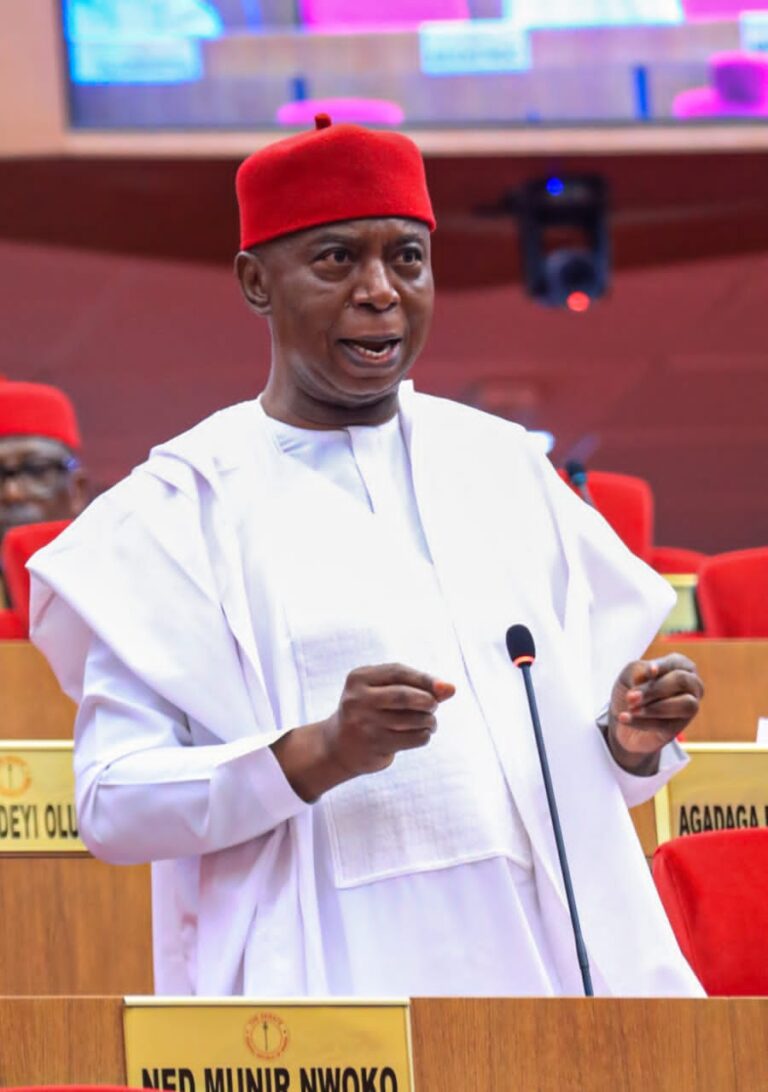
The recent debates in Nigeria’s Senate over amendments to the Electoral Act (Repeal and Re-Enactment) Bill, 2026, brought into sharp focus one of the most critical demands for electoral integrity: mandatory real-time transmission of election results. At the heart of this fight stood Senator Enyinnaya Abaribe (ADC, Abia South), whose persistent and principled stand has been described in public discourse as a clarion call for transparency and accountability in Nigeria’s democratic process.
Pamela O., political columnist and strategist.
The Context: Why Real-Time Transmission Matters
Nigeria’s electoral history has been marred by controversies surrounding result manipulation, delays in result collation, and disputes over authenticity.
The introduction of the INEC Result Viewing Portal (IReV) in previous cycles was a step forward, allowing the public to view polling unit results uploaded electronically.
However, provisions allowing manual backups or discretionary transmission—especially in cases of claimed network failures—created loopholes that critics argue enable alteration, over-voting claims, or outright rigging after polls close.
Mandatory real-time transmission addresses these vulnerabilities head-on:
– Immediate Transparency: Results are uploaded directly from polling units to the IReV portal in real time, enabling citizens, observers, political parties, and the media to monitor uploads as they happen. This reduces opportunities for post-polling tampering.
– Reduces Manipulation Risks: Without fallback options for manual transmission in routine scenarios, the incentive for officials to cite “network issues” to delay or alter results diminishes significantly.
– Builds Public Trust: In a country where voter apathy and distrust in institutions run deep, real-time visibility reassures citizens that their votes count and are verifiable instantly.
– Minimizes Post-Election Litigation: By limiting ambiguity, it cuts down on court cases that often drag on for years and undermine governance.
In the 2026 amendments, the Senate considered Clause 60(3) of the bill, which dealt with transmission protocols. A proviso allowed manual transmission as a backup when electronic means failed due to network issues.
This provision sparked intense debate, as many saw it as a dilution of the hard-won gains from prior reforms.
Senator Abaribe’s Fight: A Clarion Call in Action
Senator Enyinnaya Abaribe emerged as the leading voice advocating for uncompromised mandatory real-time electronic transmission. During clause-by-clause consideration, he raised points of order against the proviso permitting manual backups, arguing it reintroduced discretion that could be abused by the Independent National Electoral Commission (INEC) or colluding actors.
Key moments of his advocacy included:
– Demanding a division (a formal vote where senators’ positions are recorded individually) on the contentious Clause 60(3). This procedural move forced transparency on lawmakers’ stances and amplified public scrutiny.
– Insisting that transmission must be mandatory and strictly real-time, without discretionary fallbacks that could undermine the process.
– Leading a group of at least 15 opposition senators (across parties and geopolitical zones) who voted against retaining the manual proviso.
Notably, no APC senators joined this push for full mandatory real-time transmission, highlighting partisan divides.
– Holding a media briefing alongside colleagues (including Senators Abdul Ningi, Victor Umeh, and others) to clarify that the Senate had not rejected electronic transmission outright. Abaribe emphasized the approved language focused on “transmission” (not “transfer” as in the 2022 Act) and stressed the need to preserve real-time elements to prevent ambiguity, manipulation, and endless judicial disputes.
Abaribe repeatedly clarified post-plenary that what passed was electronic transmission via IReV in real time, with no discretion left to INEC to opt out arbitrarily.
He vowed that he and like-minded senators would monitor the process through presidential assent to ensure the spirit of mandatory real-time upload prevailed.
Despite his efforts, the Senate ultimately retained a version of the proviso allowing manual backups in network failure cases, after heated sessions and rowdy exchanges.
This outcome drew widespread criticism, with many viewing it as a setback for full electoral reform ahead of future cycles like 2027.
The Broader Significance
Senator Abaribe’s stand was more than procedural—it was a clarion call echoing the frustrations of millions of Nigerians who demand elections they can trust without endless excuses or court battles.
In an era where technology enables instant global communication, insisting on real-time result transmission is not radical; it’s essential for democratic legitimacy.
His actions underscore a vital truth: True reform often requires individual courage against majority convenience or partisan interests.
While the final bill retained compromises, Abaribe’s fight—and the recorded votes of those 15 senators—serves as a benchmark.
It reminds citizens to hold lawmakers accountable and pushes the conversation forward for stronger safeguards in future amendments.
Nigeria’s democracy deserves no less than full, mandatory, real-time visibility of results. Senator Abaribe’s clarion call, though not fully heeded this time, remains a powerful reminder that the battle for credible elections continues.
Pamela O., political columnist and strategist.


Lowest price this year
• A16 Bionic chip
• All-day battery
• Works with Apple Pencil
Buy now → https://www.amazon.com/dp/B0DKF2GLZP?tag=gadgets00139-20
About the Author