


Governor Charles Chukwuma Soludo’s administration appears to be taking a resolute stand against insecurity, as evidenced by the recent lawsuit filed by the state government against Chidozie Nwangwu, popularly known as Akwa Okuko Tiwara Aki, for kidnapping and felony conspiracy.
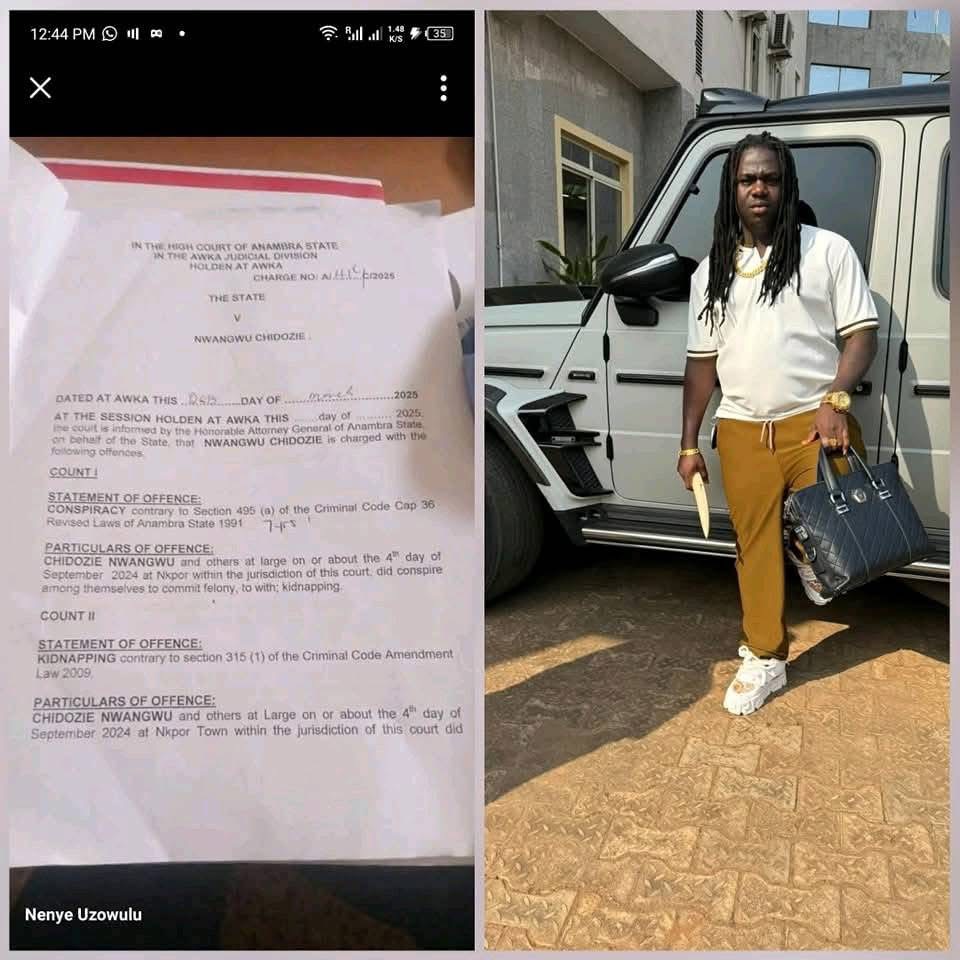
This legal action, backed by both online and offline evidence, signals a broader intent to tackle not just the foot soldiers of crime but also those allegedly enabling or orchestrating it, including influential figures like Akwa Okuko, a well-known native doctor.
Soludo’s seriousness in combating insecurity can be seen in his multi-pronged approach.
The lawsuit against Akwa Okuko, a polarizing figure with a significant public profile, suggests a willingness to confront powerful individuals who may be complicit in the state’s security challenges, regardless of their social standing or cultural influence.
This move aligns with earlier efforts, such as the establishment of the Agunechemba security outfit, which has been credited with disrupting criminal networks and targeting those who aid them, including some traditional practitioners accused of providing charms or spiritual support to criminals.
The introduction of the Anambra State Homeland Security Law (2025), which imposes strict penalties for such activities, further underscores a structured, legal framework aimed at rooting out crime at its source.
The decision to tender both digital and physical evidence in this case reflects a modern, thorough investigative strategy, leveraging technology alongside traditional methods to build a robust case.
It also sends a message that the government is prepared to hold individuals accountable with concrete proof, potentially deterring others who might be involved in similar activities. By targeting someone like Akwa Okuko, whose alleged involvement in kidnapping and felony conspiracy could have far-reaching implications, Soludo is signaling that no one is above the law—an essential stance in a state that has grappled with rampant kidnappings, armed robberies, and other violent crimes.
However, while these actions demonstrate intent, their effectiveness remains to be fully judged. Anambra’s insecurity has deep roots, tied to economic disparity, unemployment, and the proliferation of criminal networks that exploit cultural and spiritual beliefs. Legal battles, even against high-profile figures, must be complemented by broader socioeconomic reforms and community engagement to address these underlying causes.
Moreover, the success of this lawsuit hinges on the judiciary’s independence and efficiency—factors that have historically been inconsistent in Nigeria. If the case drags on or fails due to loopholes or corruption, it could undermine public confidence in Soludo’s efforts.
In my view, Soludo’s approach shows a commendable level of seriousness, blending bold enforcement with legislative backing. Taking on a figure like Akwa Okuko is a calculated risk that could either solidify his reputation as a no-nonsense leader or expose the limitations of his administration if the effort falters.
For now, it’s a step that reflects determination, but the real test will be in the outcomes—both in court and on the streets of Anambra. Sustained results, not just high-profile arrests or lawsuits, will ultimately define how serious and successful he is in this fight.


