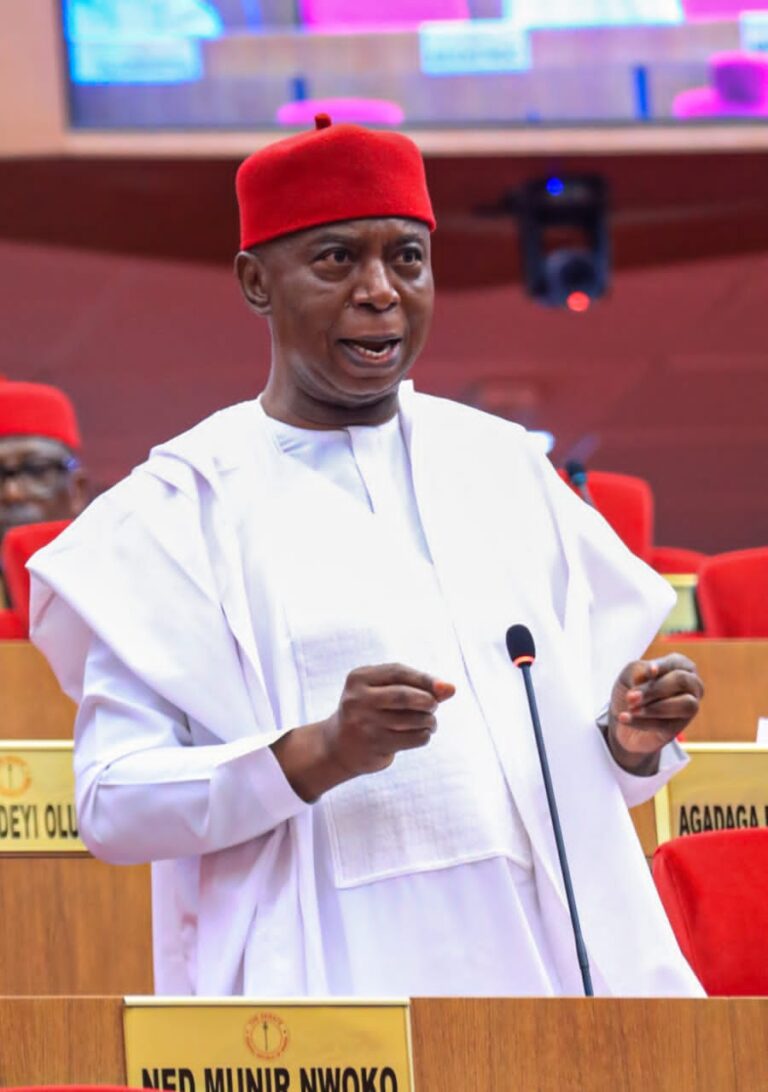
In the turbulent theatre of Nigeria’s National Assembly, where principle often buckles under pressure and jackals circle for every scrap of advantage, Senator Enyinnaya Harcourt Abaribe stands tall as the enduring voice of the people and the conscience of his constituency.
Representing Abia South Senatorial District in the Nigerian Senate since June 5, 2007—nearly two decades of unbroken service—he has once again demonstrated why he remains a political survivor par excellence.
In a significant development ahead of the 2027 general elections, Senator Abaribe has reportedly secured an automatic Labour Party (LP) ticket to return to the Red Chamber.
This seamless homecoming, following his earlier moves from APGA to a brief and troubled stint in the African Democratic Congress (ADC) and back to the ruling LP in Abia State, cements his position as the party’s standard-bearer for Abia South. It is not mere luck; it is the reward of strategic realism in a federal system where senatorial influence flows far more powerfully from state-level ecosystems than from national opposition slogans.
A Calculated Homecoming
Abaribe’s party odyssey reflects a deep understanding of Nigerian political geography. Governors, state party structures, grassroots networks, and aligned patronage systems ultimately determine who returns to Abuja with real clout.
Abstract “solidarity” in opposition ranks may generate applause in the media, but it rarely delivers projects, empowerment, or re-election security. By realigning with the Labour Party under Governor Alex Otti, Abaribe has anchored himself firmly within the dominant state machinery.
The automatic ticket is the clearest validation yet of this calculus: in Abia’s current political configuration, loyalty to the ruling structure at home translates into a smoother path to the Senate.
This move allows him to focus once more on what he does best—fighting for Abia South with the political purity and consistency his constituents have come to expect.
From Aba and its environs to the rural communities of Ukwa and Ndoki, Abaribe has maintained a record of vocal advocacy, oversight, and demand for accountability, even when it meant standing alone against powerful forces in the Senate.
Two Decades of Representation: The People’s Fighter
Since first entering the Senate in 2007, Abaribe has evolved from a former Deputy Governor of Abia State into one of the chamber’s most recognizable figures—former Minority Leader, relentless questioner of executive excess, and champion of his district’s development. In an environment where many senators treat their zones as electoral fiefdoms to be harvested and abandoned, he has kept his eyes trained on local realities while engaging boldly at the national level.
Critics, particularly from the APC and younger aspirants eyeing the seat, argue that two decades is long enough and that fresh blood is needed.

Yet the automatic LP ticket tells a different story. It signals that within the party and at the grassroots, Abaribe’s experience, name recognition, and proven ability to navigate the system are still viewed as assets rather than liabilities.
In Nigeria’s federalism, longevity is not always a sin; when paired with strategic alignment and continued service, it becomes a strength.
The Broader Lesson for 2027
As the countdown to 2027 intensifies, Abaribe’s automatic ticket underscores a fundamental truth: in the Senate, power is not sustained through fleeting national coalitions or ideological posturing.
It is rooted in state capitals—where governors control the tempo, where local structures deliver votes, and where aligned senators can more effectively attract federal attention and resources to their districts.
The voice of conscience among the jackals has chosen pragmatism over permanent opposition exile.
With the LP ticket firmly in hand, Senator Enyinnaya Abaribe is positioned not just to return, but to continue representing Abia South with the same tenacity that has defined his nearly 20-year journey.
Whether this latest chapter adds further shine to his legacy or invites renewed scrutiny will be for the people of Abia South to decide at the polls. For now, the survivor has moved with purpose once again—and the district he has served with unwavering focus stands to benefit from a senator who understands exactly where real power in Nigeria resides.
By Pamela O.
Political Analyst and Political Columnist.
About the Author