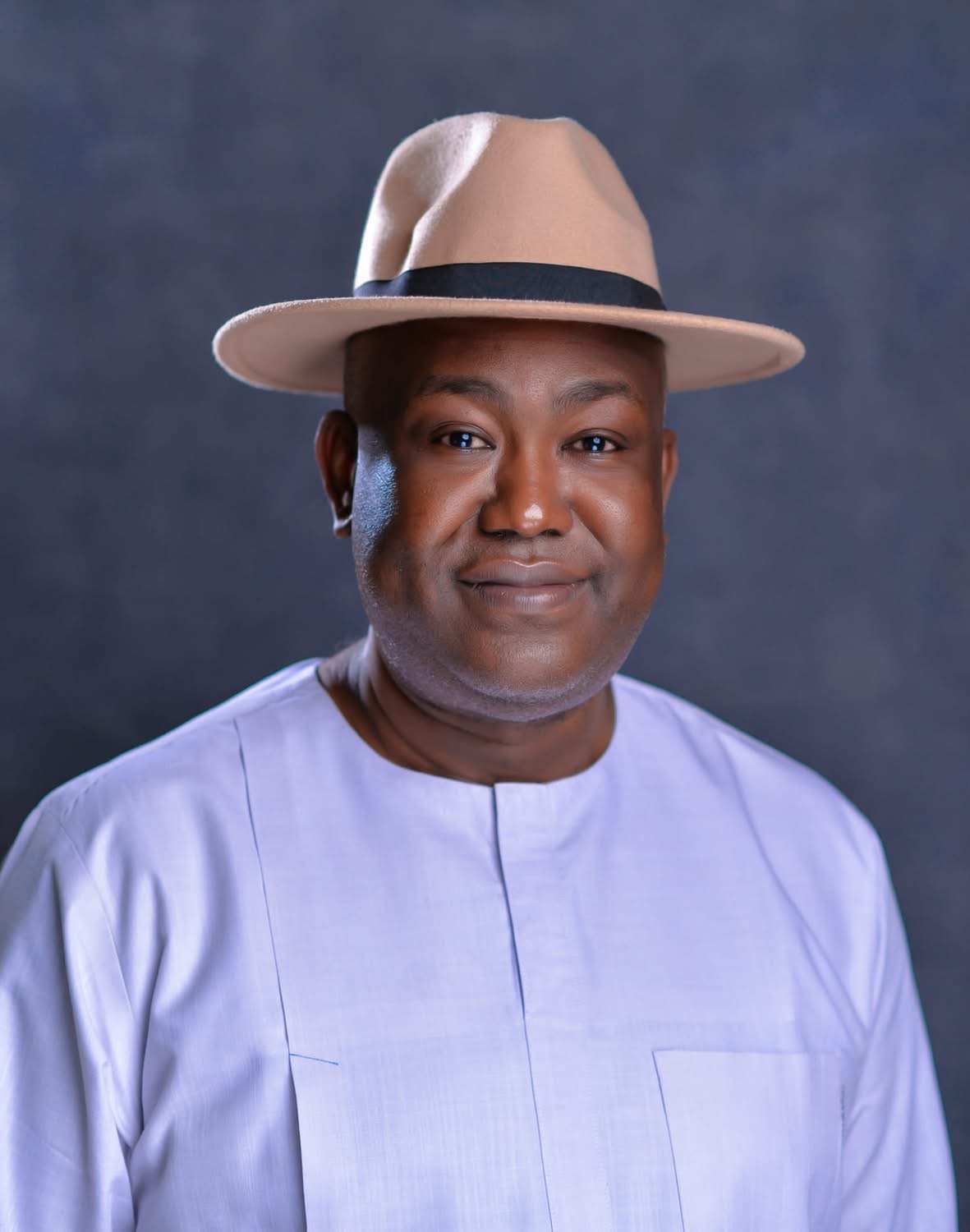
As Nigeria grapples with economic hardship, insecurity, and a growing sense of regional discontent, the 2027 presidential election looms as a pivotal moment for the nation. Among the emerging contenders, Dr. Gbenga Olawepo-Hashim, a seasoned businessman, political activist, and former presidential candidate, stands out as a compelling figure poised to address Nigeria’s challenges.
With his unique background, unifying appeal, and proven track record, Olawepo-Hashim could be the leader to replace President Bola Tinubu, whose administration has faced criticism for failing to deliver on key promises.
A Bridge Across Nigeria’s Divide
Olawepo-Hashim’s heritage makes him a natural unifier in a country often fractured along ethnic and regional lines. Born to a northern father and a southern mother, he embodies Nigeria’s diversity, offering a rare opportunity to bridge the North-South dichotomy that has long shaped the nation’s politics.
His biological and cultural ties to both regions position him as a candidate who can appeal to voters across Nigeria’s geopolitical zones, fostering national unity at a time when ethnic rhetoric threatens to deepen divisions.
As the Kaduna Integrity Group noted in 2021, “He is a true and patriotic Nigerian who will be the political bridge the country is yearning for because he has biological connection with the North and South.”
This mixed heritage is not just symbolic—it reflects his lifelong commitment to inclusivity.
Olawepo-Hashim’s business ventures employ people from diverse ethnic and religious backgrounds, demonstrating his ability to unite Nigerians around common goals.
His inclusive approach has earned him respect across the political spectrum, with PDP leaders from the North-Central zone recently praising his “unwavering commitment to national unity and democratic values” during a visit to his Abuja office.
A Proven Track Record of Leadership
Olawepo-Hashim’s credentials extend beyond symbolism. As a founding figure in Nigeria’s democracy movement and a former Deputy National Publicity Secretary of the Peoples Democratic Party (PDP), he has a deep understanding of the nation’s political landscape.
His experience as a presidential candidate for the People’s Trust (PT) in 2019 and his subsequent alignment with the All Progressives Congress (APC) showcase his versatility and ability to navigate Nigeria’s complex political terrain.
Beyond politics, Olawepo-Hashim is a successful entrepreneur whose investments have created thousands of jobs and contributed significantly to Nigeria’s GDP. His Gbenga Olawepo-Hashim Foundation recently awarded N10 million in grants to small-scale entrepreneurs in Abuja, reflecting his commitment to economic empowerment independent of political ambition.
This blend of private-sector success and public-service dedication equips him to tackle Nigeria’s economic woes, from inflation to unemployment, which have intensified under the current administration.
A Vision for Reform and Stability
Olawepo-Hashim’s advocacy for electoral and governance reforms sets him apart as a forward-thinking leader. He has consistently called for an overhaul of the Independent National Electoral Commission (INEC), proposing that its leadership be appointed by the National Judicial Commission (NJC) rather than the presidency to ensure credible elections.
“If we don’t sort out the electoral system right now, the 2027 election is going to be war,” he warned in 2023, emphasizing the urgency of reform to restore public confidence in democracy. His focus on transparent leadership selection and his rejection of “war chest” politics signal a commitment to meritocracy over money-driven governance.
Moreover, Olawepo-Hashim’s centrist philosophy and rejection of ethnic blackmail resonate with Nigerians tired of divisive politics. He has criticized opposition tactics that exploit ethnic sentiments, pointing to historical examples like Kano voters supporting Moshood Abiola in 1993 to underscore Nigerians’ political maturity.
His call for a Government of National Unity (GNU) in 2023 reflects his belief in inclusive governance that prioritizes peace, security, and economic prosperity over partisan divides.
Broad Electability in 2027
Olawepo-Hashim’s electability is bolstered by his growing support base, particularly among the youth and in the North-Central region. The Youth for the Actualization of North Central President (YANCP) recently endorsed him, citing
his “intellectual depth, economic foresight, and moral clarity” as qualities that make him a leader for all Nigerians, not just the North-Central zone.
This early endorsement, coupled with his appeal to a digitally savvy youth demographic, positions him to build a national movement ahead of 2027.
His ability to engage stakeholders across party lines further enhances his electability. Unlike many politicians tied to a single party’s machinery, Olawepo-Hashim’s cross-party appeal—evidenced by his interactions with PDP leaders despite being an APC chieftain—suggests he can forge alliances to challenge the status quo.
His vision for a “renaissance” in Nigerian governance, where leaders are chosen for competence rather than wealth, resonates with a populace frustrated by recycled politics.
Addressing Tinubu’s Shortcomings
President Tinubu’s administration has faced mounting criticism for its handling of economic challenges, including soaring inflation, fuel subsidy removal, and a worsening security situation.
Olawepo-Hashim has directly addressed these issues, condemning the centralized security structure and advocating for decentralized, intelligence-driven strategies to combat insurgency.
His economic blueprint, rooted in his entrepreneurial success, prioritizes job creation and sustainable development—key areas where the current government has struggled.
While Tinubu’s supporters argue his reforms need time, the public’s growing disillusionment highlights the need for a leader with Olawepo-Hashim’s clarity of vision and unifying appeal.
His ability to articulate solutions to Nigeria’s “existential crises” without resorting to divisive tactics makes him a stark contrast to the current leadership.
Conclusion
As Nigeria approaches 2027, Gbenga Olawepo-Hashim emerges as a leader uniquely suited to replace President Tinubu. His mixed heritage, proven leadership in business and politics, and commitment to electoral and governance reforms position him as a unifying figure capable of addressing Nigeria’s pressing challenges.
With broad electability driven by youth support and cross-regional appeal, Olawepo-Hashim offers a vision of hope, competence, and inclusivity—a new dawn for a nation in need of transformative leadership.
P. AMECHI writes from Lagos.
About the Author