By Ava James, Investigative Journalist
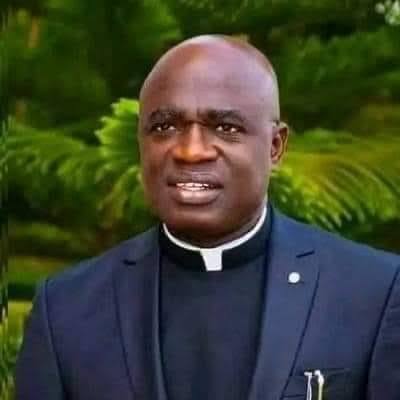
In Benue State, where the Tiv, Idoma, and Igede people have long endured cycles of violence, poverty, and neglect, the emergence of Rev. Fr. Hyacinth Alia as governor in 2023 was heralded as a divine intervention.
A Catholic priest with a reputation for compassion, Fr. Alia was seen as a shepherd who could guide a battered flock to greener pastures. Yet, two years into his tenure, the dream has soured. The pulpit and the palace, as the Church has long cautioned, do not mix. Fr. Alia, once a priest bound by sacred vows, now stands as a politician ensnared by profane power—a man caught in a tragic tug-of-war between his calling and his ambition.
The verdict is stark: Fr. Alia has failed Benue, failed his priesthood, and, if he retains any shred of integrity, must resign.
The Catholic Church, in its centuries-old wisdom, forbids clergy from contesting public office, not as a punitive measure but as a safeguard. Canon Law (Canon 285 §3) explicitly bars priests from assuming roles that involve partisan politics, recognizing the inherent conflict between spiritual leadership and temporal power.
The priest is a shepherd, tasked with guiding souls, not a politician navigating the murky waters of governance. Fr. Alia, in his pursuit of the governorship under the All Progressives Congress (APC), stepped away from the altar to chase a crown. In doing so, he abandoned the Church’s wisdom and, arguably, his own.
Benue’s plight demanded a leader of extraordinary resolve. The state, often called Nigeria’s food basket, has been plagued by herder-farmer clashes, with over 2,000 deaths recorded between 2018 and 2023, according to the Armed Conflict Location & Event Data Project (ACLED). Displaced communities, crumbling infrastructure, and unpaid salaries have compounded the suffering. Fr. Alia campaigned on a platform of peace, development, and moral leadership, leveraging his clerical collar to win trust. Voters saw in him a messianic figure—a priest who could cleanse the state’s Augean stables. Yet, the reality has been a bitter betrayal.
Under Alia’s watch, Benue’s security crisis has persisted. In 2024 alone, over 300 lives were lost to militia attacks in Gwer East and Logo LGAs, per local reports. Promises of robust security measures have yielded little, with communities like Agatu still reeling from violence.
Economically, the state remains stagnant. Civil servants, including teachers, have protested months of unpaid salaries, with the Nigeria Labour Congress in Benue reporting a backlog of over N70 billion in arrears as of mid-2025. Infrastructure projects, such as the long-promised Otukpo-Makurdi road, remain stalled, while allegations of mismanagement swirl around Alia’s administration.
The governor’s defenders argue that he inherited a broken system and faces resistance from entrenched political interests. They point to his efforts to clear salary backlogs and initiate agricultural programs as signs of progress.
But these defenses ring hollow against the backdrop of mounting failures. Fr. Alia’s inexperience in governance has been glaring. His administration lacks the decisiveness needed to tackle Benue’s complex challenges, and his reliance on APC machinery has entangled him in the same partisan quagmires he once preached against.
The man who once inspired hope from the pulpit now appears paralyzed in the palace, caught between the ideals of his priesthood and the realities of political survival.
The Church’s prohibition on priests in politics exists to protect both the cleric and the faithful. Fr. Alia’s dual identity has muddied both roles. As a priest, he was a symbol of moral clarity; as a governor, he is a figure of compromise, tethered to a party accused of fueling Nigeria’s broader dysfunction. His decision to contest office required him to seek dispensation from his priestly duties, but the spiritual weight of his vows remains. By choosing politics, Fr. Alia has not only strained his relationship with the Church but also eroded the trust of a people who believed in his sanctity.
The tragedy of Fr. Alia is not just his failure as a governor but the loss of what he represented. Benue needed a unifier, not another politician. It needed a shepherd, not a bureaucrat. His tenure has been a cautionary tale of what happens when sacred vows collide with secular ambition.
The people of Benue deserve better—they deserve a leader wholly committed to their welfare, unencumbered by the contradictions that have defined Alia’s rule.
If Fr. Alia still possesses the integrity that once defined his ministry, he must act decisively. Resignation is not an admission of defeat but a reclamation of principle. It is a chance to restore faith in both the pulpit and the palace, to step back from a path that has led to neither salvation nor progress.
For the soul of Benue, and for his own, Fr. Hyacinth Alia must resign. The Church was right: priests are shepherds, not politicians. And Benue cannot afford to be led by a man undone by both.
About the Author