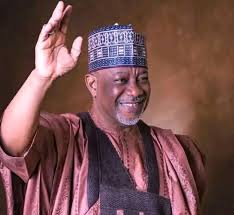
Senator Mohammed Ogoshi Onawo’s defection to the Allied Peoples Movement (APM) is best understood not merely as another party switch, but as a calculated repositioning for the 2027 Nasarawa State governorship race.
Having already tested the waters by contesting the ADC gubernatorial primary—where he secured a respectable 15,282 votes and finished third behind Major General Nuhu Angbazo (rtd)—Onawo has now transferred his political capital to a new platform.
The decision underscores a core reality of Nigerian politics in districts with strong personal followership: when a politician has consistently delivered, the candidate’s electability can sell the party far more effectively than the reverse.
Onawo’s antecedents provide the bedrock for this calculation. From his two terms in the Nasarawa State House of Assembly (including service as Speaker, 2003–2007) through two terms in the House of Representatives (where he chaired the Industries and ICT committees) to his 2023 senatorial upset victory in Nasarawa South, he has repeatedly converted grassroots credibility into electoral success.
In 2023 he defeated a former two-term governor and sitting senator, Tanko Al-Makura, by a clear margin while sweeping all five local government areas in the district.
That performance was widely attributed to perceived delivery of constituency projects, accessibility, and accumulated trust rather than pure party machinery.
Even in the ADC primary earlier this year, his third-place finish demonstrated residual organisational strength and voter appeal despite the internal turbulence that later prompted his exit.
This track record explains why successive platform changes—from PDP to ADC and now to APM—have not materially damaged his electability.
Nasarawa South remains broadly aligned behind him because voters there appear to prioritise performance over partisan labels.
The district’s loyalty functions as a portable asset: it travels with the candidate. Onawo’s decision to join the APM after citing the ADC’s internal crises and legal battles reflects an understanding of this dynamic.
He is not relying on the APM’s existing structures in Nasarawa to carry him; rather, he is positioning himself as the vehicle that can give the relatively newer party visibility and competitive weight in the state.
In this sense he serves as a litmus test for candidate-centric politics: if a politician of his standing can transfer personal popularity to elevate a less-dominant platform, it affirms that electability often resides more in the individual than in the party brand.
His governorship aspiration fits this pattern logically. Having already demonstrated the capacity to mobilise significant support in a competitive primary under the ADC, Onawo enters the APM with a clear sense of his broad acceptability across Nasarawa’s political and demographic landscape.
The swing is deliberate. He recognises that his decades-long record of legislative service, traditional titles that embed him in local structures, and history of translating representation into tangible outcomes give him a durable base that transcends any single party.
For the APM, attracting a figure with Onawo’s proven ability to win against the odds offers a potential foothold in a state where the APC currently holds the governorship and the PDP remains a traditional challenger.
For Onawo, the new platform provides the organisational flexibility he judged was lacking elsewhere, without requiring him to rebuild his personal mandate from scratch.
In the end, Senator Onawo’s trajectory illustrates a larger truth about electoral politics in many Nigerian constituencies: where delivery has been consistent and the relationship with constituents remains intact, the candidate can function as the primary brand.
The party becomes the instrument rather than the determinant of success. Whether the APM ultimately benefits from hosting his governorship bid will depend on how effectively it harnesses, rather than constrains, the personal mandate he has built over more than two decades.
Onawo appears to have made the move with precisely that understanding in mind.
He functions, in effect, as a living experiment: can a politician of proven local standing transfer that standing to a new vehicle without significant loss?
Early indications from his career suggest the answer leans affirmative. Whether the APM ultimately benefits from this transfer will depend on how effectively it harnesses, rather than dilutes, the personal mandate Onawo has built over two decades.
Now, Nassarawa state governor’s seat stands waiting for him.
Pamela O.
Political Analyst and Commentator.
About the Author