– A Cry Against Marginalization and Unjust Silencing
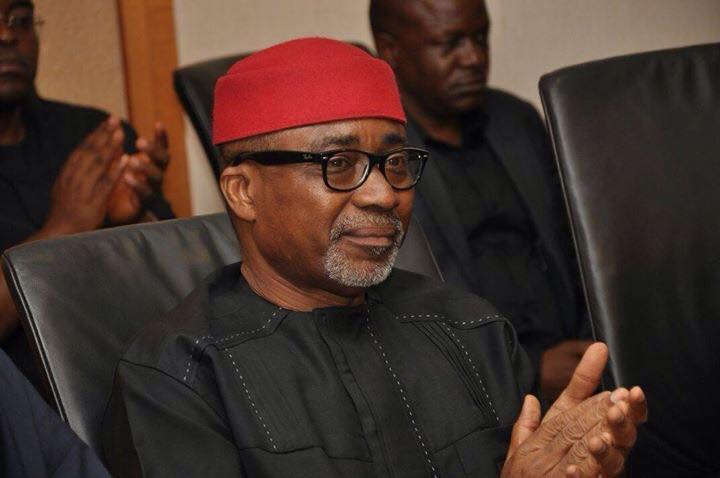
In the shadowed corridors of Nigerian politics, where the clamor for equity often drowns in partisan din, Senator Enyinnaya Harcourt Abaribe emerges as the Southeast’s unbowed sentinel—a lone fighter whose every utterance and action mirrors the deep-seated frustrations of a region long starved of justice.
Representing Abia South in the 10th National Assembly since his hard-fought 2023 victory under the All Progressives Grand Alliance (APGA), Abaribe, at 70, is no stranger to the fray.
A former deputy governor of Abia State under Orji Uzor Kalu, a one-time Senate Minority Leader, and a perennial voice for the voiceless, he embodies the Igbo spirit: resilient, articulate, and unrelenting.
If only the Southeast could boast more politicians of his caliber—unyielding in the face of marginalization, demolitions, and infrastructural neglect—Abaribe’s recent indefinite suspension by APGA on September 26, 2025, stands as a stark, uncalled-for affront, a desperate bid to muzzle the man who has championed Igbo interests more fiercely than any in recent memory.
Born on March 1, 1955, in the oil-rich heart of Abia, Abaribe’s path has been paved with both triumph and trial.
Educated at prestigious institutions like the University of Benin and seasoned in public service, he defected from the PDP to APGA in 2023 to clinch his senatorial seat against formidable odds, trouncing his predecessor Okezie Ikpeazu by a wide margin.
Yet, his legacy transcends party lines; it is etched in the annals of advocacy for a Southeast that, despite its economic vitality as Nigeria’s industrial glue, remains the nation’s most disenfranchised zone.
With only five states—fewer than any other region—Abaribe has repeatedly decried this structural inequity, lamenting in December 2024 that Igbos are “the most disenfranchised and marginalized” people in Nigeria, facing constant threats of eviction and unequal opportunities.
“We are the glue that holds Nigeria together,” he asserted in 2021, yet pushed to the fringes with infrastructural deficits that cripple progress—from pothole-riddled federal roads in Enugu to the phantom Lagos-Calabar Coastal Highway that bypasses Igbo heartlands.
The Lone Fighter: Echoing Southeast’s Simmering Frustrations
Abaribe’s actions are not performative; they are the raw pulse of Southeast grievances.
In a nation where Igbo traders in Kano or Lagos live under the specter of “eviction notices,” he has been the unfiltered megaphone, vowing in June 2021 that “no amount of threats will stop Ndigbo from demanding equitable treatment.”
His motion in January 2020 called for President Muhammadu Buhari’s resignation over unchecked insecurity—a bold stroke that reminded Nigerians of unkept promises to “stone” him out if security faltered.
More recently, in March 2025, as leader of the Southeast Senate Caucus, Abaribe assured Ohanaeze Ndigbo of unified advocacy on Igbo interests, pledging to collaborate with the apex Igbo body on issues from state creation to equitable federal appointments.
This caucus solidarity—echoed by senators like Onyekachi Nwebonyi—has positioned him as the architect of collective Igbo pushback against a lopsided federation.
Infrastructure woes? Abaribe has spotlighted them relentlessly.
The Southeast’s rail lines languish incomplete, ports like those in Onne remain underutilized, and demolitions in Abuja’s Wuse Market in 2024 displaced hundreds of Igbo vendors without alternatives—a “genocidal” pattern, he charged, rooted in post-civil war marginalization.
At a December 2024 book launch in Enugu, he urged legislative reforms to “perfect the nation’s electoral system,” tying flawed polls to broader disenfranchisement that keeps Igbos from the presidency or key ministries.
No one, indeed, has represented Igbo interests with such forensic passion: sponsoring bills for additional states, decrying the 140% JAMB cutoff disparity for Southeast students, and mobilizing against the “abandonment” of the Second Niger Bridge until its 2022 commissioning.
In a region where youth unemployment festers at 40% and insecurity from unknown gunmen erodes trust, Abaribe’s voice is the lone clarion, fostering unity amid division.
The Uncalled-For Suspension: A Desperate Silencing of Truth
Enter the farce of September 26, 2025: APGA’s Abia State Chapter, in a letter signed by Secretary Pastor Peter Nduka, slapped Abaribe with an indefinite suspension for “anti-party activities” that allegedly exposed the party to ridicule.
The trigger? Claims that Abaribe positioned himself as a leader of the African Democratic Congress (ADC), snubbing a 24-hour ultimatum to refute it.
State Chairman Sunday Onukwubiri defended the move as constitutional, citing Articles 21(1)(K) and 22(1)(B), pending a disciplinary probe.
Yet, this reeks of vendetta. Abaribe’s earlier endorsement of Labour Party’s Governor Alex Otti for a second term—his “friend” and a fellow Abian—already irked APGA, which views Otti as a poacher of loyalties.
His rumored ADC flirtations? Mere speculation, unproven, and a convenient cudgel for a party fearing his influence ahead of 2027.
This suspension is uncalled for—a petty purge of the very fighter who bolstered APGA’s slim federal presence by defecting from PDP and securing Abia South.
In a Southeast desperate for unity, it fractures alliances at a time when Ohanaeze and caucus peers rally behind him.
APGA’s action doesn’t diminish Abaribe; it exposes the fragility of parties that punish prophets for speaking truth.
If Only the Southeast Had More Like Him: A Call for Emulation
Abaribe’s travails underscore a poignant truth: If only the Southeast could boast politicians of his mettle—lone fighters unswayed by patronage, whose actions reflect the people’s pain over demolitions that scatter Igbo livelihoods, infrastructure that crumbles under neglect, and marginalization that denies a presidency since 1966—the region would roar, not whisper, its demands.
No one has represented Igbo interests with such tenacity: from Nnamdi Kanu’s 2021 bail suretyship (a stand that landed him in court) to his 2025 caucus pledges for equitable treatment.
He is the “smart one,” as The Guardian dubbed him in 2019, the bridge between Ohanaeze’s cultural fire and the Senate’s procedural steel.
As APGA’s suspension hangs like a Sword of Damocles, Abaribe’s silence—strategic or seething—only amplifies his stature.
The Southeast’s frustrations are his; his fight, theirs. In silencing him, APGA doesn’t win—it awakens a lion.
For in Abaribe, the Igbo see not just a senator, but a symbol: the lone fighter who, against all odds, ensures their voice endures.
If only there were more. Until then, he fights alone—but never unheard.
Pamela O. AMECHI writes from Lagos.
About the Author