In the heart of Ogun State’s rapidly urbanizing corridor lies a telling paradox. The Majente/Fashino environs and surrounding communities in Ifo Local Government Area sit within the Ifo/Ewekoro Federal Constituency and Ogun Central Senatorial District.
They are mere minutes from the vibrant Akute business district — a bustling commercial hub driven by trade, small-scale manufacturing, services, and spillover from Lagos State.
Yet these areas remain severely underserved in one of the most fundamental enablers of modern life and economic activity: reliable electricity.
Residents report that vast sections of the community rely on a single, aging transformer that is chronically overloaded. This infrastructure, designed for far fewer connections and lower demand, frequently fails under the weight of population growth and expanding commercial activity.
The result is prolonged blackouts — described locally as the area being without power for as many as 20 days in a typical week.
The transformer’s repeated breakdowns stem directly from carrying loads far beyond its rated capacity, a classic symptom of underinvestment in distribution infrastructure relative to demographic and economic expansion.
Economic and Social Fallout
The consequences are immediate and severe. Small businesses — shops, artisans, cold-storage operators, welding workshops, and service providers that form the backbone of Akute’s economic ecosystem — are shutting down or scaling back drastically.
Many rely on costly diesel or petrol generators, eroding already thin profit margins. Tenants are reportedly moving out in search of areas with more stable supply, accelerating a cycle of decline in what should be a thriving peri-urban extension of Akute’s commercial vibrancy.
This is not merely an inconvenience; it is a direct drag on local GDP contribution, employment, and quality of life. In an area positioned to benefit from Akute’s growth and ongoing state-level road projects in the Ifo corridor, darkness symbolizes arrested development.
Political Context and Accountability
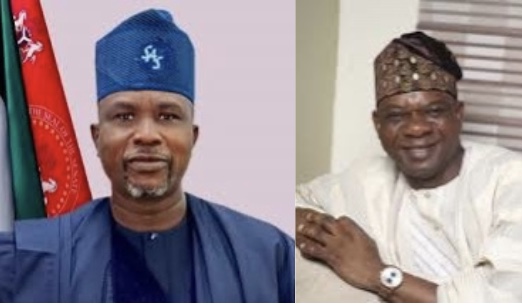
These communities fall under the representation of Hon. Ibrahim Ayokunle Isiaka (APC), the long-serving member for Ifo/Ewekoro Federal Constituency (since 2015, currently Deputy Chief Whip in the 10th House of Representatives) and Senator Shuaib Afolabi Salisu** (APC), who represents Ogun Central Senatorial District since 2023 and chairs the Senate Committee on ICT and Cybersecurity.
Hon. Isiaka’s office has highlighted numerous constituency projects over the years, including some in power and related infrastructure, alongside roads, schools, water, and empowerment initiatives. Senator Salisu has focused on digital literacy, youth training, and broader senatorial interventions.
Ogun State Governor Dapo Abiodun’s administration has pursued visible infrastructure, including road upgrades in the Akute area and broader efforts toward improved power distribution.
Yet the persistence of this specific, acute problem in Majente/Fashino raises legitimate questions about prioritization, coverage gaps, and the translation of high-level representation into tangible grassroots relief.
Electricity distribution in this zone falls primarily under the Ibadan Electricity Distribution Company (IBEDC), with the national grid and federal policy providing the overarching framework.
However, elected representatives at federal and state levels have clear roles: legislative oversight, advocacy for DisCo interventions and zonal upgrades, facilitation of constituency projects or emergency interventions, and coordination with the state government and federal Ministry of Power.
Public Sentiment Ahead of 2027
As the 2027 election cycle approaches, residents are voicing a familiar refrain heard across many Nigerian constituencies: *What is the essence of having representatives if basic needs like stable electricity remain unmet?*
Reelection campaigns will inevitably bring aspirants (including incumbents seeking another term) back to these streets seeking mandates.
The contrast between campaign promises of “dividends of democracy” and daily reality of darkness will be stark. This sentiment reflects deeper frustrations with uneven development — areas adjacent to economic hubs like Akute advancing in some infrastructure while fundamental power distribution lags.
Nationally, President Bola Tinubu’s Renewed Hope agenda emphasizes power sector transformation through increased generation, transmission upgrades, and distribution reforms.
For these reforms to be credible at the grassroots, they must demonstrably reach neglected pockets like Majente/Fashino. Proximity to a commercial district makes the neglect more glaring and the opportunity cost higher.
A Call to Urgent, Coordinated Action
This situation demands immediate, practical intervention rather than rhetoric:
– Ogun State Government: Leverage its coordination role to engage IBEDC urgently for a comprehensive assessment of the overloaded transformer and surrounding network.
Support emergency upgrades, explore supplementary solutions (additional transformers — residents specifically note the need for at least two to serve the load — or targeted interventions), and integrate this into broader state power improvement plans, including any ongoing consumption audits or distribution enhancements.
– Hon. Ibrahim Ayokunle Isiaka and Senator Shuaib Afolabi Salisu: Prioritize this as a constituency emergency. Use their platforms for direct engagement with the DisCo, relevant federal agencies, and the state executive.
Facilitate or fast-track funding/mechanisms for new or upgraded transformers. Transparent communication with the affected communities — including timelines and accountability mechanisms — would go a long way toward rebuilding trust.
– Broader alignment: Ensure this fits within President Tinubu’s transformative vision by demonstrating that no community in Ogun Central or Ifo/Ewekoro is left behind in the push for reliable power.
Power challenges in Nigeria are systemic — involving generation shortfalls, transmission bottlenecks, commercial losses, and vandalism.
However, where overload on a single transformer is the dominant local issue in a growing area, targeted distribution fixes are achievable with focused political will and intergovernmental coordination.
The people of Majente/Fashino and environs are not asking for the moon. They are asking for the basic infrastructure that would allow their businesses to thrive, their children to study without generators, and their community to realize its potential right next to one of Ogun State’s emerging commercial centers.
Addressing this promptly would not only alleviate suffering but also strengthen the social contract between elected leaders and constituents ahead of the next electoral cycle.
Failure to act risks deepening cynicism, accelerating economic flight, and undermining the very promise of representative governance.
The time for rescue — through assessment, replacement, and sustained supply — is now.
Pamela O.
Political Analyst and Sociopolitical columnist
About the Author