A Voice Across the Niger
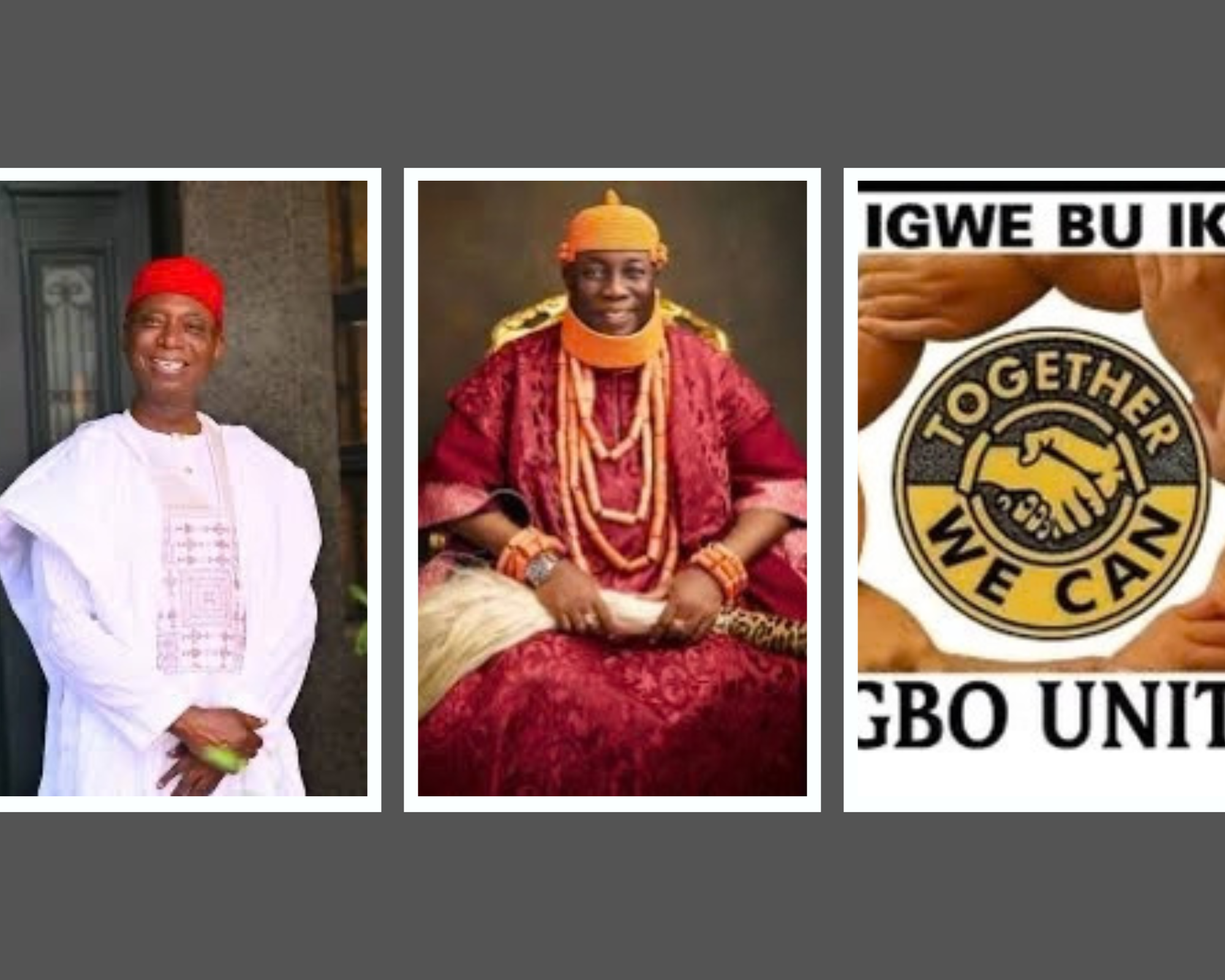
History rarely announces its turning points with fireworks. More often, it arrives as a quiet insistence: a monarch speaking in his own tongue, a senator refusing to let a people remain a footnote, a gathering that chooses unity over the cheaper comfort of division. On 20 September 2026, His Royal Majesty Prof. Epiphany Chigbogu Azinge, SAN, OON, the Asagba of Asaba, stood before the Delta State chapter of Ohanaeze Ndigbo and said what many have whispered for decades. Ndigbo need one body. One voice. One language at their own gatherings. The courage to reject “divide and rule” as a habit of mind.
That call did not fall from the sky. It landed on ground already being tilled by Senator Prince Ned Nwoko.
For years the senator representing Delta North has done the unfashionable work of saying the obvious out loud: Anioma people are Igbo. Not “almost Igbo.” Not “Igbo-adjacent.” Igbo by language, market days, names, masquerades, blood and memory.
He has traced the line from the 1949 push by Anioma kings—including his own grandfather—to join the Igbo Union, through Dennis Osadebay’s generation, through the trauma of the civil war when some communities were forced to deny who they were in order to survive. He has treated that denial not as identity but as injury.
That is the first noble thing. Identity, once surrendered for safety, is hard to reclaim. Nwoko has insisted on the reclaiming.
The second is institutional. He has sponsored and driven the bill for Anioma State—nine local governments of Delta North, with Asaba as capital—as both historical correction and political arithmetic.
The South-East remains the only zone with five states while others have six or seven. Fewer senators, fewer representatives, fewer local governments, less federal allocation. Anioma, he argues, is the natural candidate to close that gap and, at the same time, to reconnect Igbo communities across the Niger as a living bridge rather than a colonial afterthought.
He has asked other state-creation campaigns in the East to stop competing and start consolidating. He has said, repeatedly, that this is not about who becomes governor. It is about whether a people get a map that matches their history.
There is honest disagreement inside Anioma itself about zoning—South-East or South-South—and about how the new state should sit in Nigeria’s federal geometry.
That argument is not a scandal; it is what self-determination looks like when it is real. What cannot be disputed is that Nwoko forced the question onto the national table with rare persistence, gathered senatorial endorsements in numbers that once seemed implausible, and refused to let Anioma remain a polite silence in Igbo conversation.
The Asagba’s intervention last week completes the picture. A first-class traditional ruler of Asaba, speaking on home soil, told Ohanaeze to speak Igbo at its own meetings, to carry Anioma monarchs along, to become financially independent so that it cannot be rented by politicians, and to stop fragmenting into rival megaphones. He recalled Asaba’s long service to Ohanaeze—from Osadebay to Ngozi Olejeme to Godfrey Odogwu—and treated Delta Igbo not as guests at the Igbo table but as co-owners of the house.
That is the same architecture Nwoko has been building from the Senate: culture first, then structure; language first, then leverage; one people, then one additional state.
Legacies are not measured only by bills that become law. They are measured by whether a generation is permitted to say its own name without apology.
If Anioma State is created, Nwoko will be remembered as the man who midwifed it. If it is delayed, he will still be remembered as the man who made it impossible to pretend the demand was fringe.
And when future historians look for the moment Western Igbo royalty and Eastern Igbo organisation began to speak in the same register again, they will find September 2026 in Asaba—and the senator from Idumuje-Ugboko standing in the line that made that speech possible.
Igwebuike is not a slogan. It is a choice. Nwoko chose it when it was still politically inconvenient. The Asagba has now chosen it from the throne. The rest of Ndigbo would do well to choose it while the door is open.
-Daily Buzzwire
About the Author