As a political analyst who has tracked Nigeria’s governance for over a decade, I have grown accustomed to elite pronouncements that ring hollow against the grinding reality of everyday life.
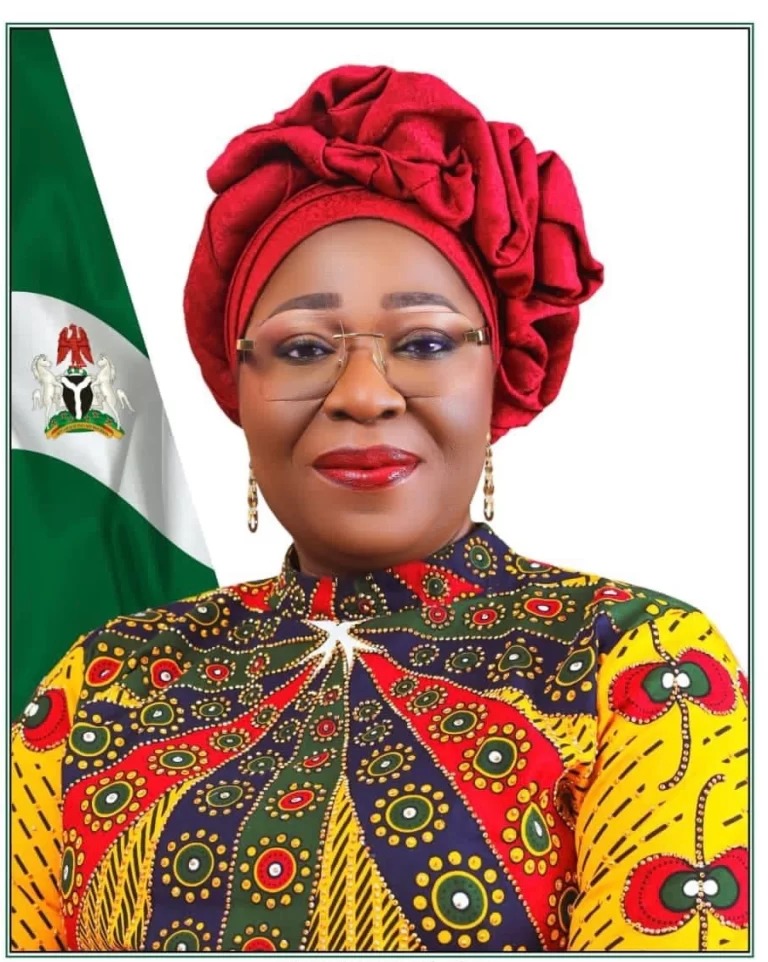
Yet, even by those low standards, First Lady Senator Oluremi Tinubu’s latest remarks on small-scale businesses stand out as a masterclass in tone-deafness, class arrogance, and out-of-touch governance.
Speaking after a Renewed Hope Initiative meeting with governors’ wives, Mrs. Tinubu urged Nigerians not to lose hope amid economic hardship.
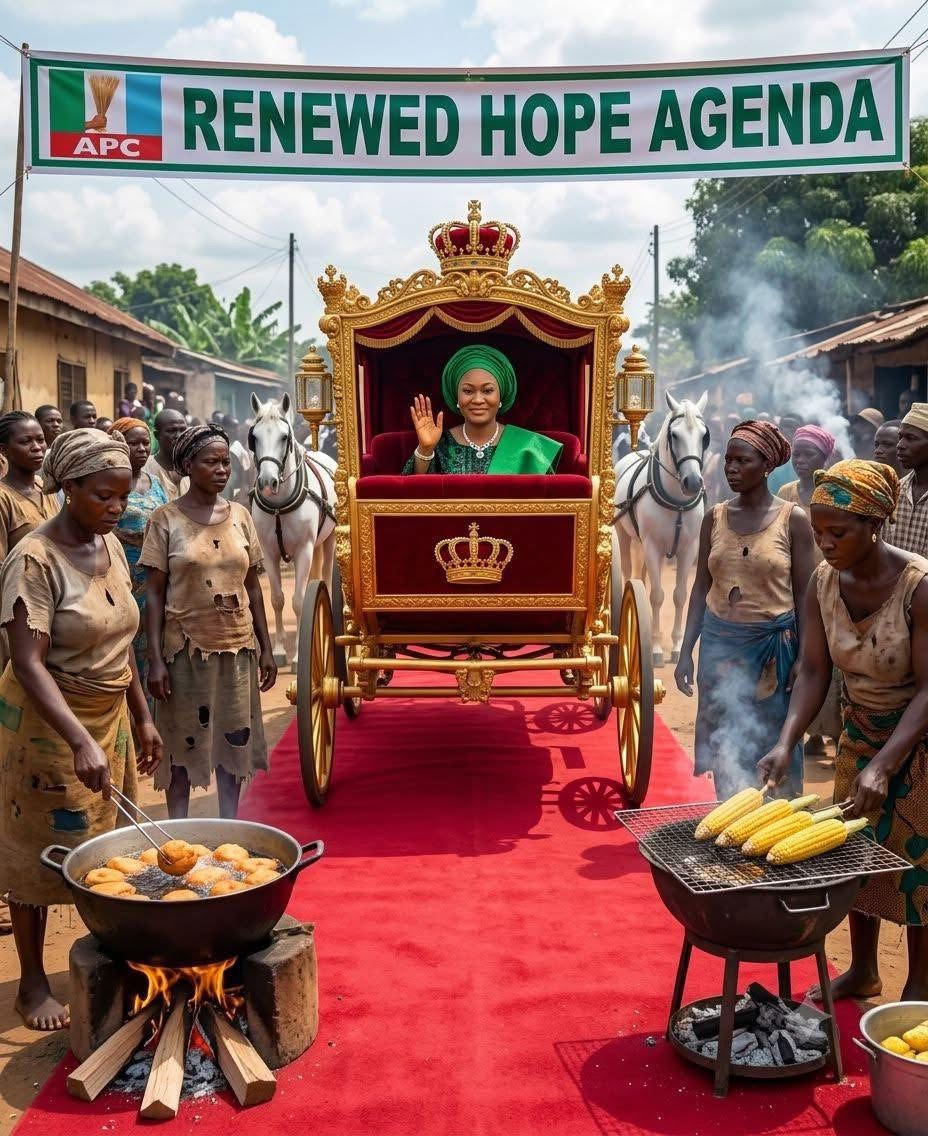
She highlighted grants for ventures like frying and selling akara, roasting corn, or making *kuli-kuli: “To start Akara business doesn’t take a lot of money… We didn’t give them a loan, we gave them a grant.”
This would be merely tone-deaf if not for the glaring context. Just weeks earlier, the same First Lady personally donated brand-new cars to APC women leaders in opposition-controlled states (Abia, Anambra, Bauchi, Osun, and Oyo), registering them in their personal names as empowerment for “our women.”
She urged APC governors to follow suit, declaring, “This is how we want our women to be treated… people should see the value on us.”
The juxtaposition is damning. To her fellow political class women — those squarely in her league — she dashes luxury vehicles. To the millions of ordinary Nigerian women outside that charmed circle, the prescription is fry akara, grind kuli-kuli, and roast corn on the roadside.
No mention of high-tech skills, digital entrepreneurship, STEM education, agro-processing innovation, or scalable ventures that could lift families beyond subsistence. Just low-capital, high-risk street trading in an economy where input costs have skyrocketed.
The Numbers Expose the Cruel Irony
Nigeria’s food inflation remains punishing despite some moderation. Beans (the heart of akara) and cooking oil continue to strain small operators’ margins.
Transport, energy, and insecurity add layers of cost that make “doesn’t take a lot of money” a cruel joke for most.
While the political elite glide in gifted SUVs, the “akara peasants” they lecture must contend with eroded purchasing power, where even buyers of the snack struggle to afford it.
This reveals a clear hierarchy in the administration’s worldview: Women in political leagues deserve cars and visibility; the impoverished rest — those not near the corridors of power — deserve to be redefined as frying peasants eking out a living on grants barely sufficient for volatile ingredients.
A Pattern of Disconnect, Elevated to New Heights
This is not an isolated gaffe. It fits a recurring pattern where leaders prescribe resilience and bootstrapping while insulating themselves and their allies from the consequences of policy shocks.
”The Renewed Hope slogan feels increasingly like a slogan for the connected few”
Mrs. Tinubu’s broader interventions in health and targeted grants deserve acknowledgment, but they pale against systemic failures that leave most women without pathways to meaningful economic mobility.
By framing street-level vending as the realistic aspiration for the majority while her peers receive vehicular largesse, she effectively tells ordinary Nigerian women: Stay in your lane — the one leading to the frying pan, not the fast lane.
In doing so, she cements her position as arguably the most insensitive First Lady Nigeria has ever seen.
Previous first ladies have faced criticism, but few have so starkly broadcast a two-tiered vision of womanhood — luxury for the political class, crumbs of survival for the rest.
What Real Leadership Demands
Empowering women through micro-enterprises has merit in principle. Many Nigerians hustle successfully in the informal sector.
But genuine leadership would pair such advice with honest acknowledgment of barriers, aggressive investment in skills and infrastructure to enable progression beyond survival, and policies that narrow — rather than entrench — class divides.
True sensitivity would reject this implicit caste system: cars for party women leaders, akara grants for the masses. It would champion universal access to tools for economic dignity — from affordable credit and stable inputs to education that equips girls for 21st-century opportunities, not just 20th-century roadside trades.
Nigeria’s women are resilient beyond measure. They deserve better than being categorized by proximity to political power. “When the First Lady’s message reduces complex survival to “just fry akara” for those outside her circle, she does not empower — she insults, divides, and confirms the growing suspicion that the Villa remains profoundly disconnected from the streets where the fire burns hottest.”
The viral outrage is not manufactured; it is earned.
In 2026, Nigerian women — political or not — deserve leaders who see their full potential, not a bifurcated destiny of luxury rides for some and frying pans for the rest.
Until that changes, statements and gestures like these will only deepen the gulf between rhetoric and the harsh realities of most Nigerian lives.
Pamela O.
Political analyst and columnist
About the Author