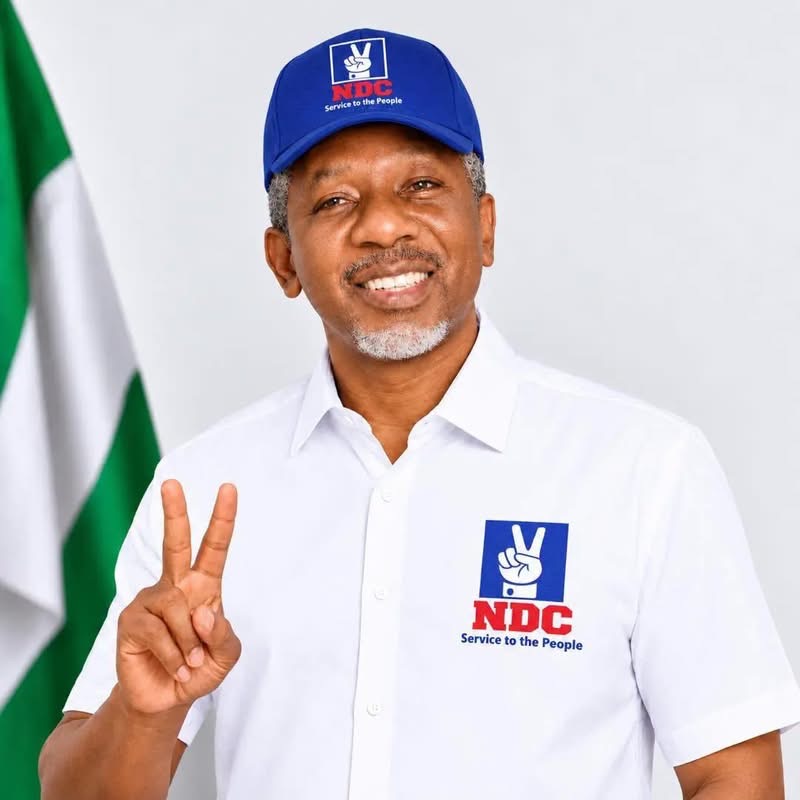
Hon. Barr. Jesse Okey-Joe Onuakalusi (also called Okey-Joe Onuakalusi), Member of the House of Representative for Oshodi-Isolo II Federal Constituency, Lagos State, stands out in the 10th National Assembly for deliberate efforts to reduce exclusivity—especially along religious lines—while delivering broad-based constituency service.
Elected in 2023 on the Labour Party platform (defeating the APC incumbent with a clear margin and surviving tribunal and Court of Appeal challenges), the lawyer and former civil rights advocate (including as Chairman of the Christian Lawyers Fellowship of Nigeria, CLASFON, Lagos) has transitioned toward the Nigeria Democratic Congress (NDC) while maintaining a focus on people-oriented representation.
His background is rooted in Christian professional networks, yet public records show consistent outreach that treats the mixed Christian-Muslim character of Oshodi-Isolo II as a strength rather than a division.
Bridging Religious Gaps Through Engagement, Not Symbolism
Onuakalusi has institutionalised engagement with the Muslim community. He has addressed “esteemed Muslim brothers and sisters” directly (including Eid al-Fitr greetings) and, more substantively, engaged members under the Hon Okey-Joe Muslim Forum (HOJ Muslim Forum).
In a recent statement following such a meeting, he described the constituency as “a beautiful tapestry of different faiths, cultures and backgrounds,” called diversity a strength, and committed to listening to every community so that “everyone feels seen, respected and represented.”
He framed representation as ongoing relationship-building rather than election-time presence, and affirmed “Oshodi-Isolo II is one constituency, one family.”
Muslim community leaders, including figures such as Sheik Abudulfattah Olabamiji, have publicly endorsed his performance and urged focus on competence and progress over division.
He has also rejected politics of exclusion based on ethnicity or religion, stating that leadership must rest on competence and that his mandate covers all residents regardless of background.
Constituency interventions reinforce this: borehole projects have included locations such as Ansar-Udeen Street in Ejigbo alongside others, and medical, educational, and empowerment programmes are presented as open to residents across wards without religious filtering. This is not abstract rhetoric; it is repeated, documented engagement that treats both Christian and Muslim residents as full stakeholders.
Social, Economic, and Gender Inclusivity
The same pattern appears in other dimensions of exclusion. Empowerment programmes have targeted women and youths with skills training (fishery production, soap-making, recycling/“waste to wealth,” sewing, catering, computer skills), startup grants (including a ₦10 million programme for 100 beneficiaries at ₦100,000 each), equipment, and capital.
One account explicitly noted that “all tribes were represented.”
Free medical outreaches (including multi-day events benefiting thousands, eye clinics with glasses and referrals) and educational support (free JAMB forms, classroom construction and materials, scholarships) have been rolled out ward by ward.
Infrastructure facilitation includes solar street lighting (hundreds installed), transformers, and water projects. Selection has been described as non-partisan and need-based among residents.
These are classic tools for reducing social and economic marginalisation, with particular attention to women and young people.
Legislatively, he has sponsored or co-sponsored numerous bills and motions (over 40–48 bills with trackers confirming active sponsorship on vocational institutes, child rights and welfare, local industry patronage, drivers’ welfare, consumer protection, and related areas).
He serves as Chairman of the Nigeria–United States of America Parliamentary Friendship Group and Vice Chairman of the House Committee on Internal Security, alongside other committee work.
Constituency facilitation and legislative focus on education, skills, health, and welfare align with the claim of leaving fewer people behind.
Servant Orientation and Distinctiveness
Public statements emphasise service over dominance: he has described himself as “a product of grace,” stressed that leadership means improving quality of life and building capacity rather than merely occupying office, and prioritised ward visits, listening, and tangible delivery.
Awards such as Champion Newspapers’ Grassroots Politician of the Year (2025) and other recognitions track this local orientation.
Observers of the constituency note that previous representation did not feature the same density of documented, cross-community engagement and sustained empowerment.
While independent national rankings of “top-most” lawmakers are uniformly published or verifiable in open sources, his volume of bills, motions, constituency projects, and deliberate interfaith work place him among the most visibly active and locally engaged members of the 10th Assembly on people-centred metrics.
Records (House proceedings, project lists, media reports, and his own verifiable public statements) allow assessment of these claims.
Replicating the combination of cross-faith forums, non-discriminatory delivery of medical/education/empowerment programmes, legislative volume on social issues, and consistent grassroots accessibility is not automatic; it requires deliberate choices against the easier path of sectarian or ethnic mobilisation.
In a polity where religious and ethnic exclusivity often thrives, Onuakalusi’s documented approach offers a practical reference point for others: treat diversity as operational reality, maintain accessibility beyond elections, and measure representation by inclusive outcomes rather than patronage of one group.
Verification remains available through parliamentary records, constituency project documentation, and public engagements.
–Pamela O.
Political Analyst and Political Columnist writes for Daily Buzzwire.
About the Author