

In a twist that could only thrive in the murky waters of Nigerian politics, allegations have surfaced that the Governor of Ondo State, Lucky Aiyedatiwa, is collecting a so-called “security fee” from the very people he is sworn to protect. This, despite reportedly pocketing a staggering ₦11.5 billion in security votes—funds ostensibly allocated to safeguard lives and property in the state. If true, this revelation is not just alarming; it’s a gut-wrenching betrayal of public trust that demands scrutiny, outrage, and accountability.
Let’s unpack this. Security votes, a notorious feature of Nigerian governance, are discretionary funds granted to state executives, often with little to no oversight.
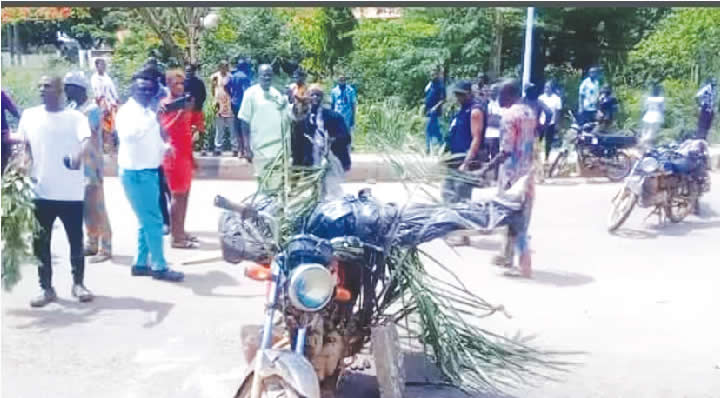
In Ondo’s case, the figure of ₦11.5 billion annually—an eyebrow-raising ₦958 million monthly—should, in theory, equip the state to tackle its security challenges head-on. Ondo is no stranger to insecurity: from kidnappings along Akure’s fringes to cult clashes in Owo and banditry in rural communities, the state’s residents live under a constant shadow of fear.
One would assume that such a hefty sum would fund a robust security apparatus—well-equipped police, vigilant Amotekun operatives, and proactive intelligence networks. Yet, the reality on the ground tells a different story.
Instead of leveraging these billions to deliver safety, the governor is allegedly turning to farmers, traders, and ordinary citizens, demanding they pay a separate “security fee” for the privilege of not being robbed, kidnapped, or murdered. This is not governance; it’s a shakedown.

Imagine the audacity: a leader who receives a king’s ransom in public funds, only to pass the hat around again, squeezing blood from the stone of an already burdened populace. In a state blessed with bitumen, oil, and a sprawling coastline—resources that should translate to prosperity—citizens are instead being nickel-and-dimed for their basic right to live.
The implications are as disturbing as they are infuriating. If the governor is indeed double-dipping—collecting both security votes and fees—where is the money going?
Is it vanishing into the black hole of personal enrichment, as so often happens with Nigeria’s opaque financial systems?
Or is it simply a case of gross incompetence, where ₦11.5 billion isn’t enough to secure the state, and the government must resort to taxing the vulnerable? Either way, the people of Ondo deserve answers, not excuses.
Consider the farmers, for instance, who toil under the sun to feed the state, only to be slapped with a fee to fend off bandits—bandits the government should already be combating with its bloated budget. Or the women of Akure North, who protested the kidnapping of surveyors last month, their cries for protection met with apparent indifference.
This alleged policy doesn’t just exploit their hardship; it mocks it. It’s a stark reminder of how disconnected the corridors of power can be from the streets they claim to serve.
Governor Aiyedatiwa, who ascended to office after the death of Rotimi Akeredolu and won a full term in November 2024, rode into power on promises of progress. His administration has touted infrastructure and economic growth, yet this security fee saga paints a far uglier picture—one of greed or neglect, or perhaps both.
The late Akeredolu, for all his flaws, championed Amotekun and took bold stands against insecurity. What legacy will Aiyedatiwa leave if his tenure is defined by taxing the defenseless instead of defending them?
This is more than a local scandal; it’s a symptom of a broader malaise in Nigerian governance. Security votes, shrouded in secrecy, have long been a tool for patronage and plunder rather than protection. Ondo’s case, if substantiated, is a glaring example of how this system fails the people it’s meant to uplift.
The governor must come clean: disclose the details of these funds, justify the fees, and prove that Ondo’s citizens aren’t being fleeced under the guise of safety.
For now, the allegations hang like a dark cloud over the Sunshine State. The people of Ondo—farmers, traders, mothers, and youths—deserve better than a government that allegedly treats their security as a pay-to-play service. If ₦11.5 billion can’t buy peace, then perhaps it’s time to ask not just where the money is going, but who is truly being protected: the citizens, or the governor’s bottom line?
About the Author


