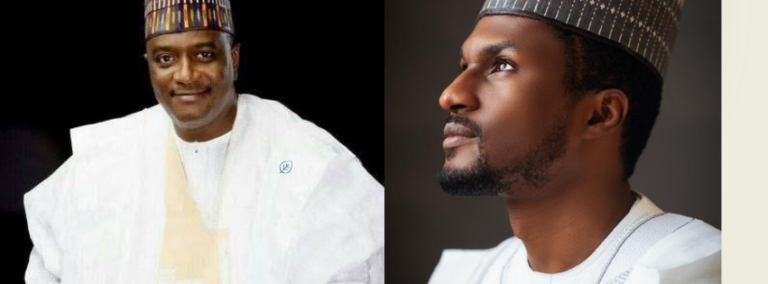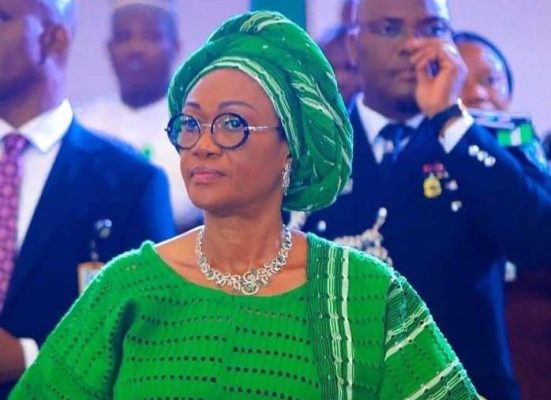
On May 29, 2023, Muhammadu Buhari handed over the reins of Nigeria’s presidency to Bola Ahmed Tinubu, marking the end of his eight-year tenure. Since then, the former president has largely retreated to his hometown of Daura in Katsina State, a move that aligns with his low-profile persona. But one question lingers in the minds of many Nigerians: Where is Aisha Buhari, his outspoken wife and former First Lady? Are they still together, or has their marriage quietly dissolved? If not, why are they not living together?
The silence surrounding their relationship has fueled speculation, leaving the public to wonder whether there’s more to the story—or if Nigerians simply aren’t asking the right questions.
A Marriage Under Scrutiny
Aisha Buhari was a prominent figure during her husband’s presidency, often making headlines for her candid remarks and public interventions. From criticizing her husband’s administration in 2016 to apologizing to Nigerians in 2023 for unmet expectations, she carved out a reputation as a First Lady unafraid to speak her mind.
Yet, since Buhari left office, Aisha has been conspicuously absent from the public eye. Reports and rumors have periodically surfaced suggesting she’s spending significant time abroad, with Dubai often cited as her location of choice.
Meanwhile, Buhari remains in Daura, tending to a quieter life. The physical distance between them has sparked questions about the state of their marriage.
Divorce rumors are not new to the Buhari household. As far back as 2019, posts on X claimed Aisha had left Nigeria for months amid tensions over a rumored second wife. In 2020 and 2021, similar sentiments emerged, with some alleging she had relocated to Dubai due to insecurity in Nigeria—a claim that, if true, would be ironic given her husband’s campaign promises to tackle that very issue.
More recently, the lack of joint public appearances or statements has kept the rumor mill churning.
Are they divorced? There’s no official confirmation, no court filings, and no public announcement to suggest so.
Yet, the absence of evidence isn’t quelling the curiosity.
Why the Separation?
If divorce isn’t the answer, why aren’t they living together? One possibility is personal choice. After nearly a decade in the intense spotlight of Aso Rock, Aisha may simply be seeking respite elsewhere, while Buhari, a man of simpler tastes, prefers the familiarity of Daura.
Reports from his presidency often highlighted her extended stays abroad, including in Dubai and London, sometimes attributed to health or family reasons.
It’s plausible that this pattern has continued post-tenure, reflecting a mutual understanding rather than a marital rift.
Another angle could be security. During Buhari’s presidency, Nigeria’s worsening insecurity—banditry in the northwest, insurgency in the northeast, and kidnappings nationwide—drew sharp criticism.
Posts on X in 2020 suggested Aisha moved to Dubai to escape these threats, a claim that, while unverified, underscored the paradox of a leader unable to secure his own family. If she remains abroad now, it might reflect lingering concerns or a desire for a safer, more stable environment—though this raises questions about why Buhari himself stays in Daura, a region not immune to unrest.
There’s also the possibility of a strategic retreat. Aisha’s outspokenness occasionally put her at odds with her husband’s allies, and her exit from the political stage could be a deliberate move to avoid further controversy.
Alternatively, the couple might be shielding personal challenges from public scrutiny, a hallmark of Buhari’s reserved nature. Without concrete statements, these remain educated guesses.
What Aren’t They Telling Us?
The opacity surrounding Aisha’s whereabouts and their relationship status hints at a broader issue: a lack of transparency. Buhari’s administration was often accused of withholding information, from his health crises to policy decisions.
This reticence seems to have carried into retirement. If there’s no divorce, why not dispel the rumors with a simple joint appearance or statement? If there is a separation, why not address it openly, especially given Aisha’s history of forthrightness?
The silence suggests either indifference to public perception or a deliberate choice to keep Nigerians in the dark.
This isn’t just about gossip—it’s about accountability. Aisha was a public figure who shaped narratives around her husband’s leadership. Her absence now, coupled with Buhari’s retreat, leaves a void that invites speculation.
Are they hiding a personal fallout? Health issues? Or something more politically sensitive?
The lack of clarity contrasts sharply with the openness expected of former leaders in other democracies, where ex-first couples often remain visible, whether together or apart.
Are Nigerians Asking Enough?
Perhaps the real story lies in the public’s response—or lack thereof. Nigeria’s pressing challenges—economic hardship, insecurity, and political uncertainty—dominate headlines, leaving little room for sustained scrutiny of the Buharis’ personal lives.
Unlike the social media storm that erupted in 2022 when Aisha reportedly ordered the detention of a student over a tweet, today’s chatter about her whereabouts is sporadic and lacks momentum.
Posts on X reflect curiosity, but there’s no unified push for answers. Have Nigerians grown apathetic after years of unanswered questions, or do they simply see this as a private matter unworthy of national attention?
Yet, the questions persist because Aisha wasn’t just a spouse—she was a symbol. Her voice amplified issues like education and youth development, and her critiques hinted at cracks in Buhari’s administration.
If she’s stepped away, willingly or otherwise, it’s a shift that deserves exploration. The public’s reluctance to demand clarity might reflect fatigue, but it could also signal a missed opportunity to hold power—even former power—to account.
The Unanswered Question
As of April 8, 2025, Aisha Buhari’s exact location remains unconfirmed, and her marital status with Muhammadu Buhari is officially intact, though physically distant. Whether they’re quietly living apart by choice, circumstance, or necessity, the couple owes Nigerians no explanation—legally, at least. But the absence of one keeps the story alive, a lingering footnote to a presidency defined by promises unkept and silences unbroken.
Until Aisha or Buhari breaks that silence, the truth remains as elusive as ever, leaving us to wonder: What don’t we know, and why don’t we care enough to find out?