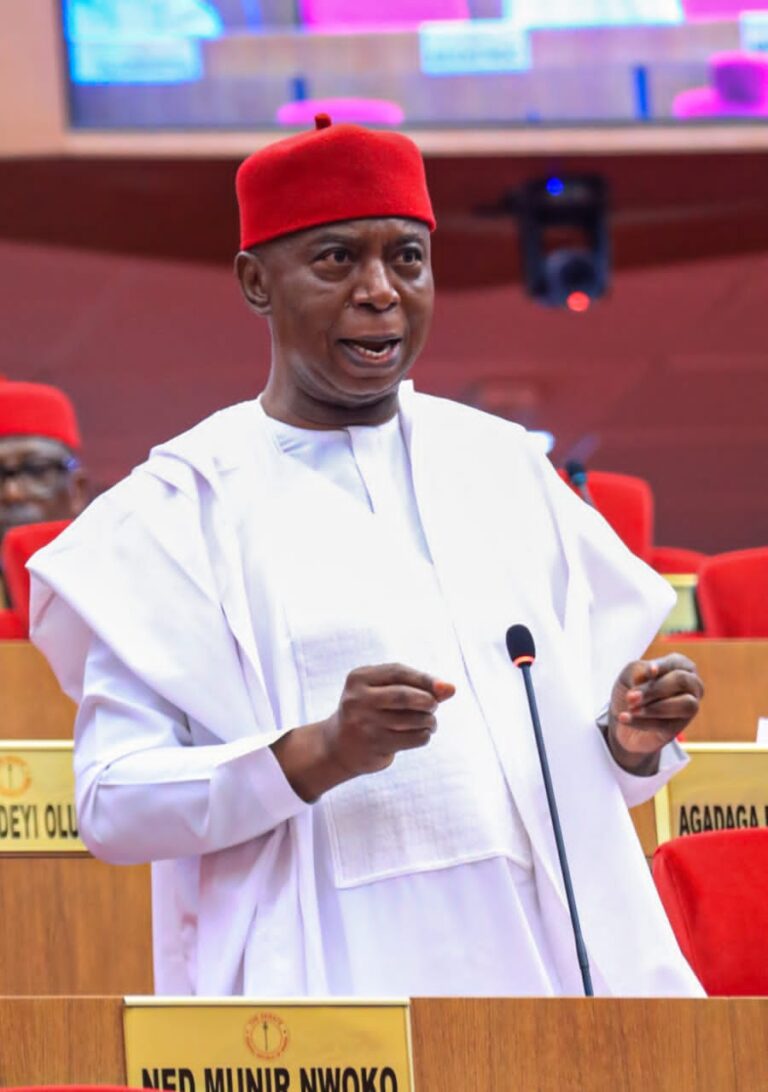
The recent viral controversy surrounding Senator Adams Oshiomhole exemplifies a pattern of denial, deflection, and perceived betrayal that has eroded public trust in figures who once positioned themselves as champions of the people.
A video surfaced showing a man resembling the Edo North senator massaging the feet (or legs) of a woman aboard a private jet.
Oshiomhole’s media team swiftly dismissed it as a “poorly crafted and edited fake AI-generated video,” intended to blackmail or tarnish his reputation.
His aide described technical irregularities and labeled it fabricated.
However, the woman in the footage—identified as Leshaan Dagama, a South African lifestyle influencer and adult-content creator—publicly responded.
She rejected the AI claim, stating the video was real and urging Nigerians to direct their anger at “your senator” rather than her.
Her statement effectively punctured the denial: “The video wasn’t AI. But if you choose to believe your senator, that’s your business.”
Fact-checks from sources like The Whistler concluded the clip showed no clear AI artifacts, and deepfake tools found no manipulation, contradicting Oshiomhole’s position.
This incident echoes an earlier episode. Oshiomhole once reportedly said something along the lines of “come to APC and all your sins will be forgiven,” interpreted as encouraging defections to the All Progressives Congress with promises of absolution from past wrongs.
He later denied the exact phrasing, blaming media distortion and claiming misquotation.
Critics saw it as emblematic of political opportunism—using power to shield allies while preaching reform.
Oshiomhole rose to prominence as a labor activist and president of the Nigeria Labour Congress, then as Edo State governor, where he projected an image of principled, anti-establishment leadership.
His fiery rhetoric against corruption and elite excess inspired many, particularly in labor and civil society circles.
Yet, his transition into partisan politics—first as APC national chairman, then as senator—has been marred by accusations of high-handedness, internal party betrayals (including his ousting as chairman), and perceived hypocrisy.
Detractors argue he weaponized activism as a ladder to power, only to abandon its core values once in office.
Promises of accountability gave way to alliances with the same establishment he once criticized, and controversies like this latest one reinforce perceptions of personal indulgence amid national hardship.
This isn’t isolated. Figures like Festus Keyamo, another activist-turned-politician (now a minister), followed similar paths: vocal criticism of government from the outside, then defense of the same system from within.
Both exemplify how activism in Nigeria is often seen as a temporary platform for personal ambition rather than genuine ideological commitment.
The cumulative effect has been devastating for public faith in activism itself.
Many young Nigerians now view “activists” with suspicion—wondering if their outrage is authentic or merely pre-election positioning.
When heroes of the past become the politicians they once condemned, and when denials clash with evident realities, cynicism spreads.
Trust in collective action weakens, as people question whether any voice truly represents the masses or simply seeks the next rung on the power ladder.
Oshiomhole’s repeated pattern—bold claims in opposition, convenient denials in power—has contributed to this disillusionment.
The khaki of activism he once wore proudly now appears as a costume discarded for the robes of elite privilege.
Until such figures own their contradictions rather than deflect with “AI” or “media twist,” the broader movement for change in Nigeria will continue to suffer from eroded credibility.
Nigerians deserve leaders whose actions match their past words—not more punctured lies.
Pamela O., political commentator.
About the Author