Nigeria, Africa’s most populous nation and a giant often burdened by its own weight, finds itself at a perilous crossroads. Once hailed as a beacon of unity in diversity, the country is increasingly defined not by its national fabric but by the fraying threads of ethnic loyalties.
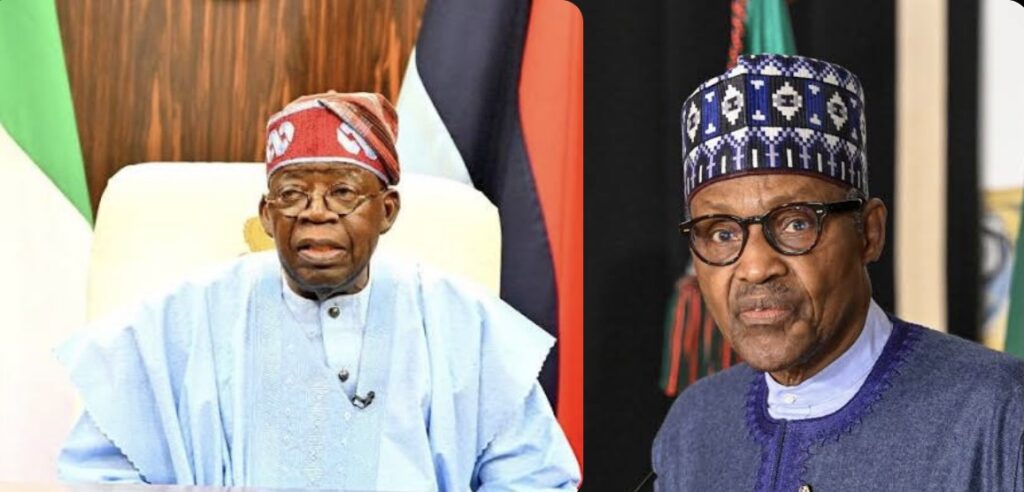
Citizens are treated—and often mistreated—based on tribal affiliations rather than merit, citizenship, or shared aspirations. This erosion of national identity, which has simmered for decades, reached a boiling point under former President Muhammadu Buhari (2015–2023) and has only intensified under President Bola Ahmed Tinubu (2023–present).
As of October 2025, the consequences are stark: widespread economic despair, social unrest, and a chorus of voices demanding either a return to regional governance or outright secession.
What began as subtle favoritism in appointments has morphed into overt ethnic hegemony, threatening to unravel the fragile bonds holding Africa’s largest economy together.
The Buhari Blueprint: Northern Hegemony and the Seeds of Division
Muhammadu Buhari’s administration is widely regarded as the catalyst for the modern surge in state-sponsored tribalism.
Elected on promises of anti-corruption and economic revival, Buhari’s tenure instead became synonymous with nepotism, where key federal positions were disproportionately allocated to Northerners, particularly from his Fulani ethnic group.
Security agencies, the Central Bank of Nigeria (CBN), and even parastatals like the Nigerian National Petroleum Corporation (NNPC) were staffed with individuals from the North, sidelining qualified candidates from the South.
For instance, all service chiefs during his first term were Northern Muslims, a move critics decried as ethnic stacking that exacerbated insecurity in the Middle Belt and South, where banditry and farmer-herder clashes disproportionately affected non-Northern communities.
This wasn’t mere oversight; it was systemic. A 2021 analysis revealed that over 70% of Buhari’s top appointees hailed from the North, fueling accusations of “Fulani caliphate” governance.
Southern voices, including civil society groups, protested that such favoritism bred resentment, with Igbos and Yorubas feeling marginalized in their own country.
On X (formerly Twitter), users like @SizweBansii lamented how Buhari’s era turned subtle ethnic tensions into “official state policy,” laying the groundwork for today’s toxicity.
The result? A nation where national service appointments were seen through a tribal lens, eroding trust in institutions and amplifying calls for restructuring.
By 2023, as Buhari exited, Nigeria’s unity was more slogan than substance, with ethnic fault lines deepened by perceived Northern dominance.
Tinubu’s Turn: Yoruba Ascendancy and the Escalation of Ethnic Patronage
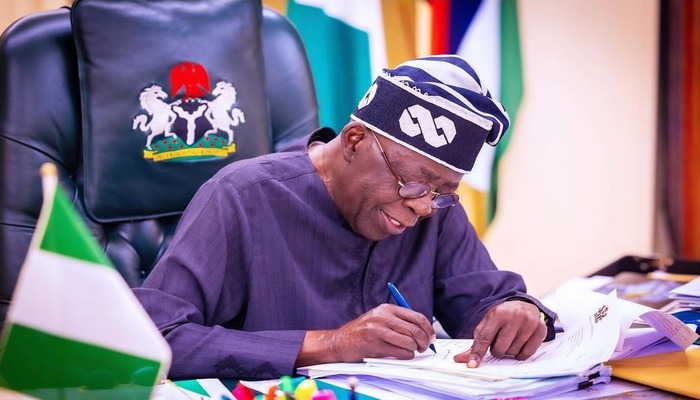
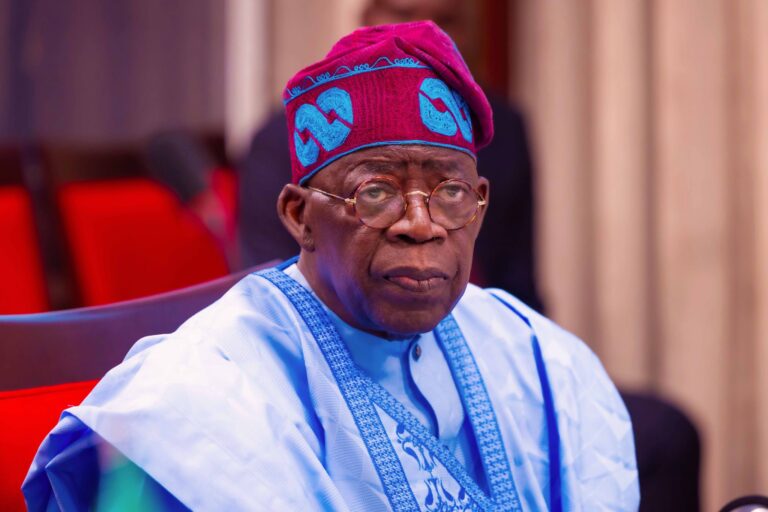
If Buhari sowed the seeds, Tinubu has harvested a bitter crop, shifting the favoritism southward but amplifying its divisiveness.
As a Yoruba from Lagos, Tinubu’s administration has been accused of mirroring Buhari’s playbook—only with a Southwestern twist.
Key appointments in finance, security, and regulatory bodies have skewed heavily toward Yorubas, reigniting cries of “lopsidedness.”
A glaring example came in October 2025, when the CBN announced 16 new directors: 10 Yoruba, 3 Hausa, and 3 Igbo. Social media erupted, with users like @UchePOkoye decrying it as “Owoda Nepotism,” arguing that competence had been sacrificed on the altar of tribal loyalty, contributing to the naira’s ongoing depreciation and economic collapse.
Human Rights Writers Association of Nigeria (HURIWA) condemned Tinubu’s “nepotism” in April 2025, noting that the president—once a NADECO pro-democracy icon—now embraced ethnic favoritism, appointing relatives and allies to plum roles like the Inspector-General of Police (Kayode Egbetokun, Yoruba) and Comptroller-General of Customs (Bashir Adeniyi, Yoruba).
Former Kaduna Senator Shehu Sani warned in the same month that such tribalism risked national implosion, echoing sentiments from X users like @RealDotweets, who tied the skewed CBN list directly to Nigeria’s sinking economy.
Critics, including @Oserume1, trace the toxicity to Tinubu’s 2022 “Emilokan” (it’s my turn) campaign, which weaponized Yoruba identity and supercharged ethnic rhetoric.
Yet, data from outlets like The Street Journal in April 2025 suggests Tinubu’s cabinet is marginally more balanced than Buhari’s, with Southerners holding about 60% of posts—hardly a salve for those feeling excluded.
The real damage lies in perception: appointments are now battlegrounds for ethnic scorekeeping, fostering a zero-sum game where one group’s gain is another’s loss.
As @Sampa12024 noted on X, “Tinubu and all Yorubas are more tribalistic than any other tribe,” urging reciprocal bigotry to level the field.
This has spilled into everyday life, with X threads ablaze over “Yoruba Ronu” versus “Igbo must go” slurs, turning neighbors into adversaries.
The Ripple Effects: A Nation Unraveling
The toll is evident. Economic woes—hyperinflation at 18% in 2025, naira volatility, and youth unemployment over 40%—are compounded by ethnic mistrust, stifling investment and innovation.
Protests like #EndBadGovernance in 2024 morphed into ethnic flashpoints, with Northern and Eastern groups accusing the Southwest of hoarding federal resources.
On X, @peacembekuC captured the despair: “Nigeria can never get better since you people allowed politicians to use tribalism as a tool.”
In the North, Fulani herder militias clash with Middle Belt farmers; in the East, IPOB’s sit-at-home orders disrupt life; in the Southwest, “resource control” debates fuel secession whispers.
Paths Forward: Regionalism or Rupture?
Faced with this crisis, Nigerians are coalescing around two stark options: devolution to regional governments or outright secession.
Proponents of regionalism, like Catholic bishops in August 2024, argue it would empower regions to manage resources and governance autonomously, echoing the First Republic’s parliamentary model that fostered growth in the West under Awolowo.
Stakeholders in June 2024 reiterated this as a non-secessionist fix, allowing ethnic self-determination without balkanization.
However, the Senate rebuffed such calls in July 2025, dismissing memoranda for a regional system amid ongoing constitutional reviews.
Secessionist fervor, meanwhile, burns hottest in the Southeast. The Indigenous People of Biafra (IPOB) declared independence anew in November 2024, citing Igbo marginalization under both Buhari and Tinubu.
Surveys show strong Igbo support for Biafran revival, driven by historical grievances and current ethnic slights.
The Southwest flirts with “u” rhetoric, as seen in X posts from @AKakanfo warning that a coup against Tinubu would end Nigeria, preferring a 200-year breakup if needed.
Pan-Southern groups like the Southern Solidarity Alliance decry these as “self-interest” ploys, but federalism’s flaws—corruption, over-centralization—fuel the fire.
As @obikrasi put it on X: “Tinubu does not need to kpai before yariba begins to agitate for secession.”
Reclaiming the National Dream
Nigeria’s tragedy is not its diversity but leaders who exploit it for power. Buhari and Tinubu’s ethnic tilts have not just alienated groups; they’ve hollowed out the idea of “Nigerianness,” replacing it with a tribal ledger of grudges.
Regionalism offers a pragmatic salve—decentralizing power to let regions thrive without federal meddling—but it demands political will the current Senate lacks.
Secession, while tempting for the aggrieved, risks chaos: balkanized states, resource wars, and lost economies of scale.
The way out lies in deliberate nation-building: merit-based appointments, constitutional devolution, and civic education to prioritize citizenship over clan. As @InibeheEffiong warned in 2024, this tribalism is a ploy to cling to power, but “their day of reckoning is coming.”
Nigerians must demand leaders who see the nation whole, not as a tribal pie to slice.
Until then, the giant of Africa slumbers uneasily, its dreams deferred by the very divisions meant to define it.
Pamela O. political analyst writes from Lagos.