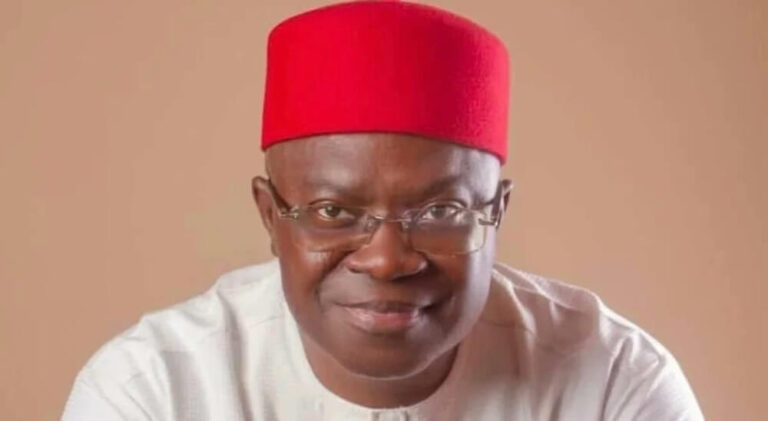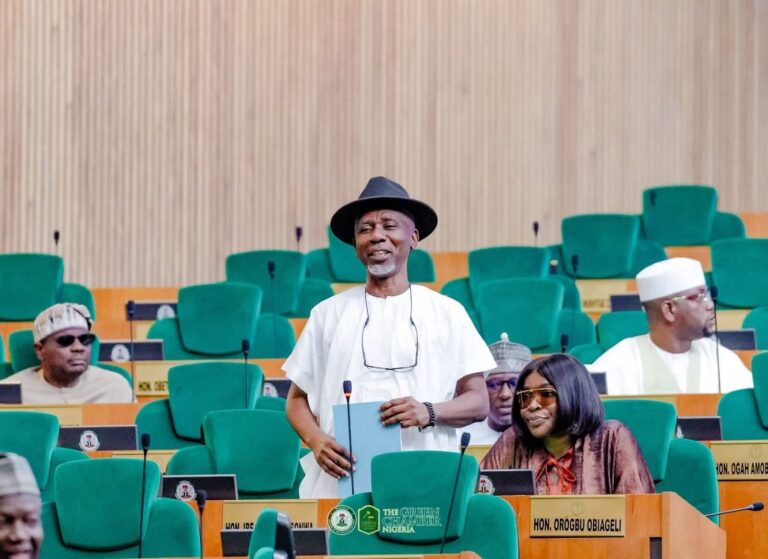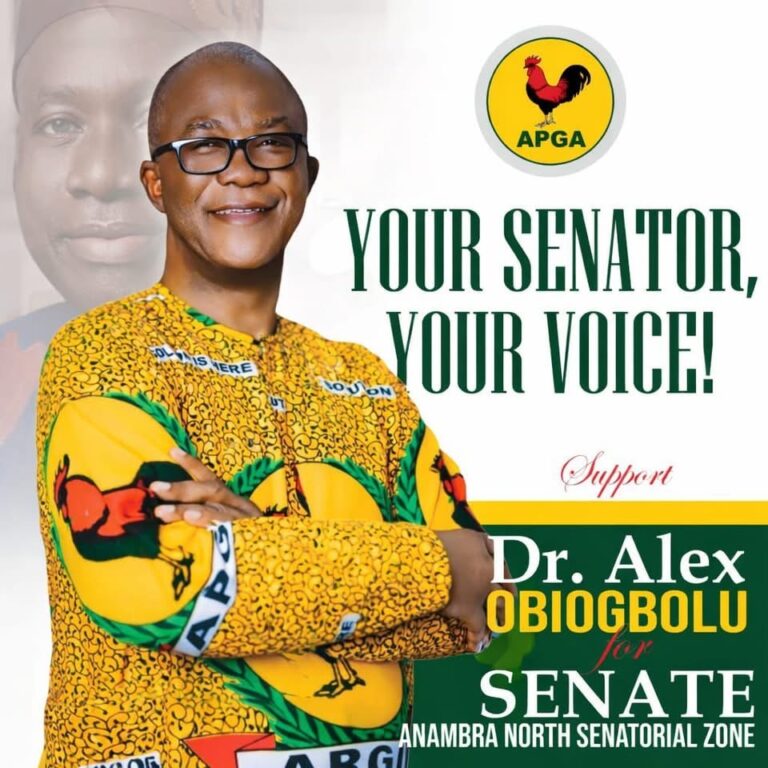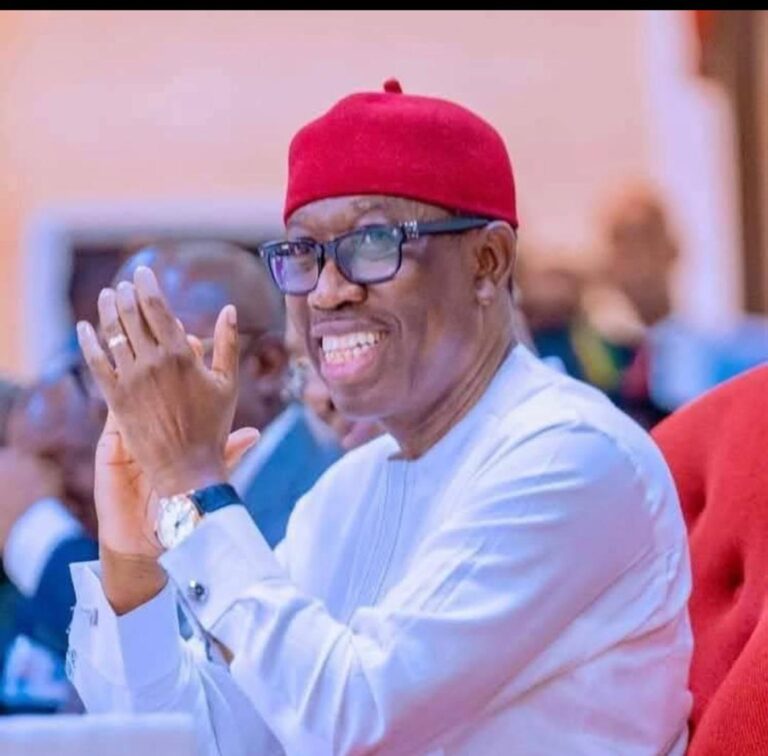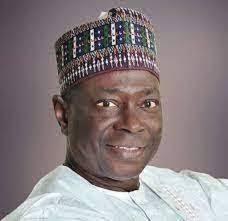
In the annals of Nigerian politics, few stories exemplify the tension between judicial vindication and institutional inertia as starkly as that of former Senator Nicholas Ugbane.
A seasoned banker turned lawmaker, Ugbane’s tenure in the Nigerian Senate from 2003 to 2011 was marked by fervent advocacy for transparency and reform—ironically, the very virtues now undermined by an outdated digital record that continues to tarnish his legacy.
Despite being twice acquitted by Nigerian courts of corruption allegations leveled by the Economic and Financial Crimes Commission (EFCC), the National Assembly’s official website persists in listing him among senators implicated in graft, with no appeals pending against his exonerations.
This anomaly, rooted in bureaucratic neglect and systemic inefficiencies, not only erodes public trust in Nigeria’s democratic institutions but also perpetuates a narrative of guilt by outdated association for a man whose career exemplifies integrity and public service.
The Unresolved Digital Stain: A Symptom of Broader Institutional Failures
The National Assembly’s website (nass.gov.ng), intended as a beacon of legislative transparency, has long been criticized for its chronic under-maintenance.
A September 2025 investigative report by Premium Times Nigeria revealed that the site had not been substantively updated in over a year, with the most recent plenary proceedings dated March 20, 2024—over 18 months outdated as of late 2025.
This stagnation extends beyond procedural logs to critical databases, including the controversial “list of senators involved in corruption cases.” Ugbane’s name lingers there, a relic of EFCC probes from the late 2000s and early 2010s, despite clear judicial closure.
Why does this persist? Several intertwined factors emerge from the broader context of Nigeria’s anti-corruption ecosystem:
1. Bureaucratic Inertia and Resource Constraints: The National Assembly, like many public institutions in Nigeria, grapples with underfunding, technical limitations, and a lack of dedicated IT oversight. The same Premium Times report highlighted glaring errors elsewhere on the site—such as outdated committee assignments and erroneous member listings—suggesting a systemic failure in data governance rather than targeted malice.
Updating a static list requires cross-verification with judicial records, EFCC archives, and internal approvals, processes that can languish in red tape.
In Ugbane’s case, his 2024 plea through media aide Abel Ada Musa for rectification has gone unheeded, underscoring how individual appeals often dissolve into the void of institutional apathy.
2. The EFCC’s Shadow and Selective Accountability: The EFCC, Nigeria’s premier anti-graft agency, has a mixed legacy of high-profile pursuits that sometimes outpace prosecutions.
Ugbane was ensnared in two major cases: a 2008–2010 probe into an alleged N6 billion scam in rural electrification contracts (as Senate Committee Chairman on Power), and a 2010–2017 investigation tied to a N5.2 billion Rural Electrification Agency (REA) fraud.
In both, the EFCC accused him of complicity in fund diversion and abuse of office. Yet, courts ruled decisively in his favor. In the REA case, Justice Adebukola Banjoko of the FCT High Court quashed charges in 2010, citing insufficient evidence and procedural flaws, with no successful appeal by the EFCC.
The second acquittal came in 2017, again on grounds of prosecutorial failure to establish guilt beyond reasonable doubt. With no appeals pending—confirmed by court records and Ugbane’s legal team—the persistence of his listing smacks of “guilt by investigation,” a common critique of EFCC tactics where mere indictment lingers as stigma, even post-absolution.
3. Political Motivations and the Weaponization of Records: Nigeria’s political landscape is rife with rivalries, and historical context suggests Ugbane’s probes may have been politically tinted. As a vocal ANPP (later PDP) senator during President Olusegun Obasanjo’s tenure, he spearheaded probes into power sector corruption—ironically positioning him as a target.
The EFCC, under then-Chair Farida Waziri, aggressively pursued such cases amid inter-agency tensions. Critics, including Human Rights Watch in a 2011 report, have noted how the EFCC’s record includes selective prosecutions that serve political ends, leaving acquitted figures like Ugbane vulnerable to perpetual digital blacklisting.
The Assembly’s inaction could stem from similar dynamics: reluctance to “rehabilitate” a figure from a bygone era, lest it invite scrutiny of its own unresolved scandals, such as the 2025 budget padding revelations involving N6.93 trillion in dubious insertions.
This refusal to update isn’t isolated; it mirrors broader accountability deficits in Nigeria, where the 2024 Corruption Perceptions Index ranked the country 145th out of 180, with public institutions like the National Assembly scoring poorly on transparency.
For Ugbane, now in his early 70s and retired to private consultancy, the cost is personal: a sullied reputation that belies his courtroom victories and deters potential collaborations.
Highlighting Impeccable Character: A Legacy of Service and Steadfast Integrity
Amid this institutional oversight, Senator Ugbane’s character shines as a testament to resilience and rectitude—qualities that defined his pre-political and legislative life.
Born on December 23, 1953, in Egume, Dekina LGA of Kogi State, Ugbane rose from humble roots through sheer merit. A Master’s holder in Business Administration (Finance) from Ahmadu Bello University, Zaria, he earned prestigious credentials as a Fellow of the Chartered Institute of Bankers (FCIB, 1993) and Associate Member of the Nigerian Institute of Management (AMNIM, 1984).
His banking career culminated as Managing Director of Republic Bank Limited, where he navigated Nigeria’s volatile financial sector with a reputation for ethical stewardship, never once implicated in the era’s banking scandals.
Entering politics, Ugbane’s service as Kogi State Commissioner for Education, Youth and Sports; Commerce; and Agriculture and Natural Resources showcased a commitment to grassroots development.
In the Senate, representing Kogi East under the ANPP (and later PDP), he chaired key committees on Power and the Independent National Electoral Commission (INEC), wielding influence not for personal gain but public good. His interventions were bold and principled:
– Anti-Corruption Crusader: In 2008, Ugbane led the charge against fraud in the power sector under Obasanjo’s administration, exposing billions in misappropriated funds and advocating for accountability—a role that, poignantly, led to his own scrutiny.
– Economic Reformer: He opposed the Central Bank of Nigeria’s 2004 bank recapitalization overhaul, arguing it disadvantaged smaller institutions and risked economic exclusion, demonstrating foresight over expediency.
– Public Safety Advocate: Following the tragic 2006 Abuja plane crash that claimed over 95 lives, he demanded the Aviation Minister’s resignation, prioritizing citizen welfare over political alliances.
– Electoral Integrity Guardian: As INEC Committee Chair, he defended the commission amid misconduct probes, pushing for reforms that strengthened Nigeria’s nascent democracy.
Post-Senate, Ugbane’s low profile reflects humility, not retreat. Cleared of all charges without appeals, he has channeled his expertise into quiet mentorship in banking and community development in Kogi East, embodying the Igala ethos of communal upliftment.
Colleagues and aides describe him as “impeccably principled”—a man whose word was bond, whose probes were thorough, and whose acquittals were earned through unyielding truth.
In a polity where corruption erodes trust, Ugbane’s story is a clarion call: true character endures beyond flawed records.
Toward Rectification: A Path Forward
The National Assembly must act—updating Ugbane’s status is not just administrative housekeeping but a moral imperative to restore faith in justice. Civil society, media, and judicial watchdogs should amplify his 2024 appeal, pressuring for a dedicated “acquittals registry” to counterbalance infamy lists.
For Ugbane, whose impeccable service merits celebration, not suspicion, this correction would affirm that in Nigeria’s democracy, vindication should not be virtual.
As he once fought for a cleaner power sector, so too does his legacy demand a cleaner institutional ledger.
Pamela O. writes from Lagos.